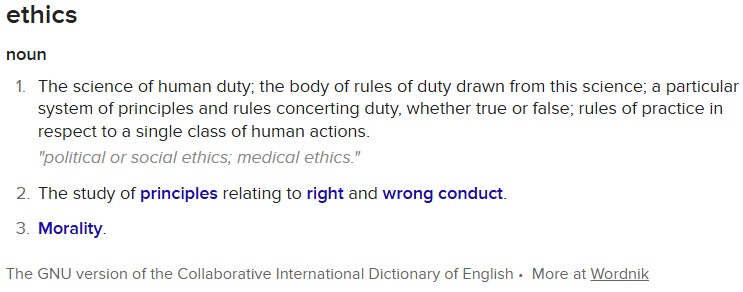
An-Op Ed Received After Today’s Video With Jason Murphy On The Ethics Of The Oklahoma Legislature
Though I haven’t edited the video to shorts yet, if you didn’t see this morning’s live video with former legislator and current author of The Oklahoma State Capitol on Substack, Jason Murphy, I suggest you do. You can find it on our YouTube and Rumble channels. If you’re not paying attention to the Oklahoma legislature, she better be. They’re not only not acting very “Red”, they’re also not acting very ethically either.
The following is an Op-Ed I received after the video.
Where Is the Oklahoma Ethics Commission When We Need It Most?
By Domesticated Warrior – domesticatedwarrior@gmail.com
When we think of government ethics, we often assume there’s a safeguard in place to ensure that public officials are held to the highest standards. In Oklahoma, that safeguard is the Oklahoma Ethics Commission—an independent agency charged with enforcing rules around conflicts of interest, campaign financing, and transparency in public service. But lately, many of us are asking a very simple question: Where are they?
This session alone, we’ve seen several troubling examples of apparent conflicts of interest among our lawmakers:
- Senator Lonnie Paxton, the new President Pro Tempore, has drawn scrutiny for his close ties to PACs and dark money groups, particularly from the energy sector. He also reportedly brushed off concerns about conflicts of interest during a recent Senate Education Committee hearing, suggesting such conflicts were acceptable—rather than disqualifying.
- Senator Paul Rosino filed a resolution to oust the head of the Oklahoma Department of Mental Health—while his wife works there whether directly or via a contractor. That’s not just poor optics. That’s a textbook case for recusal, and one that should have triggered an immediate ethics review.
- Representative Josh West, co-chair of the mental health caucus, is actively involved in mental health policy while his wife owns a mental health practice. This isn’t about questioning his passion for the issue. It’s about whether his votes and advocacy may directly benefit his family’s business.
- Representative Brian Hill, a vocal champion of workforce reform, sits on the Workforce Committee and frequently collaborates with the Oklahoma State Chamber. The same Chamber that holds exclusive $350 fundraising dinners and pours money into legislation favorable to their corporate agenda. Hill’s workforce bills align tightly with the Chamber’s interests, raising red flags about policy being steered by private influence instead of public need.
- And most recently, House Speaker Kyle Hilbert violated House rules and called for a bonus vote on a bill that directly benefited initiatives pushed by the State Chamber. It was a maneuver that should have been stopped—not rubber-stamped. Hilbert has received donations from Koch PAC, a major financial backer of the State Chamber and local business chambers throughout Oklahoma. If that’s not a conflict of interest, it’s certainly one that deserves real scrutiny.
Yet in all these cases, the Oklahoma Ethics Commission has remained silent. No public inquiries. No investigations. No statements.
We shouldn’t have to be the ones filing ethics complaints just to get accountability. That’s literally the job of the Ethics Commission—to proactively monitor, investigate, and respond to behavior that threatens public trust. When those charged with protecting integrity fall asleep at the wheel, the system begins to erode from the inside.
We’ve allowed a dangerous narrative to take root in our Capitol: that conflicts of interest are normal, that they’re manageable, or worse—that they’re nobody’s business. But they are our business. Every piece of legislation passed by conflicted lawmakers risks being tainted by undue influence. Every ignored conflict of interest sends the message that the rules don’t apply to those in power.
This isn’t partisan. This is about restoring a basic expectation of fairness and accountability in Oklahoma governance. And if the Ethics Commission is unwilling or unable to do its job, then maybe it’s time we ask a more fundamental question:
Who watches the watchdog?
We need structural reforms: increased funding and independence for the Ethics Commission, greater transparency on legislator financial and familial ties, mandatory recusals in cases of direct personal benefit, and timely public reporting of ethics violations. Because right now, ethics in Oklahoma politics looks less like oversight—and more like a cover-up.
If you’ve lost faith in the system, I don’t blame you. But silence will only allow these problems to deepen. Speak up. Push back. And as we head toward the next election cycle, ask yourself this:
Did your legislator work for the people—or for the people who fund their campaigns?
