This article was written by Emily Wright, an Edmond Public Schools parent.
Conscious Discipline – Social and Emotional Learning
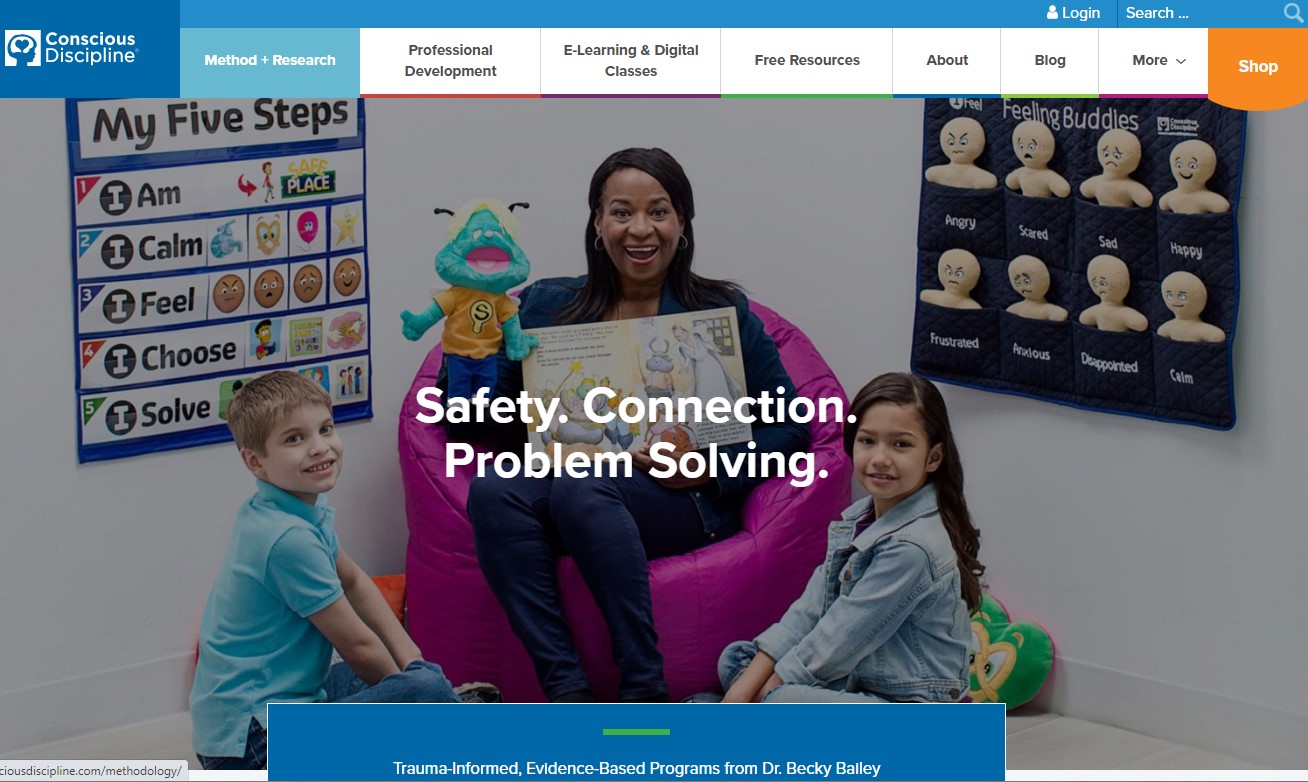
“Conscious Discipline believes that trauma-responsive social and emotional learning (SEL) is a lens through which transformational change in the areas of racial equality, equity and inclusion is not only possible, but essential.”
Conscious Discipline is the elementary Social Emotional Learning Curriculum, used in Edmond Public schools. Click on the name and try not to vomit as you explore the site. Let not your heart be troubled and drop those Tums!
Edmond Public School superintendent, Dr. Angela Grunewald, insisted once again that EPS does not teach Critical Race Theory during a 25 minute phone conversation with me on November 12.
Why did I get a phone call?: I sent her an email you can read here, in response to her rebuttal of the speaker comments made at the November 1 school board meeting.
Dr. Grunewald’s response to the Social Justice/CRT platitudes galore littering the Conscious Discipline (CD) site was that in the wake of the 2020 death of George Floyd, many companies put out these kind of messages on their websites.
I then asked her what CD edition EPS is using and are teachers/counselors just omitting any subject matter deemed to violate HB1775. She gave the same response: EPS does not teach CRT. She then invited me to come look at the curriculum, and/or sit in on a lesson and attend a parent meeting regarding CD. (I will be attending a parent meeting in January)
Dr. Grunewald then REPEATED that EPS is not teaching CRT.
Read the letter below written by Conscious Discipline creator, Dr. Becky Bailey, that I’ve included in its entirety. You will see that CRT is embedded in Conscious Discipline’s curricula and teacher/counselor training and come to the conclusion that our tax payer dollars are funding the brainwashing of our children!
Posted on July 29,2020 by creator Dr. Becky Bailey:
Recently we shared a public statement about racism, injustice and inequity and outlined our organizational commitment. This follow-up message is the first of many public updates we will provide as we strive to be both transparent and accountable in this critical area.
I firmly believe systemic racism must be dismantled, and I will be part of the solution both personally and professionally. As the voices of the Black Lives Matter movement call for increased equity and social justice, Conscious Discipline will answer with unequivocal support and actionable change.
Conscious Discipline’s methodology is based on and steeped in inclusion. Inclusion and unity are inseparable from our philosophy. Having said that, we are acutely aware that our company profile— particularly that of the independent contractors who make up our Certified and Master Instructor program— does not sufficiently represent the diverse cultures of many of the schools we support. Although our methodology is inherently culturally sustaining and inclusive, we believe increasing our team’s diversity will strengthen our resource offerings, our organization and ourselves, and is essential in supporting racial justice. With the urgency and importance of current events laying many of these issues raw, I feel it is important to convey some of the efforts we’ve taken over the past few years and our current commitments toward lasting change.
CERTIFIED INSTRUCTORS (INDEPENDENT CONTRACTORS)
Conscious Discipline Certified Instructors and Master Instructors are independent contractors who are licensed to teach Conscious Discipline. The first 15 years of our Instructor Certification program relied on candidates seeking us out in order to become consultants. This yielded some phenomenal Instructors, but also resulted in many who came from similar life experiences— most were white, female, 35+ years old, suburban and middle class. Our pool of Instructors did not reflect the rich diversity of our nation.
In 2015, we paused in accepting applications for Certified Instructors in order to undertake a dramatic reorganization. In 2017, we launched additional organizational shifts to increase equity, address the lack of diversity, and provide additional training and coaching in our onboarding process. Most significantly, we reorganized into “family” units to provide better mentorship, and we changed from an application model to a recruitment model in order to focus on engaging people of color, especially Black Americans. This intentional shift helps us to actively identify, support, remove obstacles and fast-track promising candidates who are more diverse. It also helps us to better support our growing Instructor family. This worthwhile shift has required a significant investment of time and financial resources. Even with these focused efforts, this is a long-term endeavor as many of our Instructors implement Conscious Discipline for 5+ years before becoming Certified.
We will continue to build diversity and equity in our Certified Instructor program in the following ways:
We will evaluate our Instructor Certification process to accelerate the multi-year requirements around the study, implementation and coaching needed for Certification in order to meet an initial goal of a minimum of 30% people of color, with an emphasis on Black Americans.
We will provide diversity training to all Instructors via our family structure in order to encourage individual growth and assist Instructors in creating events that are culturally informed, inclusive and equitable.
We will enlist a racial equity consultant and a committee from within our organization to work together to formulate the steps for these processes and assist in implementation. Establishing the committee, the specific steps and a timeline are all in-process, and we will periodically post progress updates.
ADVANCED INSTITUTE
The Conscious Discipline Advanced Institute (CD2) is an intense training limited to only 48 attendees and an essential step needed for Certification. In 2017, we shifted CD2 from open registration to an invitation-based event. We reserved 50% of CD2 invitations for people of color, with a definite focus on recruiting Black attendees. We then gifted scholarships to those for whom finances were a barrier. These endeavors have not yet yielded the diversity we seek, so we are examining additional ways to recruit more effectively. We will continue this initiative indefinitely as a specific, actionable step toward increasing equity within the Conscious Discipline community and within the educational system at large.
TRAINING
Over the past decade, I have intentionally sought out research and amended trainings to include information about intergenerational, cultural and generational trauma specifically as it relates to Black Americans and Native Americans. I will continue this internal educational process for myself and our Instructors in efforts to address cultural responsiveness, microaggression, unconscious/implicit bias and the general historical perspective that is neglected in our educational system at large. We will also continue to increase the prevalence of Black and brown teachers, administrators and mental health professionals featured in videos and images during our trainings.
Additionally in our trainings, we will be more intentional and direct about sharing the way Conscious Discipline is designed to function in relation to one’s personal experiences. Conscious Discipline utilizes skills, powers and structures, but no prescriptive curriculum. Our approach supports mindset shifts, a compassionate cultural climate (the School Family), and skills of interaction that promote resilience and healthy relationships for all stakeholders (children, adults, schools, communities, etc.). We ask adults to digest and internalize Conscious Discipline into their mental models of their world, culture, jobs, relationships and children in their care— especially regarding misbehavior. We ask each adult to utilize what they deem helpful and set aside anything that doesn’t resonate, essentially making each person’s experience with Conscious Discipline uniquely their own. One outcome of this personalization is the ability for Conscious Discipline to be culturally sustaining, accessible and applicable to all communities, including communities of color. In efforts to further ensure access to training and resources, Conscious Discipline has invested $1.5 million dollars into under-resourced areas to support their goals with Conscious Discipline in the past three years.
STAFFING
Since 2018, we have engaged a reputable external partner to guide our hiring processes. Our directive is to elevate the best possible candidates for each position, with a priority on increasing diversity in our offices. We currently have two leadership positions and one staff position open. Our goal is to fill these positions once we recover from the economic impacts of COVID-19. Promoting diversity will be a lead factor in filling these and future positions.
OFFICE EDUCATION
Moving forward, Conscious Discipline will provide ongoing education and growth opportunities for our office leadership and staff in the areas of unconscious bias and racial equity. We will engage independent experts to help assess and train employees in regard to our antiracism goals, beginning with our most critical leadership and public-facing job positions. This effort will start immediately using Insperity HR Services, and will expand as we identify additional partners.
SOCIAL MEDIA
In early June, we began to prioritize using social media to share antiracist and race education content from respected thought leaders, including Ibram X Kendi’s Raising Antiracist Kids event, CASEL’s SEL as a Lever for Equity series and the APA’s Uplifting Youth Through Healthy Communication About Raceresources. We will continue to share antiracist content as an ongoing component of our messaging on all of our social media platforms. Our intent is to amplify leading voices and resource providers that encourage safe, productive conversations about racial equality, and to present educators, students, families and communities with opportunities for growth.
LEADING BY EXAMPLE
Like the world we live in, I am in a perpetual state of change and growth. Mistakes and missteps are essential to this process, and I have made many in my lifetime. A foundational concept in Conscious Discipline is to expand the pause between stimulus and reaction to create room for a conscious response. I am a teacher of this process, yet I am still learning this process. I believe the path to systemic and systematic change begins within each individual, and I am leading the way the best I know how— through continuous devotion to learning and improvement.
Over the past two years, these books and online courses have deepened my understanding of race issues and social justice, and helped to uncover my own unconscious bias:How to Be an Antiracist by Ibram X Kendi, Biased: Uncovering the Hidden Prejudice that Shapes What We See, Think and Do by Jennifer L. Eberhardt, Ph.D., Cultural Somatics online course by Resmaa Menakem, Spare the Kids: Why Whupping Children Won’t Save Black America by Stacey Patton, Culturally Responsive Teaching and the Brain by Zaretta Hammond.
I am currently reading My Grandmother’s Hands: Racialized Trauma and the Pathway to Mending Our Hearts and Bodies by Resmaa Menakem and it is profound. I will continue to seek out powerful resources to shape my personal growth as well as the content and organizational policies of Conscious Discipline.
PRODUCT CONTENT
Conscious Discipline has consistently sought to prioritize cultural sensitivity and accessibility in our products and materials, including inviting input and making related improvements. For example:
We have historically instructed our directors and managers to ensure cultural diversity in the content and images featured in our products and support materials. This will continue in a more strategic way, including increased staff training and enlisting guidance from independent experts.
In 2019, an outside firm reviewed the Conscious Discipline e-Course to reveal implicit bias in the content. My team corrected the content that could be changed, and I used the insights as an opportunity for improvement and growth.
We have made multiple adjustments to the fabric of the Feeling Buddies in order to address color variances in certain manufacturing runs. (The desired form for the Buddies is a unisex, racially ambiguous “gingerbread” appearance.)
Moving forward, we will more closely review all new products through the lens of diversity, cultural sensitivity and inclusiveness. Our internal diversity committee and independent experts will work together to develop a Diversity Assessment Framework that will help guide new product development, training, and the marketing of our products and resources.
IN CLOSING
These are initial steps that lay the foundation for much larger shifts to come. I am eager to actively seek ways to create equity and dismantle systemic racism through awareness, compassion, connection and action— starting within myself and Conscious Discipline, and extending outward to those we serve.
Our next step toward these commitments is to develop a specific and measurable plan that will include key milestones, metrics and timelines, and will grow as our knowledge expands. As new opportunities and concerns surface, we will responsively adjust this plan. We will strive for transparency by periodically sharing updates, benchmarks and celebrations on our website and through social media.
We will be listening throughout this process, and are eager to hear from you about addressing racism, our progress or related matters.
Please email drbeckybailey@consciousdiscipline.com with your input.
As Maya Angelou famously said, “Do the best you can until you know better. Then when you know better, do better.” I am committed to learning more and doing better. My personal commitment to act in support of equity and social justice begins with myself and extends to my office staff, our Instructors and the Conscious Discipline family. We are all in this together, and we will continue the lifelong process of uncovering our false beliefs and unconscious biases; acquiring new skills; ensuring our policies and actions reflect our core principles of love, unity and equity; and actively living these values embedded in Conscious Discipline.
Thank you for your willingness to join us on this journey.
Wishing you well,
Dr. Becky A BaileyFounder & Chief Knowledge Officer,
Conscious Discipline
Curriculum is designed to teach set objectives. SEL is the latest fad in education and hundreds of curriculum companies have sprung up to cash in on the federal government’s and academia’s push of this garbage.
Curriculum is approved by local school boards of education and must align with the state’s department of education standards that must align with federal standards to access any federal and/or state funds/grants. Therefore state, federal and local education entities are working in tandem to turn kids into social justice/CRT warriors meanwhile SEL/CRT curriculum companies are getting rich off our tax dollars. Federal, state and local governments are complicit in this money laundering, socially indoctrinating scheme.
Progressive SEL foundations/organizations provide funding via grants or awards too. In fact, an Edmond elementary counselor, Janessa Bointy, received the National University System-Sanford Teacher Award for Oklahoma in 2020. She was awarded $10,000 for indoctrinating school children by “demonstrating high levels of inspirational teaching practices by engaging students, building student confidence, motivating students to succeed, giving students a voice and creating an inclusive environment.” “She has been a pioneer in using the Sanford Harmony social and emotional learning program to promote strong peer relations, self-regulation, tolerance, and understanding among students.”
During my conversation with Dr. Grunewald I brought up this counselor and her use of the Sanford Harmony Curriculum and she knew nothing about its use in our district or about this honor that was bestowed upon Ms. Bointy. In my letter to Dr. Grunewald I provided this link: Sunset Counselor Wins Award and $10,000 Prize – Edmond Public Schools (edmondschools.net) I also provided CRT-laced evidence from the Harmony website. Obviously, she failed to read my letter completely, as well as answer all my questions in concerns in a professional, truthful manner. If you or Dr. Grunewald would like to know more about the Sanford Harmony program here is a link from Ms. Bointy’s above mentioned blurb:
Sanford Harmony is a PreK-6 research-based social-emotional learning program that cultivates strong classroom relationships between all students. Sanford Harmony has been recognized by the Collaborative for Academic, Social and Emotional Learning (CASEL) as a quality program. http://sanfordprograms.org/
Back to the phone call.
I bemoaned the fact that my tax payer dollars are being used to ultimately rewire my kid’s thoughts, values and beliefs. I also expressed my opinion that more SEL does not address Covid learning loss and more instruction of core subjects is the solution.
Upon expressing my disdain for EPS’s molding and shaping my child’s identity Dr. Grunewald said since my kids come from stable home with involved parents, they will be able to cope and think for themselves, but SEL is necessary because there are students that come from unstable homes and everybody benefits; some more than others based on individual needs. She said mental health is a district priority now more than ever in light of the Covid pandemic and SEL is great tool to address it. We also discussed the definition of SEL and the link she provided in her response from the OK State Department of Education to explain further why SEL is taught.
CASEL is the author of the definition and framework of SEL that school districts across the country use. I am guessing that CASEL provided this document to the state department and OK State Department just inserted their tag on it. CASEL is a clearing house for all these SEL curriculum companies.
The information provided under the heading Teacher and Parents and subtitle SEL Resources for Parents, Educators and School Communities Related to Covid-19 will lead you to another vomit-inducing link.
Under the Diversity, Equity, Inclusion subheading you’ll find, “Speaking Up Against Racism Around The Coronavirus – The coronavirus became racialized, so it’s critical that educators understand the historical context and confront racist tropes and xenophobia from students and colleagues”, from an organization called, “Learning For Justice”, which is a project of the “Southern Poverty Law Center“.
I also was able to find, COVID19 Resources From America’s Promise Alliance Partner Organizations a Google Document containing this link Talking About COVID-19: A Call for Racial, Economic, and Health Equity | The Opportunity Agenda.
From the Opportunity Agenda:
“We also need to step up our allyship with communities of color. As Race Forward stated: “Implicit and explicit racism has often historically driven government responses to urgent health situations…The Trump administration has used this crisis to stem travel from unaffected regions, including halting asylum seekers at the Southern border. Hate-filled and racist rhetoric has stigmatized people of color as “infected,” threats to public safety, and burdens to the health care system.”
“Being an ally for communities of color starts in our language and messaging. We must avoid slipping into the mindset of “othering” when talking about this pandemic or any other public health crisis.
America is currently grappling with its long legacy of racism and othering. This comes through in our messaging around COVID by allowing implicit and explicit bias to influence our thinking and language, whether it be the example of blaming specific races for the virus and its spread or referring to the virus using derogatory terms.
Instead, we should work together to actively dispel xenophobic myths and racist misinformation – and hold our elected officials and the media to doing the same. Addressing implicit bias and racism is not always easy, but it is imperative, which is why The Opportunity Agenda developed a messaging tool to help advance these conversations.”
Oklahoma has a law banning this type of curriculum/instruction, yet the OK State Department of Education has a resource sheet with clearly unvetted links to CRT political action organizations and CRT disguised as SEL curriculum resources?
Dr. Grunwald’s response to this was: “Well you know when you start clinking on links you could end up on a porn site.”
Parents, educators, patriots please understand that SEL is a conduit of CRT. IT IS A 12 YEAR PROGRAM THAT SOCAILLY ENGINEERS YOUR CHILD by transforming your child’s core values, attitudes and beliefs. SEL lessons focus on diversity, equity and inclusion to promote “kindness” and create a “safe” learning environment for all. These lessons already occur naturally in our homes, families, communities and classrooms. It is not the school’s job to focus on feelings. Their job is to impart objective truth.
YES, Dr. Grunewald CRT is being taught in our schools!