Opponents of the green energy onslaught in Oklahoma have celebrated several high profile wins over the past few months. In December, the Department of Energy cancelled the Delta Plains Electric Corridor, a 645-mile long (and 18 miles wide) transmission line project that would’ve spanned the entire northern part of the state, after relentless pressure from landowners, activists, and lawmakers.
A proposed wind farm in McIntosh County was scrapped earlier this month, after intense public outcry. The Canadian company TransAlta planned a massive wind farm of 100 turbines, but scrapped the project after encountering intense pressure from activists who are becoming increasingly organized and vocal about the encroachment of green energy into our state.
In December, a judge ruled that a large wind farm of 84 turbines in Osage County must be dismantled within one year, after ruling that Enel, a renewable company currently operating several green projects in the state, failed to acquire the proper permissions to build, violating the Osage tribe’s mineral rights.
Despite these wins, there has been very little public outcry over the rapid advance of another green energy scam in Oklahoma: the carbon capture industry. How many know that the largest Direct Air Capture facility in the United States opened in Osage county back in August? The project, Bantam, passively draws carbon dioxide directly from the atmosphere via a method using heated limestone, and then captures the CO2 to be compressed into a liquid and injected deep below the surface for permanent storage, or transported via a proposed vast network of pipeline throughout our state.
In December, the New York Times dubbed carbon capture as a new “gold rush”, and thanks to the Inflation Reduction Act of 2022, which tripled the 45Q tax credit that companies receive for each ton of captured carbon, billions are being poured into this unproven and potentially dangerous technology.
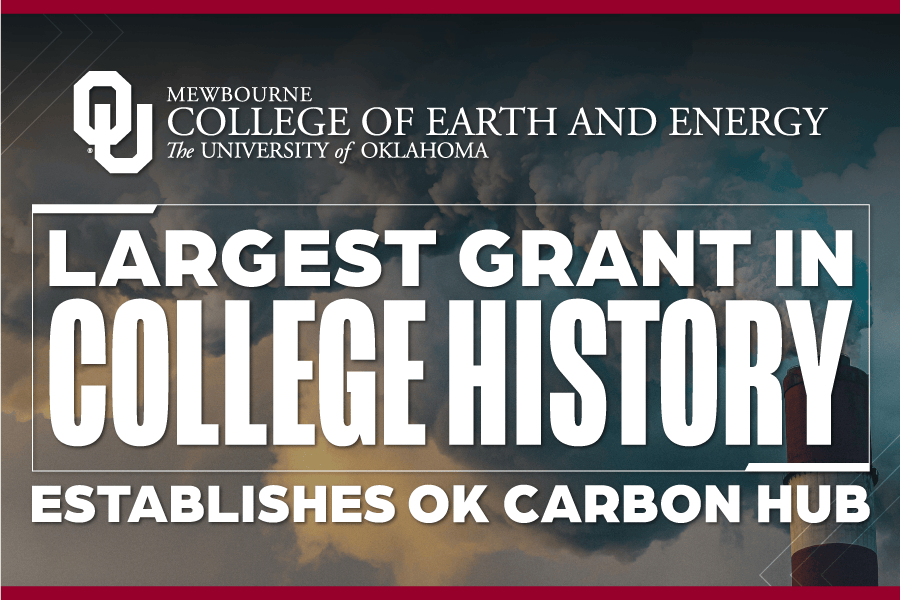
In November, OU’s Melbourne College of Earth and Energy received an $18.7 million grant from the Department of Energy, the largest grant in the college’s history, to establish the Oklahoma Carbon Hub, and researchers will investigate three separate underground storage locations to potentially inject 54 million metric tons of liquefied and highly pressurized CO2 over a period of 20 years (54 million tons may sound significant, but it is a drop in the bucket compared to the 40 billion tons of CO2 pumped into the air globally each year).
Once injected underground, this massive amount of high-pressure CO2 will require constant monitoring for hundreds of years to prevent disastrous leaks and shifts. There are currently three customers committed to providing captured carbon to be stored deep under Oklahoma: the CVR fertilizer plant in Coffeyville, Kansas, the Azure Sustainable Aviation Fuel Production Facility near Cherryville, Kansas, and the Bantam Direct Air Capture facility in Osage County.
I, for one, don’t remember this ever being on the ballot, or even being discussed with the public before proceeding with these plans. Does Oklahoma really want millions of tons of out-of-state CO2 stored under their feet, where future generations will be saddled with the burden of ensuring that the CO2 remains underground?
A new study concludes that sequestered CO2 must be stored for 1000 years, centuries after the companies collecting on the carbon capture “gold rush” have disappeared from the earth, but the CO2 will remain, and all future generations of Oklahomans will be forced into stewardship of these wells. Put in this perspective, its easy to see how outlandish these endeavors are.
New research has found that existing carbon capture facilities appear to capture almost none of the total emission they release during operation, seemingly cancelling out the carbon that they do capture. A carbon capture project located in Decatur, Illinois, one that the DOE called “the largest demonstration of its kind in the United States”, was recently found to have captured only 10 to 12% of its total emissions each year. The facility, Archer Daniels Midland, was also found to have experienced dangerous leaks last year,
One big question that should be asked is this: what happens when our entire subsurface storage is filled to the brim with CO2? When 50 or 100 million tons are stored under our feet, will it have affected the level of atmospheric CO2 in the slightest? Once we’ve run out of room for captured carbon underground, where will newly captured CO2 be stored? Will the liquefied gas migrate to the surface, threatening the lives of anyone in the vicinity? Will our aquifers or our soil be in danger of contamination? Can this highly pressurized gas cause earthquakes? The questions are almost rhetorical. It seems clear that this is an enormous and dangerous boondoggle, and no one has a right to demand our citizens bear this level of risk.
The massive amount of money being poured into carbon capture appears to be blinding investors and legislators from considering long-term consequences and how this “gold rush” will affect no only present generations, but future generations who will inherit this ridiculous burden.
Unlike other green energy projects, carbon capture has drafted our oil and gas industry into the scam, and they’ve become some of the biggest supporters because they stand to reap the rewards thanks to large increases in the tax credit. To oppose carbon capture in Oklahoma means to oppose the oil and gas industry itself. As more investment pours into Oklahoma-based carbon capture projects, so will be the pressure to expand CO2 pipeline across the state, and the use of eminent domain to fast-track this expansion. The Great Plains Institute has been hard at work promoting the expansion of CO2 pipeline here, and they’ve even created a handy “fact sheet” to see just what might happen if this pipeline isn’t opposed soon.
Carbon capture will be probably the most disastrous “green” boondoggle this state has ever seen. The potential for deadly leaks, where the high-pressure CO2 migrates to the surface and killing everything within the vicinity, as well as aquifer and soil contamination, is enough to reject the industry in toto. The fact that Oklahoma will be expected to act as stewards of these massive reservoirs of CO2 for up to a millennium is laughable.