Search

ROPE Report

Tag

rules

Interesting News That Needs Reading Today

Oklahoma Voice gets the prize for having the most interesting reads in one place this week.

When I opened the email today I was pretty surprised at the topics they’d covered.

Panasonic to delay production at Kansas battery plant as electric car sales decline, policies shift – Oklahoma had tried to land this plant, offering nearly $700M in incentives.

Why is this important? Because of the tag line – Oklahoma was going to offer SEVEN HUNDRED MILLION of YOUR tax dollars to get the plant here. Fortunately, everyone and their dog in Topeka, Kansas, offered more taxpayer dollars than Oklahoma and the plant went to Topeka.

As so many of us fighting the ‘green agenda’ have said – most of these deals are done via non-disclosure-agreements (NDA’s) that leave neighbors of the plant/project/etc. almost completely in the dark as to what has been promised to the plant/project/etc., though the neighbors (i.e. tax payers) are paying for it and will have to live with it as part of the “people in their neighborhood“.

Here we have a plant that was ready to go, but then had to scale back because people are deciding to scale back on EV purchases and because President Trump has put the kibosh on EV subsidies through the Big Beautiful Bill. The plant has already spent taxpayer dollars to get up and running. What’s going to happen to the rest of Panasonic’s community promises of jobs, etc. with the scaleback?

This is just one of the many reasons why OKLAHOMA should NOT be pumping taxpayer dollars into private businesses – in so many cases, taxpayers aren’t getting what they paid for. But who cares, right? It’s not the Governor’s money, or the Commerce Department’s money…

Oklahoma parents, faith leaders drop lawsuit over Catholic charter school

There’s no reason to sue when the Supreme Court has said that taxpayer funds can’t fund religious education.

“The plaintiffs and their legal counsel — who include attorneys from the American Civil Liberties Union, Americans United for Separation of Church and State, and the Freedom from Religion Foundation — declared victory while dropping their case”. The Oklahoma Parent Legislative Advocacy Coalition was also involved.

Sadly, these are all left-of-center organizations that hate Christians and religion. I’m a conservative Christian, so they don’t represent me – other than my viewpoint that the state should not fund religious schools. Here’s why:

  1. My God is a jealous God and if I had autonomy over my purse I would not ever financially support another religion. It’s America. You do your own religion. But don’t do it on my dime. When the government takes my money by force and gives it to a church outside the sphere of my religious belief, I’ve funded a religion whether I meant to or not. I vote. The government is of the people, by the people, for the people. How I can say I have absolutely no say against that is mind-blowing.
  2. The government controls what it funds. During COVID, lots of churches closed down because their state told them to. People quit going to church because they were simply told, “you can’t” and lots of people listened. I do not want my government controlling religious institutions of any kind. Churches are to be the pillar of the state. They can’t be that when the government tells them “you can’t”. Churches should make the state accountable to the people and to God. They can’t if the government tells them, “you can’t”.
  3. It is against the Oklahoma State Constitution to use tax dollars to subsidize religious schools. How did a bunch of attorneys decide that the highest land in the nation can just change Oklahoma’s Constitution and not its people. Who knows? Maybe Oklahomans would decide to change the state Constitution to allow that, but we wouldn’t have known because Oklahoma school choice pushers – Governor Stitt, etc. – wanted to remove The People from the government by making an end-around to the Supreme Court. Nope.

So, obviously, I’m thankful the Supreme Court deadlocked and the School Choice pushers were thwarted.

Former Oklahoma agency head prohibited from working for state, under settlement agreement

Well, the Ethics Commission actually did their job and slapped Shelley Zumwalt on the wrist.

In a story that personifies – for me – the absolute horror show that is the Oklahoma government revolving door of agency heads making the round of government agencies (Stitt appointed Zumwalt to three positions: the Oklahoma Employment Security Commission, the Oklahoma Department of Tourism and Recreation, Secretary of Tourism, Wildlife and Heritage – a Cabinet secretary position), Zumwalt was fined $20,000 by the State Ethics Commission and told she can’t work for the state FOR THE NEXT TWO YEARS. Just enough time for Governor Stitt to be removed from office by term limits (thankfully) so that he can’t appoint her to anything else.

As the head of the OESC, Zumwalt created contracts with a business run – in part – by her husband. But don’t worry, neither she nor her husband benefitted, according to Zumwald and the Ethics Commission.

About this situation, AG Drummond said, in April of 2024: “This level of self-dealing represents an unforgivable breach of trust that disqualifies Ms. Zumwalt from overseeing the expenditure of our tax dollars,” Drummond said. “She should resign immediately and cooperate fully with my office as I seek to determine whether any Oklahoma statutes were violated.”

But, never fear, our intrepid AG will not now investigate Ms. Zumwalt because he’s satisfied – after the Ethics Commission ruling – that no crimes were committed here. Come on. Seriously? State Auditor Cindy Byrd’s office found that she violated the rules on conflict of interest by issuing contracts to a company of which her husband was vice-president.

So, breaking the rules isn’t committing a crime? Rules put in place to protect taxpayers from contract-fixing? Why have rules then? What are those supposed to do exactly? Provide a typist somewhere something to do entering it into a database? Again. Slap on the wrist. Yawn. Sigh. Who cares? It’s just taxpayer money…

State board calls for investigative audit of Epic Charter School – Mismanaged budget resulted in mass layoffs at Epic, state officials say

Why has somebody at the Oklahoma Statewide Charter School Board not created an agenda item for closing Epic Charter Schools? My word. This school has been mismanaged from the word “go” and cost taxpayers MILLIIONS and MILLIONS of dollars. Why does this keep happening? Why is the OSCSB LETTING it happen?

First there was State Auditor Cindy Byrd’s scathing audit of Epic which showed that, “since 2015, Epic was allocated $458 million in tax dollars, with $125.2 million funneled to a private company owned by Ben Harris and David Chaney, according to the audit“, though AG Drummond has declined to prosecute the men since taking the case over in 2023. Now, there are massive layoffs and a $30 million shortfall.

Cindy Byrd’s office performed the original audit. Now, Chair Bryan Shellem and the OSCSB have decided to hire an outside auditor to examine the school’s books. This is concerning. The ‘right’ auditor has to be found. So many state agencies and governments use auditors to obtain generalized information that doesn’t provide meaningful results to taxpayers. It will be interesting to follow this story to find out how EPIC will be audited now – and by whom.

FAMILY ORIENTED INFORMATION –

Porn and marijuana are hurting our boys. Parents and schools need to speak up.

“They smoke to relax. They watch to escape. They become lethargic, less motivated, more isolated. Not because they don’t care; but because they’re chemically rewarded for not caring.”

This is a HUGE and IMPORTANT statement. In point of fact, every dad (and mom) needs to read this OpEd in the Daily Oklahoman today and ACT ON IT. Young men in our society are being turned into zombies and we’re effectively letting this happen. Unfortunately, too many parents don’t care as much as this letter-writer. Please read this short editorial and take it to heart.

2025 Homeschool Curriculum Picks and Practical Planning Tips – Aby Rinella and Yvette Hampton

We’ve had Yvette on the show before. She and her husband produced the movie, “Schoolhouse Rocked: The Homeschool Revolution“, a documentary about the rise and possibilities of homeschooling.

Yvette – and Aby Rinella – just released this list of homeschool curriculum picks and planning tips! JUST IN TIME FOR YOU TO DECIDE TO HOMESCHOOL INSTEAD OF GOING BACK TO YOUR PUBLIC SCHOOL!

Check these out and opt for staying home with your kids. It was the best thing I EVER did and I wouldn’t take it back for all the money in the world. In fact, the only downside I EVER found to having my kids with me 24/7 was that when they finally grew up and flew out of the nest, it was just SO LONELY. Having them around was just the best! I recommend it HIGHLY.

Neither The Oklahoma State Department of Education DEI Rules Or Gov Stitt’s Executive Order Will Stop DEI In Oklahoma Education – Here’s Why

Jenni White – 1.25.24

GOVERNOR STITT’S EXECUTIVE ORDER (EO-31) FOR DEI IN OKLAHOMA HIGHER EDUCATION

December 13, 2023, Governor Stitt signed an Executive Order 2023-31 (EO) that has been referred to as BANNING DEI by the general media. Heritage Foundation (a center-right think tank that also promotes School Choice, but was loudly vocal against Common Core) referred to the Executive Order as “condemning DEI” – a big difference from “banning DEI”.

EO-31 DOES prohibit Oklahoma’s Executive Branches from using “state funds, property or resources” to promote DEI via any of 6 different ways listed, including “(2) Mandate any person to participate in, listen to, or receive any education, training, activities procedures or programming to the extent such education, training, activity or procedure grants preferences based on one person’s particular race, color, sex, ethnicity, or national origin over another’s”. 

It also orders the heads of the Executive Branches to “initiate a review” of any DEI programs or activities under their purview and bring them into compliance with the parameters of EO-31 if not already. 

Here is a listing of Oklahoma’s Executive Branches:

  • Attorney General
  • Governor
  • Lieutenant Governor
  • Oklahoma Secretary of State
  • Oklahoma State Auditor and Inspector
  • Oklahoma Superintendent of Public Instruction
  • Oklahoma Treasurer
  • Oklahoma Agriculture Commission
  • Oklahoma Insurance Commission
  • Oklahoma Labor Commission
  • Oklahoma Corporation Commission
  • Oklahoma Wildlife Conservation Commission

To be clear, according to EO-31, I can’t be hired by the Insurance Commission and have them give me training out of their budget that includes a DEI component. That is good and I do not want to overlook the GOOD part of this EO.

Now, though, let’s look further down in the Executive Order and note that the Oklahoma State Regents for Higher Education is NOT an Executive Agency. EO-31 is clear in the first statement of the EO, “Executive state agencies shall not utilize state funds, property or resources to:”. It says NOTHING about anything outside the agencies listed above.

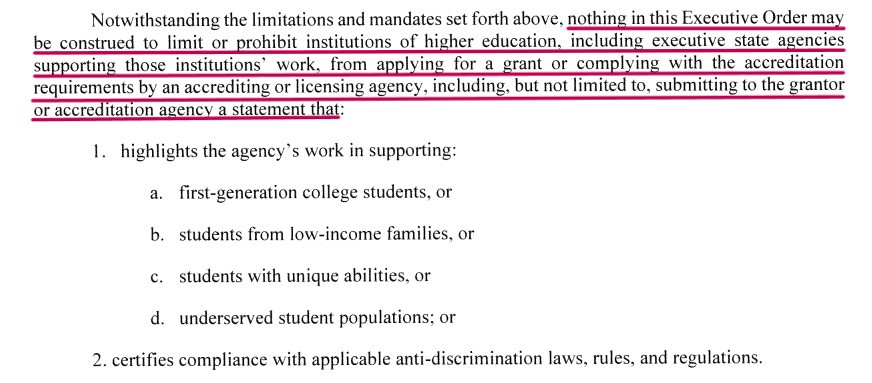
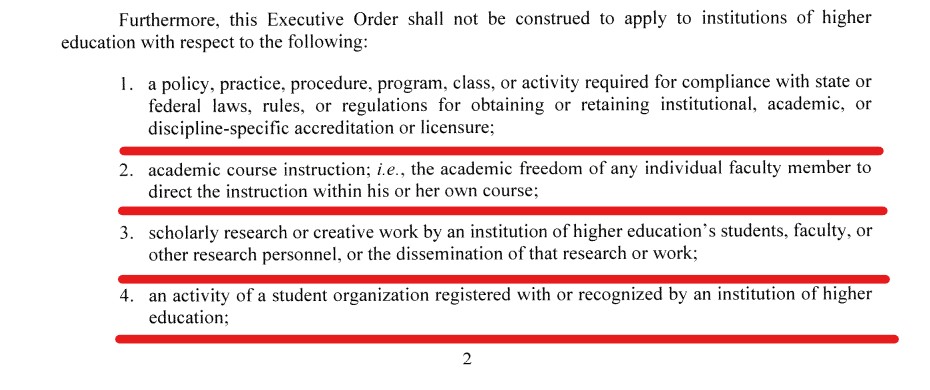
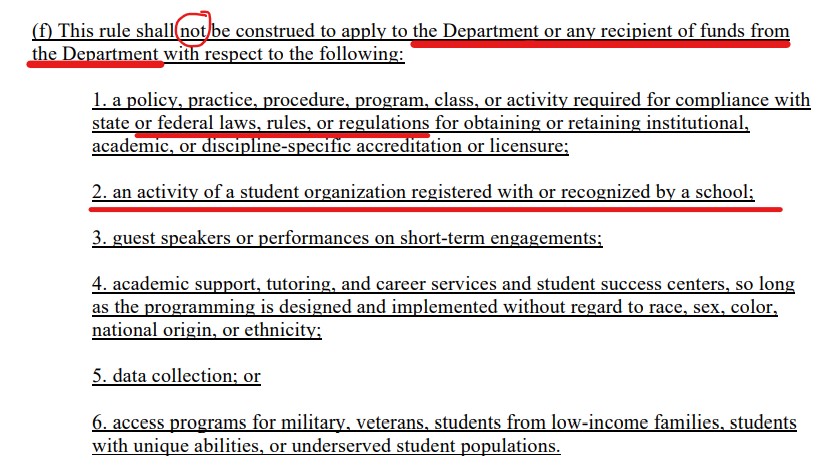
Thinking in that vein, note the underlined in red below:

Let’s stop here. This paragraph says that EO-31 will not apply to COLLEGES and UNIVERSITIES or any of the executive agencies SUPPORTING them – INCLUDING THE STATE DEPARTMENT OF EDUCATION – if they apply for a GRANT or to comply with ACCREDITATION requirements. Unfortunately, GRANTS and ACCREDITATION are where so much of the DEI in higher education arises. If you don’t believe me, internet search “DEI in higher ed accreditation” and you will find article after article about how, the only way to really advance DEI principles in higher education is THROUGH ACCREDITATION. 

Here, in fact is an article from the Chronicle Of Higher Education titled, “The New Accountability: How Accreditors Are Measuring colleges’ diversity, equity and inclusion efforts“.

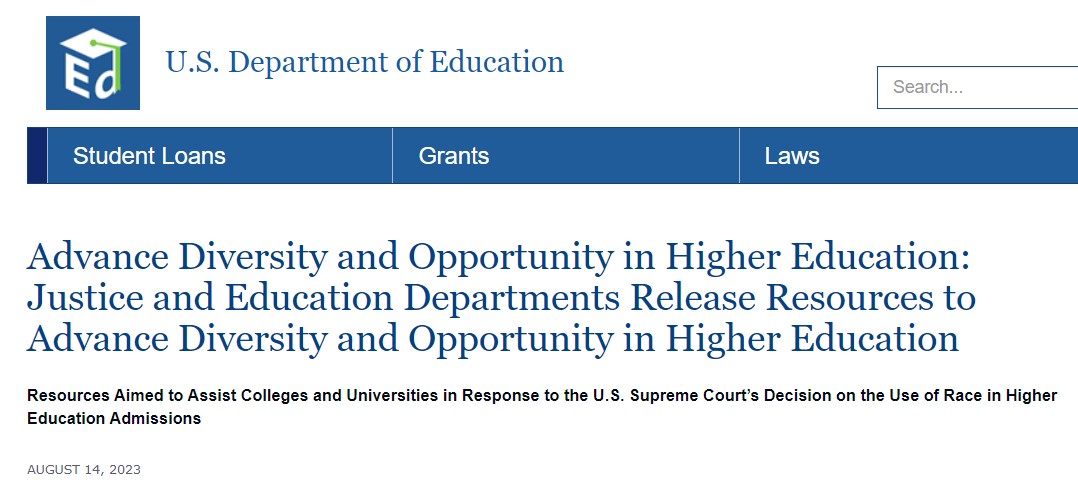
So what about grants? Well, we ALL know Higher Ed takes federal government grant money. Check this out:

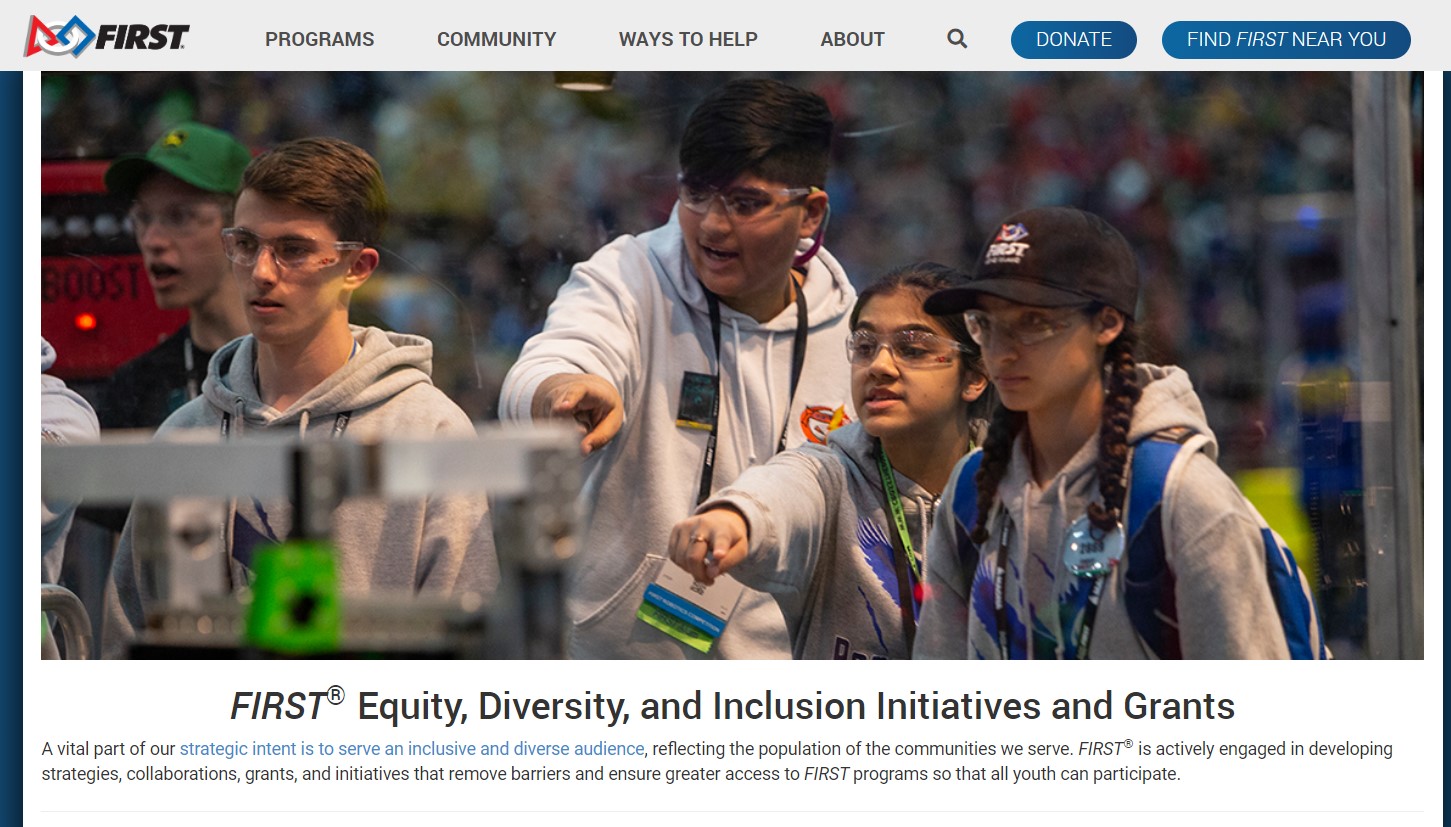
And that’s just FEDERAL grants. There are other grants from non-Federal sources in abundance, like this group. 

Now let’s look even FARTHER down in EO-31. It says:

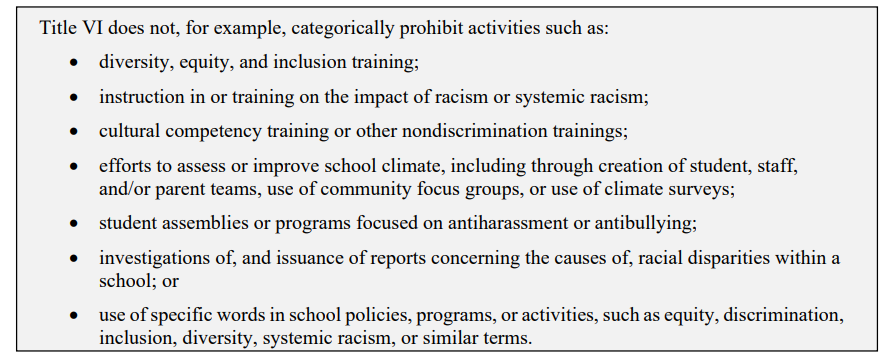
Alright. Let’s think about that. The order says the EO DOESN’T apply if a federal law supersedes. Here’s a Fact Sheet from the Feds that talks about how Title VI law CAN PROMOTE DEI. And not only that, President Biden also has his OWN EO mandating DEI in schools, so NO, EO-31 STILL DOESN’T STOP DEI in higher ed. 

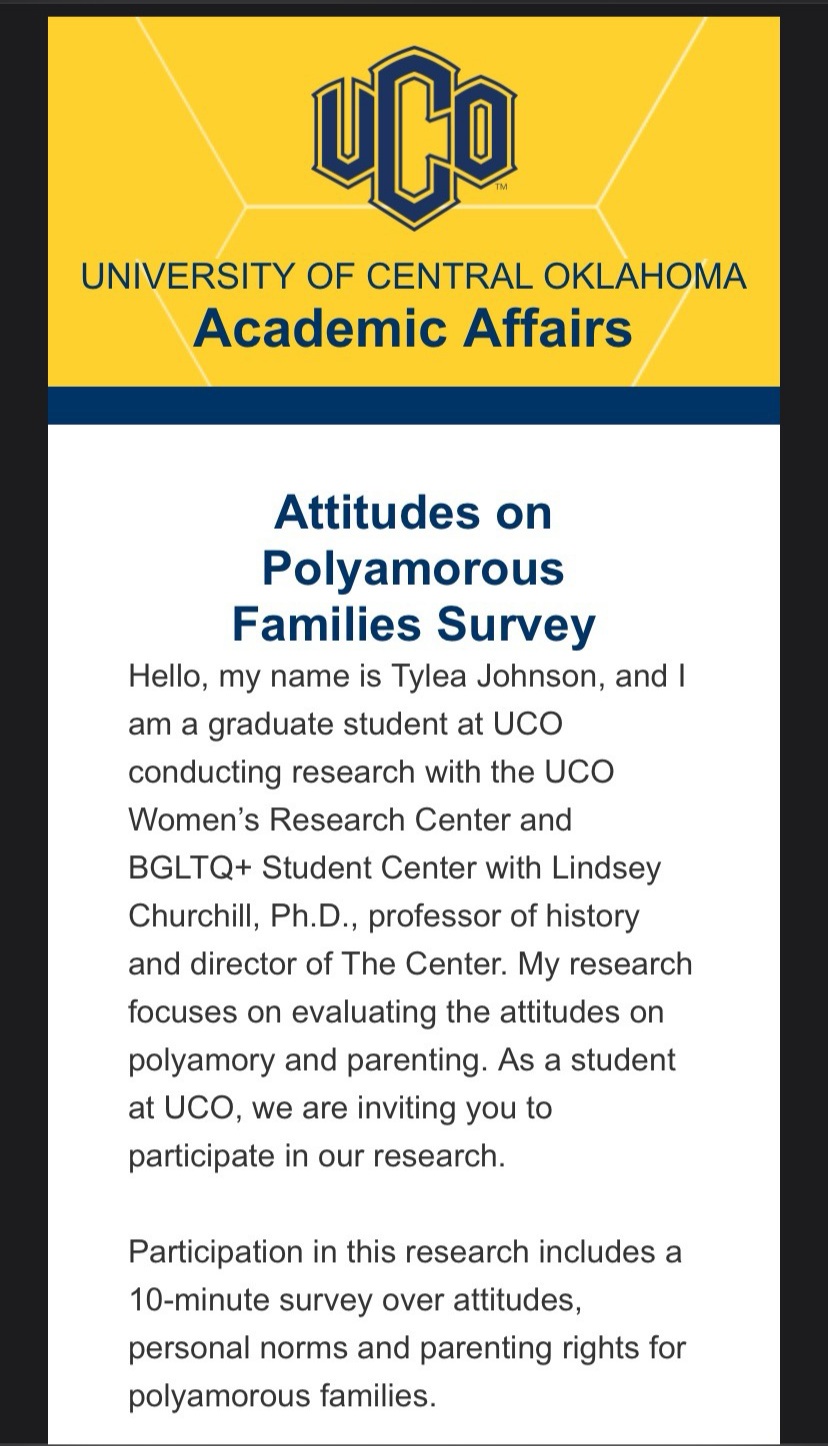
We could go on, but EO-31 won’t stop higher ed DEI scholarly research either and a friend just sent this to me. Not only will EO-31 not stop, creepy research, it won’t stop “a student organization registered with or recognized by an institution of higher education”. This research is in conjunction with the BGLTQ+ Student Center and we all now know that the alphabet sex brigade and DEI go together like furries and cat boxes.

RYAN WALTERS PROPOSED DEI RULE FOR K-12 SCHOOLS

Here is the set of rules proposed by Walters to be heard by the Board on Friday, February 16th. 

The rules for K-12 actually do more than those for higher ed, but they still do not stop DEI.

Walters’ rules FOLLOW THE GOVERNOR’S EO-31 EXACTLY (with the exception of the removal of #2 and #3 under letter (f) of the Governor’s EO that apply only to higher ed). In point of fact, they would have to, as the OSDE is an Executive Branch and it must follow the Governor’s EO-31. 

But herein lies a bit of a problem.

Accreditation of Oklahoma public schools are done by the OSDE using their accreditation standards. So, as long as those standards don’t allow DEI, that window is closed – unlike with higher ed and Oklahoma private schools which can be accredited by the OSDE, or a myriad of other accrediting agencies.

Unfortunately, however, we still have the issue with GRANTS.

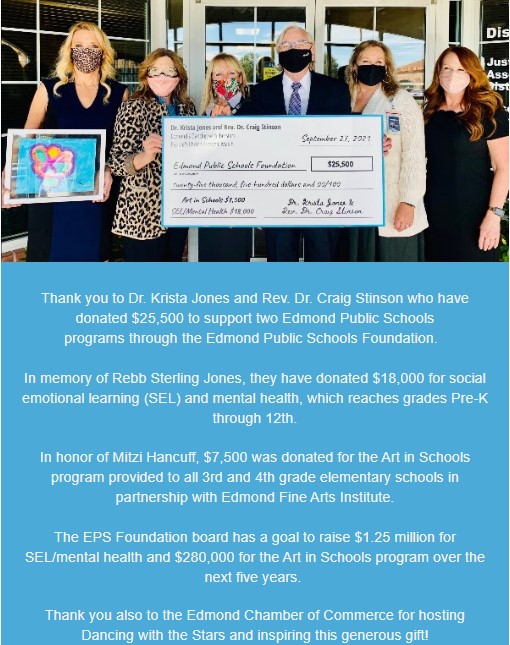
Here, Edmond Public Schools Foundation is thanking those donors who are helping to raise OVER ONE MILLION DOLLARS for SEL programs inside Edmond schools. Unfortunately, SEL is intricately tied to DEI in a million ways and any grant that comes into a school for SEL will ultimately bring in DEI as well. George Lucas’ educational non-profit Edutopia, has a whole page devoted to ways in which k-12 schools can obtain grants to push out SEL. 

Also unfortunately, we still have the problem with FEDERAL LAW being exempted as well as student organizations, with both of those issues similar in K-12 to my discussion on higher ed.

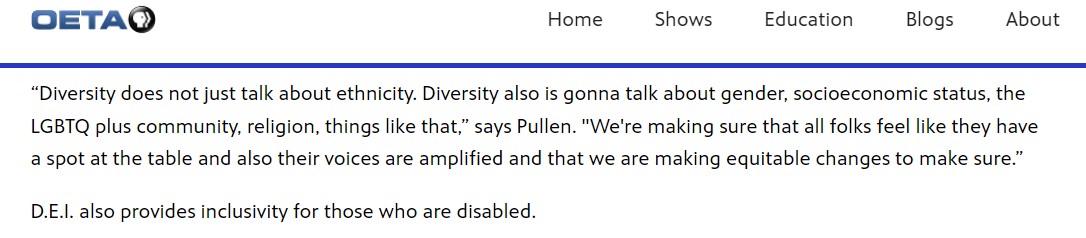
An article from OETA entitled, “D.E.I. In Oklahoma Schools“, quoted OCU’s DEI coordinator as saying:

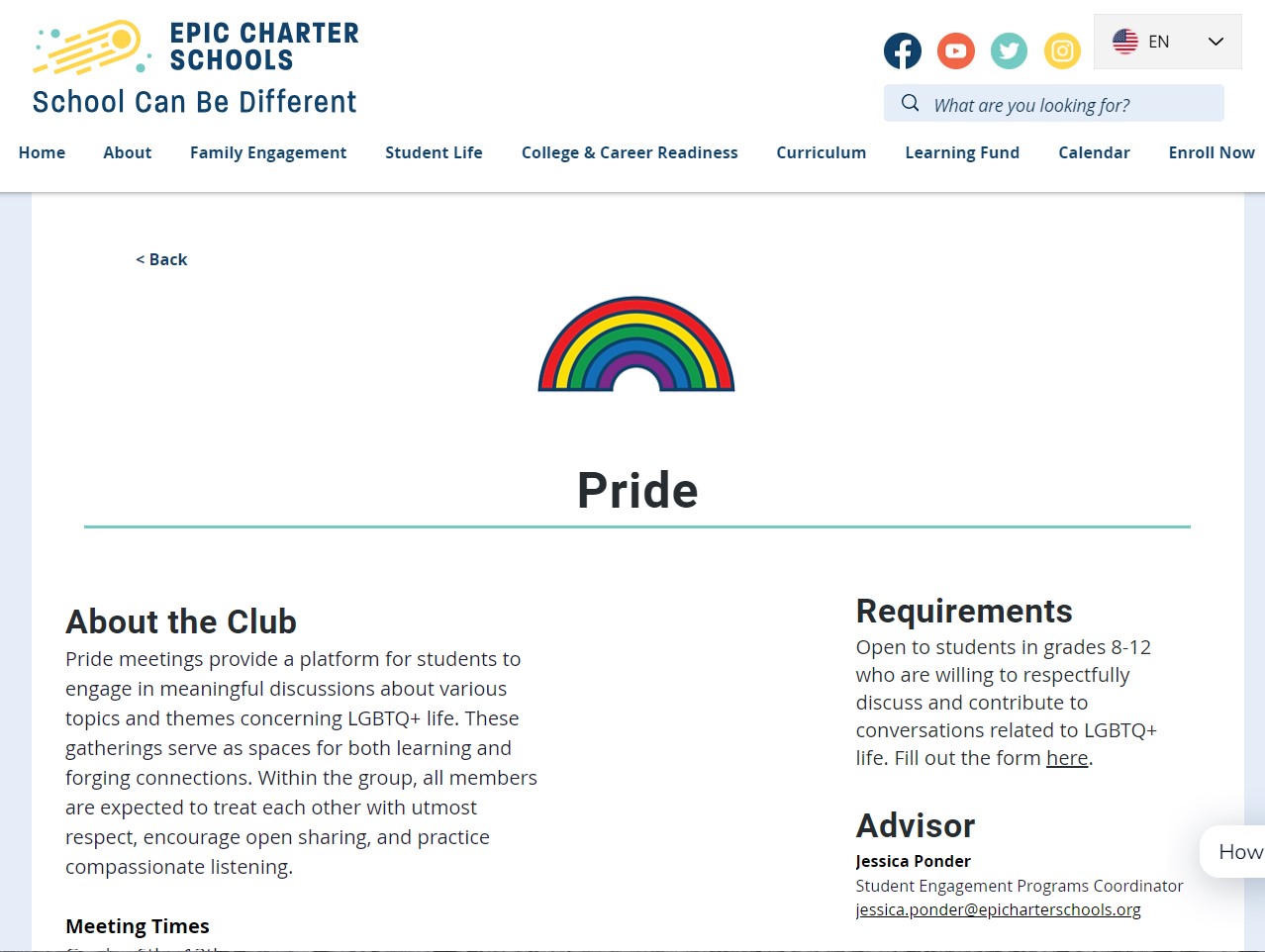
Yet LGBTQ clubs such as this one from EPIC Charter Schools, is exempted from the new DEI rule because it’s a student organization recognized by the school.

To close out, since data collection is ALSO exempted, DEI also can come in through THAT door. I’ve written numerous times about how horrible some of the surveys being given by Oklahoma public schools are today. Here’s an article about Success Highways and its link to DEI. Here’s another about the Oklahoma Prevention Needs Survey.

And worse, here’s an exchange I had with a teacher on social media that shows that it’s often teacher training and teacher mindset that bring DEI ideals into the classroom on a daily basis without even needing a private or federal grant, or anything else.

Additionally, Oklahoma uses school counselors from the American School Counselor Association an organization DEDICATED to bringing DEI into every school and with every child. So there’s that.

Consequently, since we still have DEI coming into schools through data, teachers and counselors, whether or not Walters’ new rule on DEI is passed by the Oklahoma State School Board members or not

the bottom line here is this: BOTH THE HIGHER ED EO and the K-12 RULES ARE BETTER THAN WHAT WE HAD BEFORE – WHICH WAS NOTHING – but it’s important to remember that NEITHER STOP DEI. Really, the surest way to keep your child from being influenced by DEI ideology is to:

  1. Educate your child/children at home – not even private schools are ‘sure things’ in terms of rational, classical, non-ideological education anymore
  2. Monitor your child’s social media and internet access closely and lock down problem apps and sites
  3. Talk to your children constantly about your moral values and ethics – your worldview
  4. Make sure you’re clear with your children about what you as a parent – or guardian – expect from them in terms of their behavior
  5. Prevent as much government entanglement as possible, including the use of tax credits or vouchers for private school as these have strings that can bring unwanted influences in through the regulation

A List – With Commentary – Of The Newest Rules Added To The Oklahoma State Department Of Education Website For Review

Jenni White

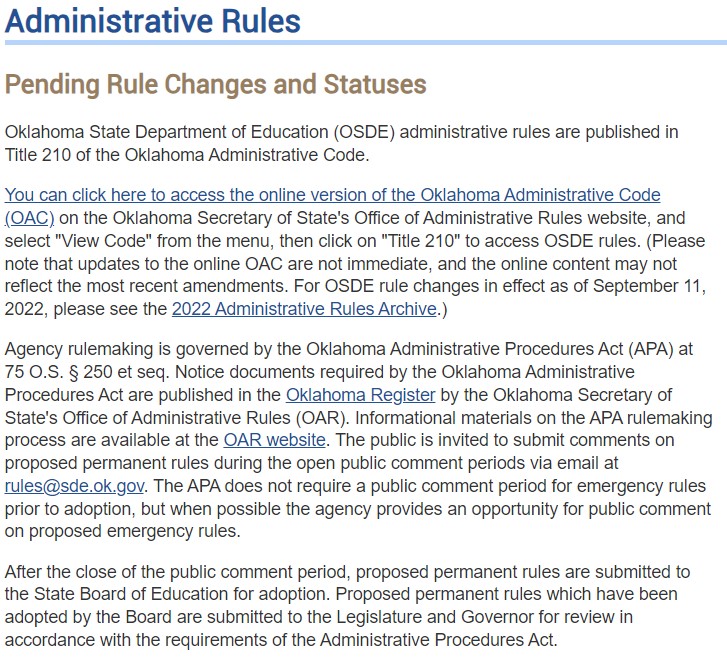
I have simply copied and pasted much of the information from the OSDE website’s Administrative Rules page into this document, so please pay attention to the PUBLIC HEARING DATES in BOLD. Also, if you’d like to provide any commentary on these rules to the state prior to the hearing, you may do so here: rules@sde.ok.gov, or through their address:

Office of Legal Services
State Department of Education
Hodge Education Building
2500 North Lincoln Boulevard
Oklahoma City, Oklahoma 73105-4599


A public hearing will be held at 2:00 p.m. on Thursday, February 15, 2024, in Room 1-20 (State Board Room) at the Oliver Hodge Building, 2500 North Lincoln Boulevard, in Oklahoma City for the following rules.

Subchapter 3.  Standards for Elementary, Middle Level, Secondary, and Career and
Technology Schools
Part 22. Standard XII: Academic Performance
210:35-3-210. Purpose. [NEW]
210:35-3-211. Applicability of the Standard. [NEW]
210:35-3-212. Metrics for Academic Deficiencies. [NEW]

Text of proposed rule
Rule Impact Statement

These appear to be reasonable rules to specifically address schools with low academic proficiencies. The only question here is, upon what tests will the school year district data assessment be predicated? Oklahoma’s state tests, NAEP, or something else. Without knowing from what assessment tool the data to be considered will be culled, how can the rule be enforced? That issue needs to be addressed.


Subchapter 3.  Standards for Elementary, Middle Level, Secondary, and Career and
Technology Schools
Part 9. Standard V: The School Staff
210:35-3-86. Qualifications; personnel records; health and safety. [AMENDED]

Text of proposed rule
Rule Impact Statement

This rule appears to be addressing the issue at Western Hills Elementary School exposed by ROPE Report Regular V1SUT.

These rules, under the NEW heading of Health and Safety, require all administrative assistants in a school building overseeing staff or an education program to have appropriate teaching certification for the job they hold.  Same for staff.  All certifications must be filed in the school of employment throughout the school year.

Additional PROPOSED rules say:

(g) Health and safety regarding certified employees. If a district maintains the active employment or contract of, or renews a contract of, a certified employee currently under investigation for certificate revocation, and that employee’s certificate is revoked at the conclusion of that investigation, the district shall be given a health and safety deficiency.

(h) Health and safety regarding non-certified employees. If a district maintains the active employment or contract, or renews a contract, of a non-certified employee currently under investigation by law enforcement for a felony; and that employee is convicted of a felony, pleads guilty to a felony, or pleads nolo contendere to a felony at the conclusion of that investigation; the district shall be given a health and safety deficiency.  

The problem to me here is the word CURRENT.  It appears to be a grandfather clause.  If there are staff or teachers with a felony record in the past, there is no provision for that.  This is an absolutely REQUIRED rule to protect the safety of children in public schools, but – in my mind – it should include ALL CURRENT employees regardless of whether they are ‘currently’ under investigation.  If a teacher or employee in a public school has a felony record, they should – more than likely – not be around children.

Also, what impact is a “health and safety deficiency” in a school’s accreditation?  If it is a slap on the wrist, why even create the rule?  This question speaks to the rule below.


Subchapter 3.  Standards for Elementary, Middle Level, Secondary, and Career and
Technology Schools
Part 21. Standard XI: Accreditation Status
210:35-3-201. Statement of the standard. [AMENDED]

Text of proposed rule
Rule Impact Statement

I’m unclear how specific are these rules.  Here’s an example of the 3rd accreditation standard:

3. Accredited With Deficiencies: A school site or district fails to meet one or more of the standards but the deficiency does not seriously detract from the quality of the school’s educational program.

Question: We learned above that a “Health and Safety” deficiency will be added if schools continue employment of certified or non-certified personnel under current investigation for a felony or found to have a current felony.  One could argue that employees under investigation of a felony do “not seriously detract from the quality of the school’s educational program”.  Consequently, this needs to be tighter language – or it should at least be made clear that the State School Board retains the right to use recorded deficiencies based on the evidence at hand for each school.  Even that doesn’t work, however, because that kind of language will be construed in whatever way an Administration decides to use it – for good or for evil.

Maybe we should keep the number of ‘deficiencies’ very small and very meaningful and then make the accreditation based on the number of deficiencies alone.


A public hearing will be held at 10:00 a.m. on Friday, February 16, 2024, in Room 1-20 (State Board Room) at the Oliver Hodge Building, 2500 North Lincoln Boulevard, in Oklahoma City for the following rules.

Subchapter 1.  General Provisions
210:25-1-2.  Equal Protection [NEW]

Text of proposed rule
Rule Impact Statement

This is the highly anticipated DEI rule that our Superintendent has been talking about.  I see no reason for this rule.  What the rule states in a-d is effectively wiped out by e-f.  Here’s what I mean:

(e) Nothing in this rule prohibits the Department or any recipient of funds from the Department from applying for a grant or complying with the accreditation requirements by an accrediting or licensing agency, including, but not limited to, submitting to the grantor or accreditation agency a statement that:

And then it goes on to specify services for poor and underserved populations.  Following this, the rule exempts situations:

(f) This rule shall not be construed to apply to the Department or any recipient of funds from the Department with respect to the following:

Included under (f) is this specification:

  1. a policy, practice, procedure, program, class, or activity required for compliance with state or federal laws, rules, or regulations for obtaining or retaining institutional, academic, or discipline-specific accreditation or licensure;

Here’s an example of an accreditation organization for K-12 institutions including Catholic schools;

“Standard 1 Leaders cultivate and sustain a culture that demonstrates respect, fairness, equity, and inclusion, and is free from bias.”

So, if the OSDE is going to exempt accreditation organizations, you’re gonna get DEI.  There are other exemptions in this list.  I’m not going to list them all here, but I’ve pasted in the URL, please look at it yourself and let me know your thoughts, but if these rules DON’T APPLY to any of the items listed under (f) – THEY ARE COMPLETELY MEANINGLESS IN TERMS OF STOPPING DEI.


A public hearing will be held at 2:00 p.m. on Friday, February 16, 2024, in Room 1-20 (State Board Room) at the Oliver Hodge Building, 2500 North Lincoln Boulevard, in Oklahoma City for the following rules.

Subchapter 29. Standards of Performance and Conduct for Teachers
210:20-29-5.  Principle III [AMENDED]

Text of proposed rule
Rule Impact Statement

Here is the text of the rule:

(e) A teacher may be dismissed, refused employment, or not reemployed after a finding that such person has, either in the presence of a minor or in a manner available to a minor online, engaged in sexual acts, acts that appeal to the prurient interest in sex as found by the average person applying contemporary community standards, or acts that excessively promote sexuality in light of the educational value of the material and in light of the youngest age of any student with access to said material.

Again, this seems to be a perfectly reasonable rule that SHOULD stop predators from being around public school kids.  HOWEVER: here are some concerns:

  1. This is similar language to that used by many parents to try and remove sexually inappropriate library books from school libraries – this has only worked in isolated incidences.  Sexually inappropriate library books are still littering the shelves of libraries across the campuses of Oklahoma public k-12 schools.
  2. The left will argue until they turn blue in the face that whatever sexually disgusting nonsense they’ve brought into the classroom “has educational value”.
  3. In addition, they MAY be dismissed etc?  What does THAT mean?  That means that no one could be removed from the classroom.

This rule basically needs to say that ANY STAFF MEMBER OF A PUBLIC SCHOOL WILL be dismissed if – after a law enforcement investigation AND/OR a school inquiry of the individual – has found that they engaged in ANY sex act with a minor student – including inappropriate online communications.

So much of this stuff ends up being useless because the wording doesn’t say what it needs to say (not that mine is perfect either, just saying what’s written is NOT good)


A public hearing will be held at 10:00 a.m. on Tuesday, February 20, 2024, in Room 1-20 (State Board Room) at the Oliver Hodge Building, 2500 North Lincoln Boulevard, in Oklahoma City for the following rules.

Subchapter 3.  Departmental Precepts 
210:1-3-4. Annuities contracts. [REVOKED] 
Subchapter 5.  Due Process 
210:1-5-7. Teacher evaluation, dismissal, and nonreemployment. [REVOKED] 
Subchapter 9.  Interlocal Cooperative Agreements [REVOKED] 
210:1-9-1. Purpose. [REVOKED] 
210:1-9-2. Definitions. [REVOKED] 
210:1-9-3. Enabling provisions/restrictions. [REVOKED] 
210:1-9-4. Conditions applicable to interlocal cooperative agreements. [REVOKED] 

Text of proposed rule
Rule Impact Statement
 

Not sure why all these are being revoked, but nothing much to say about revoked law.  The more revoked laws we can get, the happier I’ll be!


Subchapter 1.  General Provisions
210:1-1-1. Purpose Declaration of Foundational Values [AMENDED]
210:1-1-7. Purpose [NEW]

Text of proposed rule
Rule Impact Statement

Oh my goodness.  So much of this is completely unnecessary.  While I agree with many of the sentiments, this is a Department of Public Education supported by the tax dollars of ALL Oklahomans.  This entire document should be scrapped excepting the BASICS contained in (a), (b) – I suppose, (e), (f), (i) and (j).  Because it’s been said in many of the other rules that the Department of Education of the State of Oklahoma follows that State and Federal Constitutions, there is no reason to take up space banging that ideal on the head.  It simply serves to put liberals into spasms and why should we use tax dollars for that?  We must educate kids properly as asserted in letter (e) and move on.  The more strife this department stirs up with the Left, the harder it becomes to get business done.


Subchapter 5.  Due Process
210:1-5-6.  Suspension and/or revocation of certificates [AMENDED]

Text of proposed rule
Rule Impact Statement

This rule inserts a single paragraph that states the number of days in which the OSDE must be notified if contesting the revocation of a teaching certificate.  Nothing here out of the ordinary.


Subchapter 1. General Provisions
210:10-1-6. Computer assisted pupil accounting [REVOKED] 
210:10-1-10. Accreditation rating [REVOKED] 

Text of proposed rule
Rule Impact Statement

It appears the accreditation rating was revoked in favor of the language submitted under 210:35-3-201. Statement of the standard.


Subchapter 1.  General Provisions
210:10-1-16.  Oklahoma Academic Scholar and other student recognitions [AMENDED]

Text of proposed rule
Rule Impact Statement

This is VERY HELPFUL.  It adds language including the CLT (Classic Learning Test) – a test that is being used by some universities now instead of the SAT and ACT (or at least in conjunction with).  My kids took the CLT as 8th graders and while there was still some iffy gunk on it about global warming for example (according to my kids), there was nothing at all as just downright confusing and indoctrinating as some of the ACT and/or SAT language.

But again, this goes back to my question about Metrics for Academic Standards at the beginning of this document.  What test will the state use to make those determinations?  We can’t have some kids tested with the state test, but then include ACT/SAT or CLT scores.  We need to pick a test and we have long advocated for an independent testing service like CLT or the Iowa Test of Basic Skills as the ACT is HORRID.


Subchapter 2.  Parental Rights
210:10-2-2. Definitions [AMENDED]
210:10-2-3. Requirements [AMENDED]
210:10-2-4. Noncompliance [AMENDED]

Text of proposed rule
Rule Impact Statement

This language has been added to the existing rule:

“Independent Contractor” means an individual, organization, or entity that is engaged by and/or contracted by a school district to provide services or instruction, whether directly or indirectly, to students or within a school district on a temporary or contractual basis and is not an employee of the school district.

Does this person have to be certified?  The school is responsible for them ultimately, but it makes me uncomfortable.  I’m not sure exactly what this might be.  If it’s a health coordinator, what information could they bring in the parent might not be aware of.  It’s a tricky business.  We have always wanted the public schools to have more ability to be flexible, but with all that has been going on in the last 10 years, one could argue that many are already way more flexible with education providers than we want them to.


Subchapter 13.  Student Assessment and School Accountability
210:10-13-2.  Oklahoma School Testing Program (OSTP) scope and general administration [AMENDED]
210:10-13-18. Oklahoma School Accountability System [AMENDED]

Text of proposed rule
Rule Impact Statement

I couldn’t really find anything that was problematic in either of these rules.  Basically it’s allowing for remediation for schools who do not score at least satisfactory on the state criterion-referenced tests (very specific test, thankfully).  The only problem is that the school only gets remediation if there’s funding.

The second rule gives schools a way to challenge their A-F score and makes it clear that F schools must get comprehensive support and show improvement – but then it doesn’t say here what will happen if they don’t.  It’s always the follow-up that kills the best rules/laws/plans…


Subchapter 17.  Federal Programs complaint procedures
210:10-17-1. Complaint Procedures [AMENDED]

Text of proposed rule
Rule Impact Statement

This is HUGE!  So huge in fact, that I wrote a whole blog just about that.  Please read it.


Subchapter 9. Professional Standards: Teacher Education and Certification 
Part 1. General Teaching Certificate Requirements
210:20-9-12. General education requirements of individuals who already hold baccalaureate
degrees [REVOKED]
210:20-9-14. Alternative plan for student teaching requirements [REVOKED]

Subchapter 11. Professional Standards: Accreditation Standards for Approved Teacher Education Programs
210:20-11-1. Evaluation process [REVOKED]
210:20-11-2. Specific Standards for Program Approval [REVOKED]
210:20-11-3. General education and professional education [REVOKED]
210:20-11-4. Specialization standards [REVOKED]
210:20-11-6. NCATE/State joint visits [REVOKED]

Subchapter 15: Residency Program
210:20-15-3. Residency committee [REVOKED]
210:20-15-4. Variations to the residency program regulations [REVOKED]

Subchapter 24. Science and Mathematics Advanced Recruiting Technique (SMART) Program
210:20-24-1. Purpose [REVOKED]
210:20-24-2. Science and Mathematics Advanced Recruiting Technique (SMART) Program [REVOKED]

Subchapter 26. Academic Achievement Award Program
210:20-26-1. Purpose [REVOKED]
210:20-26-2. Selection and payment criteria [REVOKED]
210:20-26-3. Qualified employees [REVOKED]

Text of proposed rule
Rule Impact Statement

Again, not sure why, but happy to revoke any laws, rules or regulations. LOL


Subchapter 23. School Board Members    
210:20-23-3. Requirements for new and incumbent school board member training [AMENDED]
210:20-23-4. Requirements for continuing education; certificates; costs [AMENDED]

Text of proposed rule
Rule Impact Statement

Interesting; the only thing changed about this rule is that the Oklahoma State School Boards Association (OSSBA) has been removed from the wording of the rule under training.  Unfortunately, I’m not sure how this will help anything because state law has not been changed.  We tried to get it changed, but we were not successful.  Several times in the rules I’ve read today it says that if the rule disagrees with state law, state law prevails, so I’m not sure how this will do anything.  If you’d like to see why I say that, please read this article.

SB1447 STOPS MANDATORY SCHOOL BOARD TRAINING and SB1445 REDUCES ALL SCHOOL BOARD TERMS TO TWO YEARS


Subchapter 5.  Budgeting and Business Management
Part 1. Implementation 
210:25-5-4.  Accounting [AMENDED]

Text of proposed rule
Rule Impact Statement

Apparently this removes the ability of a charter school to appeal any changes in the data they’ve sent the OSDE regarding their financial reporting and accounting.  They can show cause that changes are warranted before the data is locked, but the appeal process no longer would exist.


Subchapter 3. Standards for Elementary, Middle Level, Secondary, and Career and Technology Schools 
Part 5. Standard III: Administration and Organization
210:35-3-48. Local board responsibilities/staff relationships [AMENDED]

Text of proposed rule
Rule Impact Statement

Nothing really much to say about this.  These look to be changes required by reorganizing the text after removing this statement:

(3) The local board and its individual members shall refrain from involvement in or interference with the administrative functions of the school.

I’m surprised that was in the rules, but then I was also surprised that THIS was in the rules previously:

(B) Lack of harmony in the teaching staff, board, or community, when such conditions affect the quality and effectiveness of instruction and climate of the school, shall be considered sufficient cause for not accrediting a school. Political and special interest groups or individuals shall not interfere in the operation of the schools.


Subchapter 3.  Standards for Elementary, Middle Level, Secondary, and Career and Technology Schools
Part 17. Standard IX: Financial Support
210:35-3-167.  School District Transparency Act [NEW]

Text of proposed rule
Rule Impact Statement

This is a new section of rules that basically say that if a school’s website does not comply with accountability law they’ll get a deficiency on their accreditation if they don’t fix it within 30 days.


A public hearing will be held at 2:00 p.m. on Tuesday, February 20, 2024, in Room 1-20 (State Board Room) at the Oliver Hodge Building, 2500 North Lincoln Boulevard, in Oklahoma City for the following rules.

Subchapter 3. Standards for Elementary, Middle Level, Secondary, and Career and Technology Schools
Part 25. Standard XIV: Freedom of Religion [NEW]
210:35-3-251. Voluntary prayer [NEW]
210:35-3-252. Minute of silence in public schools [NEW]

Text of proposed rule
Rule Impact Statement

I’ll be honest.  I think this is nonsense.  I think it’s detracting from the REAL issues which are that our kids can’t read or do math proficiently, and while I love Jesus personally, I don’t think adding one minute of quiet time to their school day will affect a single thing about that.  Making  teachers teach properly and schools follow the law will do more for that than a single silent minute.

In fact, I don’t see anything different in this section of ‘new’ law than what has already been happening in public schools for many years.

The only thing different about this ‘new’ rule is that it provides for a complaints process if the school isn’t following the law and:

(c) The State Department of Education shall annually verify that districts have adopted policies that comply with this rule and shall recommend an accreditation deficiency to the State Board of Education for any school district that fails to comply.

Getting an accreditation deficiency for not enforcing a single silent minute is way over the top to me.  Now, if a school is not allowing a coach to say a prayer before a game, or teachers to keep Bibles on their desks – I think there’s a problem, as those are personal issues, not state issues – but those situations aren’t addressed in this rule, most probably because they’ve been adjudicated frequently at numerous levels of the judiciary.
What Do The Oklahoma Tax Commission (OTC) Rules Say About The Oklahoma Parental Choice Tax Credit?

The Oklahoma Parental Choice Tax Credit Act (OPCTCA) – HB1934 – directed the OTC to create/promulgate rules “to implement the provisions of the [Act]” (page 6 and page 8). To that end, the OTC has created rules and now has them open for public comment until 4:30pm on Thursday, October 12th of this year. The rules can be found here. The Oklahoma Statutes created from HB1934 can be found here.

Beginning Monday (10/2), I began to compare the rules to the bill. The rules cannot mirror the bill/statute word for word, because the OTC rules will include verbiage specific to the Act’s implementation. After speaking with Representative Sherrie Conley, I did learn, however, that the rules do have to mirror the legislative intent of the Act – the OTC couldn’t add things via the rules process that weren’t already specified by the Act or the intent of the Legislature in creating the Act. Consequently, I confined my review of the rules to that parameter.

Wednesday, October 4th on our ROPE Report LIVE podcast, I explained my findings – but also, the reasons ROPE cannot abide the Act in the first place. You can find a clip of this video on the front page of the website, but the FULL video can be found on YouTube and Rumble. I think it’s worth a watch for the topics covered.

WHAT CONCERNS DID I HAVE WITH THE RULES?

I really didn’t find any place that did not mirror the legislative intent of the Act. In other words, I couldn’t find any law making through the rules. I did, however, take issue with a couple things:

  • There are two versions of “Taxpayer” in the rules. One called “Taxpayer” that copies the definition from the Act, and another called “Oklahoma Taxpayer” that defines that OTC verbiage for a tax payer. These two should be combined because it is confusing to have two “Taxpayer” definitions.
  • Under the definition of “Eligible Student”, the OTC adds to the Act’s definition by including the words, “and is registered with the Oklahoma Tax Commission”. What? Why would a child under 18 be registered with the Tax Commission? Their taxpayer parents/guardians are registered, not the child. This designation needs to go in my opinion (IMO). I don’t even see how it’s helpful here and it makes me nervous because we ALREADY collect so much data on CHILDREN in Oklahoma.
  • Warrant. There are several problems here IMO.
    • The Act’s definition of “Warrant” says, “means an order for payment directing the State Treasurer to disburse funds to a designated payee. A warrant operates like a paper check.” (page 2 near the bottom of the page)
    • 3D (top of page 5), says this, “Payment of the credit shall be made by the Tax Commission with an individual warrant made payable to the taxpayer and mailed to the private school where the eligible student is enrolled or expected to enroll. The taxpayer shall restrictively endorse the warrant to the private shcool for deposit into the account of the school, unless the tuition and fees for the eligible student have already been paid by the taxpayer.”
      • Why would the OTC send a paper check two places? Why does the school get it and the school ALSO get a warrant mailed to them? The taxpayer has to ‘restrictively’ (meaning they can’t endorse it for personal use – but then, how many people are going to have to be hired to check up on this?) endorse the check they receive to the school. Why doesn’t the parent just take the warrant to the school and not have the OTC issue two warrants?
      • This makes no sense IMO. In fact, the only reason I can see this ‘procedure’ being used is to make it seem as though the payment is coming from the family to the private school – which it is not. According to Forbes Oklahoma Income Tax Calculator, a married couple filing jointly have to make $180,000 before their Oklahoma income tax is $7500 (it’s $7,497) – the ‘reimbursement’ provided by the state for each child to go to private school. Therefore, the state pays the tuition to the private school for every child who applies for the ‘credit’ in a family that earns $180,000 or less.
      • This is extremely important because AG Gentner Drummond “is withdrawing a legal opinion that gained national attention for its support of creating religious charter schools” citing that he believes that state money going to private schools is unconstitutional. Not ony that, but there is a lawsuit to stop the publicly-funded Catholic online charter school already proposed.
      • Incidentally, a KOSU poll from last year found that voters oppose public money going to private schools – which is probably why House and Senate leadership (with cover provided by “school choice” groups Americans For Prosperity (AFP), OCPA and American Federation of Children) – lied to legislators and/or twisted arms to get them to agree that the Act was a ‘tax credit’.

Now, I could go more in depth about the OPCTCA here, but I did that in the video – and will continue to do it as time goes on with the vain hope that the people will see the errors in this idiodic scheme and tell the Legislature to do away with it because, in the long run, this WON’T help parents like the Legislature REDUCING OUR TAXES IN THE FIRST PLACE. The idea that the government overtaxes me and then wants to return money to me – most of it that it stole from OTHER PEOPLE to give me (redistribution of wealth) in the first place – is anathema because the government’s ‘gift’ gives it so much more control over me than if the taxes weren’t taken from me (by force) in the first place.

Believe me, as a Christian, I HATE being the one to stand up and say, “You can’t give my taxes to a private school”, but I’m only doing it because I firmly believe that this whole “school chioce” scheme is to make sure that the public money going to private schools will make private schools public so that NO PARENT HAS A CHOICE as to how their child/children is/are educated.

WHAT SHOULD WE DO NOW?

According to the OTC website, “Written comments will be accepted until 4:30 p.m. on October 12, 2023, at the Oklahoma Tax Commission, Oklahoma City, OK 73194, Attn: Lisa Haws, or by email to parentalchoice@tax.ok.gov.”

So, I’m sending an email to Lisa Haws that says,

Dear Ms. Haws,

Please consider the following comments regarding the Oklahoma Parental Choice Tax Credit Act rules:

There are two versions of “Taxpayer” in the rules. One called “Taxpayer” that copies the definition from the Act, and another called “Oklahoma Taxpayer” that defines that OTC verbiage for a tax payer. These two should be combined because it is confusing to have two “Taxpayer” definitions.

Under the definition of “Eligible Student“, the OTC adds to the Act’s definition by including the words, “and is registered with the Oklahoma Tax Commission”. Why would a child under 18 be registered with the Tax Commission? Their taxpayer parents/guardians are registered, not the child. This designation needs to go in my opinion (IMO). The designation of “taxpayer” already covers who pays taxes.

The Act’s definition of “Warrant” says, “means an order for payment directing the State Treasurer to disburse funds to a designated payee. A warrant operates like a paper check.” (page 2 near the bottom of the page)

  • 3D (top of page 5), says this, “Payment of the credit shall be made by the Tax Commission with an individual warrant made payable to the taxpayer and mailed to the private school where the eligible student is enrolled or expected to enroll. The taxpayer shall restrictively endorse the warrant to the private shcool for deposit into the account of the school, unless the tuition and fees for the eligible student have already been paid by the taxpayer.”
  • Why would the OTC send a paper check two places? Why does the school get it and the school ALSO get a warrant mailed to them? The taxpayer has to ‘restrictively’ (meaning they can’t endorse it for personal use – but then, how many people are going to have to be hired to check up on this?) endorse the check they receive to the school. Why doesn’t the parent just take the warrant to the school and not have the OTC issue two warrants?
  • This makes no sense IMO. In fact, the only reason I can see this ‘procedure’ being used is to make it seem as though the payment is coming from the family to the private school – which it is not. According to Forbes Oklahoma Income Tax Calculator, a married couple filing jointly have to make $180,000 before their Oklahoma income tax is $7500 (it’s $7,497) – the ‘reimbursement’ provided by the state for each child to go to private school. Therefore, the state pays the tuition to the private school for every child who applies for the ‘credit’ in a family that earns $180,000 or less.

Thank you so much for your consideration of my comments.

Sincerely,

Jenni White

Education Coordinator

Reclaim Oklahoma Parent Empowerment (ROPE)

jenni@rope2.org

CLOSING

Please feel free to make any changes to my letter – also, feel free to examine all the information for yourself to see if I missed something or if you don’t particularly agree with my criticisms of the Rules.

Please watch the ROPE Report LIVE video for more information on the OPCTCA.

Blog at WordPress.com.

Up ↑