
Search

ROPE Report

Tag

data

Oklahoma’s Data Center Disaster

“You can’t drink data”. The quote from Tulsa Rep. Amanda Clinton encapsulates what many, probably most, Oklahomans feel as they struggle to comprehend the full-scale invasion of data center growth currently underway in their state. “Invasion” is an accurate term to describe what is happening, as large corporations descend on Oklahoma to exploit our relatively cheap electricity, water, and gullible city councils who are cajoled into entering into murky agreements with faceless megacorps, and in the process selling out their community and surrounding population for…what, exactly? The data center invasion is something that nobody asked for, much less the thousands of residents who feel they are being completely ignored by their elected leaders when they rubber stamp these water-and-electricity devouring atrocities. What benefit do they gain that will offset the inevitable rise in their monthly bills and blight the land near their homes? We can smell a scam coming a mile away, and we can’t help but feel powerless when we’re muscled out of the deal-making entirely. We understand that we will be the ones footing the bill for these facilities, and more than likely the last in line to reap any benefits.

Gov. Kevin Stitt is fully onboard with the data center incursion, touting “economic growth” as he always does when opening another door for large corporations to exploit our state’s low-cost resources. In his 2025 State of the State address, Stitt stated that he wanted “Oklahoma to be the high-tech capital of the world”. I think we should take his word for it. That may sound great to him, but to the rest of us it rings ominous.

Each day, a typical hyperscale, AI data center will consume roughly as much electricity as 100,000 homes, and around 5 million gallons of water. The larger data centers are expected to use 20 times as much electricity. According to one study, data centers in Texas consumed 49 billion gallons of water in 2025, and are expected to use as much as 399 billion gallons each year by 2030. In 2024, US data centers accounted for 4% of all the energy usage in the entire nation, or 183 TWh (terawatt hours). By 2030, that number is expected to jump to 426 TWh. Is this dramatic rate of increase in energy consumption really sustainable, and what does it mean for residents?

Construction of large data centers have proceeded at a break-neck pace in our state, and few residents have had the time to even understand what is happening to their communities. The lack of knowledge has been an advantage to the metastasizing industry so far, because when Oklahomans do realize what’s happening, they almost universally oppose it. What’s in it for them? How does “data” improve their lives in the slightest? The sheer cost of electricity, water, and land that these data centers consume is staggering, and many wonder how our electric grid and water reservoirs could ever supply the needed resources without averting a total disaster.

According to www.datacentermap.com, 37 data centers currently operate in Oklahoma. Many of these are small facilities that our grid can handle. But the new data centers are “hyperscale”, dedicated to processing unheard-of amounts of information for AI purposes, and will use millions of gallons of water, and more electricity per day than most Oklahoma cities. 

Four hyperscale data centers currently in the planning phase or already under construction are located in Claremore, Coweta, another on the outskirts of Owasso, and another just outside of Sand Springs. Dubbed ‘Project Mustang’, Project Atlas’, ‘Project Clydesdale’, and ‘Project Spring’, all four complexes will be located within 20 miles of each other, and are projected to use vast amounts of water and electricity each day.

Project Mustang is planned 300-acre data center, estimated to use 1.5 million gallons of water per day. Project Atlas, a $1 billion, 200-acre data center, will use an estimated 400 MW of electricity per day. Project Anthem will be located on 304 acres and is projected to use 2 million gallons of water per day. Project Clydesdale will span roughly 500 acres, and use an estimated 7 million gallons per day. The developer, Beale Infrastructure, has not publicly disclosed estimated electricity demand for the complex.

Google’s Project Spring is set to be a massive, 827-acre hyperscale data center located just outside of Sand Springs. Despite overwhelming public opposition, the Sand Springs city council approved rezoning for facility in a 6-1 vote. Beau Wilson, to his credit, was the lone dissenting vote. Local grassroots group Sand Springs Alliance filed a lawsuit, alleging violations of annexation policies. Residents voiced they concerns about a doubling of their utility bills, concerns that fell on deaf ears.

One point of great contention is the fact that many city councils and counties sign non-disclosure agreements with data center developers long before the public learns anything at all, and before the backroom deals begin to take shape. Details of a deal for a planned data center in Stillwater was kept under wraps for months before the public was made aware that the new facility would be a Google-owned data center. Almost every planned data center has been wrapped in vague wording, almost up to the moment that the deal is inked. 

The real questions that are never answered clearly is: is this sustainable? Do we have enough water and electricity long-term to allow these enormous facilities to operate in our state without devastating consequences for Oklahoma residents? What the residents who understand the issue want to know is simply this: what are our leaders getting us into?

The biggest AI companies in the world are bypassing our Legislature entirely, going straight to small city councils with their slick presentations about how their gargantuan facility will somehow benefit their community. Councilmembers see dollar signs, and not much else, apparently. Is it really appropriate for city councils to hold such consequential decision-making power over these ventures when the outcome could very well lead to a doubling or tripling of utility bills, or at worse, ecological disaster? And when those councils appear to completely disregard the voices of their residents, it is appropriate to ask whether they should be stripped of this power entirely.

Thankfully, several Oklahoma legislators have taken notice of this ominous development, and have offered legislation to pump the brakes on the data center invasion. Tulsa Rep. Amanda Clinton has filed a host of bills aimed at creating transparency. HB 3392 would require the Oklahoma Corporation Commission to conduct studies of the long-term impact of these large load data centers on the communities they operate in. The bill recently passed out of Committee to a unanimous vote. HB 3394 would require the Commission to keep a detailed database of all data centers in the state. HB 3397 would “quantify the electricity needs of large-load electric users, such as data centers and other industrial operations, measure their impacts and find ways to ensure these large-load users pay their fair share”, according to Clinton.

State Senator Ken Sacchieri filed SB 1488, which would impose a moratorium on data center construction until November 1st, 2029.

Rep. Brad Boles filed HB 2992, the Data Center Consumer Ratepayer Protection Act of 2026, requiring data centers to pay for their own infrastructure costs, rather than offloading it on current residents through rate hikes. 

Rep. Mickey Dollins filed HB 3917, which would force large load electricity consumers to pay a surcharge during peak electricity demands. The bill passed unanimously out of the House Appropriations and Budget Natural Resources Subcommittee and now heads to the House Appropriations and Budget Committee before being slated for a vote.

The big lie surrounding this issue is that data centers are inevitable, and we should just accept it, and let them be built. But we know that this isn’t inevitable, and we do have the power to direct the destiny of our communities if we organize and oppose them. A planned data center in New Brunswick, New Jersey, was just defeated after intense pushback from local residents. Another data center project in Monterey Park, California, was scrapped after a sustained and organized opposition campaign was waged by local residents. Data Center Watch reports that $64 billion of data center projects have been successfully opposed across the nation. 

It is possible, if only there is a will.

So You Think You Have A Non-REAL ID-Compliant Driver’s License, Huh?

Today, Oklahoma Senator Kendal Sacchieri made an extremely important Facebook post.

I know. How unbelievable. Our Oklahoma government lied to us.

Seriously, in the world of “unfunny” this is it. Please contact Governor Stitt’s office and ask him to prevent Service Oklahoma from uploading ALL of Oklahoma’s driver’s license data to the national REAL ID database.

In America, everyone should have a choice as to how their data is shared. We should have the absolute RIGHT to say we don’t want an ID that could easily become a digital ID.

ROPE Report has followed REAL ID and it’s privacy concern for years. If you’d like more information, please see the following links for more on the topic:

Here is a social media post you can download and use to help spread the word about this issue. We only have until FEBRUARY.

We simply can’t put this off! Once the data is UPLOADED, we’re toast. We can’t get it back.

A graphic urging action to protect privacy regarding Oklahoma driver's license data, featuring bold text and a phone number for Governor Stitt's office.

Legislative Retaliation Against Ryan Walters For Neutrality On Jeb Bush’s Plan To Collect Data On Your Kids?

Today, at nearly 3pm, Representative Dell Kerbs and Senate Pro-Temp Paxton took a bill already on the floor calendar in the House for today under Title 20 – SB646 (An Act relating to judicial and federal official security and privacy😉 – gutted it and amended the entire bill to amend the education statutes under Title 70 to An Act relating to education which relates to State Board of Education membership;).

The bill now creates a board of 10 members from 7. One will be the Secretary of Education who will be the chair plus, five members shall be appointed by the Governor by and with the advice and consent of the Senate, two members shall be appointed by the Speaker of the House of Representatives, and two members shall be appointed by the Pro Tempore of the Oklahoma State Senate.]. It also changes the way items may be added to the agenda. If three or more Board members wish to add an item to the agenda, they may – it does not have to be approved by the State Superintendent who is the chair of the board. (it was not heard 5.8)

This is a problem because if the governor has five appointments to the Board and the governor is interested in making changes to the Oklahoma State Department of Education, policy or procedure, he could conceivably ask Board members to take that issue to the full board by asking for an item to be added to the agenda. As we’ve seen, Governor Stitt – who has about a year left on his term – has made radical changes to the board in just this year alone because he didn’t like collecting data on illegal children (even though we already do that) so that conception isn’t really out of the question.

Why would this bill be changed just today?

Possibly because our friend Mary with V1SUT Vantage published a story on SB224 – the government data sharing bill we’ve been pushing back on for weeks – OEQA Will Hold Oklahomans’ Lifelong Data Under SB 224: Why You Should Be Concerned. I urge you to read it. It’s eye opening about so many things!

Midway down the page, Mary reports:

During committee hearings, Caldwell claimed the SDE under State Superintendent Ryan Walters’ (R) supports SB 224. We reached out to Supt Walters who denied any public support and asserted his agency’s neutrality concerning the bill.

“I have never publicly supported the bill. Not sure where that would be coming from,” said State Supt Ryan Walters of SB224. “SDE has always been neutral on the bill. We are required to provide data to legislators when they request it.”

OEQA’s claims of having “worked collaboratively with SDE, Regents, OESC, and CareerTech to advance the development of a Statewide Longitudinal Data System (SLDS)” are also exaggerated.

When asked if he had personally attended any meetings with any OEQA personnel concerning SB 224 or a centralized database over the last year, Walters replied, “No, I was not personally involved in that.”

Until today, the Superintendent of Public Instruction had not made a comment – publicly – about whether or not he supported the bill.

Now, put the two things together.

WHAT IS JEB BUSH’S INVOLVEMENT WITH OKLAHOMA AND SB224?

Let me be clear – I do not definitively know. What I’m about to report is pure speculation, but speculation that deserves real consideration.

We know that Jeb Bush has a long history of involvement with Oklahoma education policy. He was heavily involved in pushing Common Core here in our legislature. We know that Superintendent Barresi and others got a free trip to Bush’s – then Foundation for Educational Excellence, now ExcelInEd – during her tenure. We also know that he has come to Oklahoma – at least once – to push school “choice” in 2021.

Here’s a bit of an article summing up Bush’s influence here in Oklahoma, but let’s also not forget, that – not only does Jeb have his own educational policy-pushing organization – his father was the guy who STARTED THE IDEA OF TAKING DATA ON KIDS FOR ‘EDUCATIONAL’ PURPOSES.

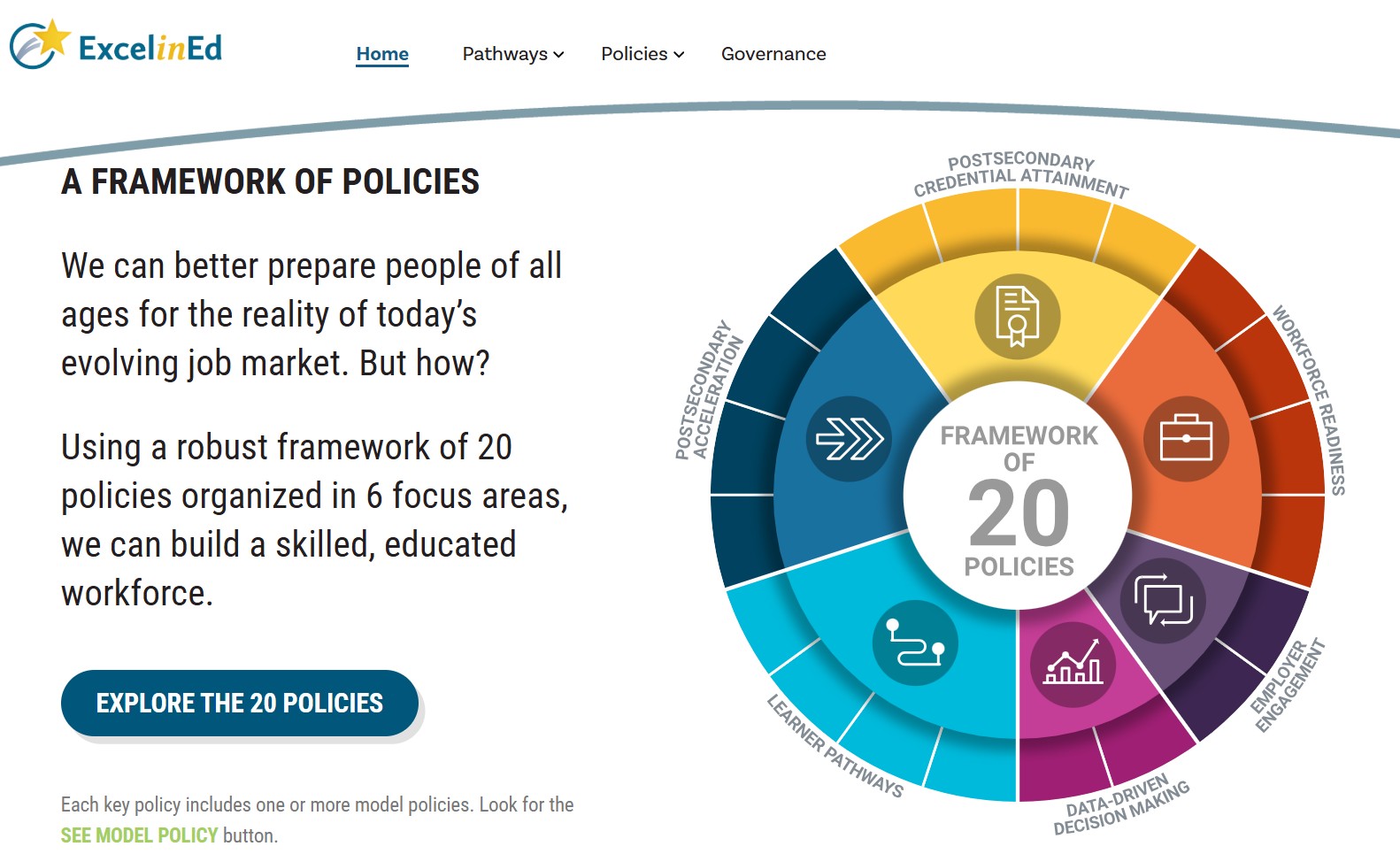
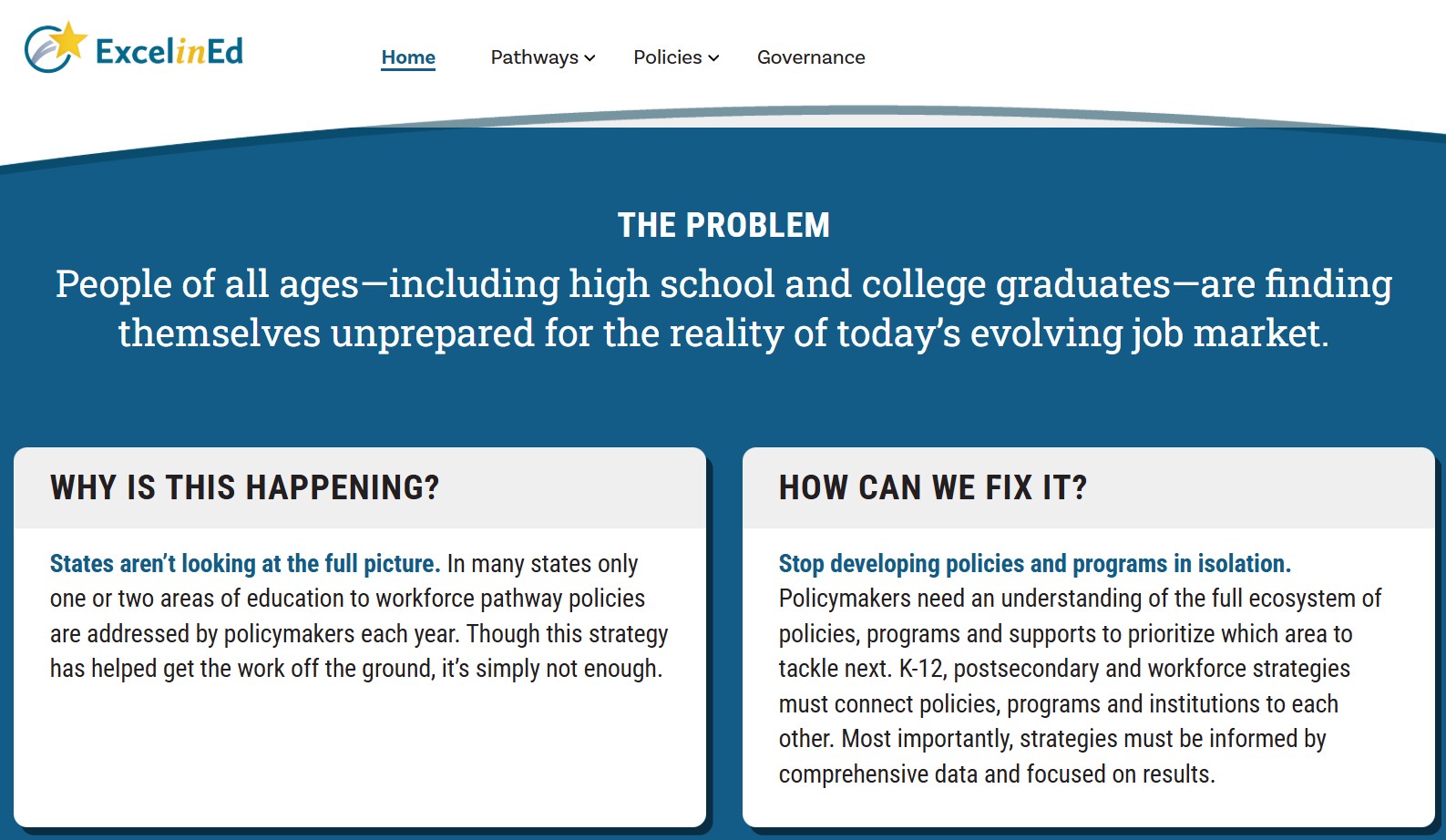
The many of us who are trying to stop this bill from passing the legislature this year have heard that ‘someone big from outside the state’ is interested in seeing this bill pass. A few names ran across my brain, but Jeb was at the top. On his ExcelInEd website is something called, “Pathways Matter: How The Right Combination of State Policies Builds a Skilled, Educated Workforce“.

So, this initiative by the non-profit ExcelInEd organization run by Jeb Bush, has a MODEL POLICY that states can use to create an initiative in their state to allow kids to be tracked from birth through workforce to make sure they can get a job.

No, scratch that – make sure our businesses have the workers they’ll need to keep their business open, pay taxes and wine and dine legislators to create policy to help them do business. Listen below.

Notice “How Can We Fix It?”. Gosh. That sounds a whole lot like what bill SB224 is attempting to do, doesn’t it?

Here’s the Power Point program all about Oklahoma where – shockingly so much legislation stacks up to mesh with the intent of Bush’s initiative. Look specifically at the last three pages on data collection. So uncanny!

BOTTOM LINE

Do we know that Jeb Bush is influencing Oklahoma education? No. Do we have enough evidence to believe so? YES.

I fought hard to have Oklahoma repeal the Common Core State Standards from law. I never really thought anything had been accomplished afterward, because teachers/schools went right back to using them and there was nothing to make them stop. After reading the contents of a search I asked Grok to run for me, I’m having second thoughts.

Groks analysis indicated that the 2014 Common Core data repeal and NCLB waiver revocation “created policy turbulence, potentially disrupting COWIBs alignment with Oklahoma Works’ educational goals. Political resistance to federal mandates may have complicated WIOA implementation”.

So, call your Senator and Representative RIGHT NOW and tell them you

  1. don’t want Oklahoma to be like every other state,
  2. you don’t want your kids to be trained to fill a job, you want your kids to be educated so they can make up their own mind about what they want to be when they grow up
  3. and Oklahoma doesn’t need an out-of-state globalist, policy-monkey ,wrenching up Oklahoma’s education policy.

We MUST defeat SB224 and keep the Oklahoma State Department of Education data from being hooked up with Workforce data (collected at the Department of Commerce) at the Oklahoma Educational Quality and Accountability board, helping to create the Planned Economy our overlords – like Bush! – want!

Dollars For Data – Grok: In Order To Continue Receiving Federal Dollars, Oklahoma Needs To Gather Data On Babies Through 20-Year-Olds

I’m not a huge fan of AI, but I’ve been a researcher since 1990 and this tool has helped me find data more quickly and completely than I ever have before.

Today, because I’m still trying find a way to explain that SB224 is NOT FOR Oklahoma’s kids, but to satisfy a broader need to plan the economy on a national level, I asked Grok “does the federal government require states to codify the need to connect education and workforce data”? I got a long, in-depth, very interesting answer. So, is this to help Oklahoma’s kids, or get more federal grants? I’ll let you be the judge.

Grok’s answer:

The federal government does not explicitly require states to codify into state law a specific mandate to connect education and workforce data as a condition for receiving federal grants. However, federal policies, grant programs, and regulations often incentivize or require states to establish systems for linking education and workforce data to meet reporting, accountability, or performance goals. These requirements can typically be met through administrative actions, interagency agreements, or data systems like Oklahoma’s Data Sharing Hub (DASH), without necessarily codifying the connection into state statutes. Below is a detailed analysis based on available information:

Federal Context for Education and Workforce Data Integration

  1. Relevant Federal Laws and Programs:
    • Workforce Innovation and Opportunity Act (WIOA, 2014):
      • WIOA is the primary federal law governing workforce development programs. It requires states to develop integrated data systems to track participant outcomes across workforce, education, and training programs (e.g., Title I for adults, Title II for adult education, Title IV for vocational rehabilitation).
      • States must report performance metrics, such as employment rates, earnings, and credential attainment, which often require linking education and workforce data. For example, WIOA’s performance accountability provisions (29 U.S.C. § 3141) mandate data collection and reporting, which may involve connecting education records (e.g., high school or college completion) with employment outcomes.
      • While WIOA encourages states to establish data-sharing agreements or systems, it does not explicitly require codification into state law. States can comply through administrative frameworks, such as memoranda of understanding (MOUs) between agencies or platforms like DASH.
    • Every Student Succeeds Act (ESSA, 2015):
      • ESSA requires states to report on student outcomes, including college and career readiness indicators, which may involve linking education data to workforce outcomes (e.g., post-secondary enrollment or employment).
      • States receiving ESSA funds must submit state plans and comply with accountability requirements, but these do not mandate codifying data linkages. Instead, states often use existing data systems or establish new ones to meet federal reporting needs.
    • Perkins V (Carl D. Perkins Career and Technical Education Act, 2018):
      • Perkins V funds career and technical education (CTE) programs and emphasizes aligning education with workforce needs. It requires states to report on CTE student outcomes, such as employment or post-secondary success, which often necessitates data integration.
      • Like WIOA, Perkins V encourages data system interoperability but does not require states to pass laws mandating data connections. States can use administrative tools or data-sharing platforms to comply.
    • Higher Education Act (HEA):
      • The HEA governs federal student aid and includes reporting requirements for post-secondary institutions, such as graduation rates and employment outcomes. Some grant programs under HEA may encourage data linkages to track student success, but codification is not a requirement.
  2. Federal Grant Conditions:
    • Federal grants, particularly those tied to WIOA, ESSA, or Perkins V, often include conditions related to data collection and reporting. For instance, WIOA grants require states to submit annual performance reports that integrate education and workforce data (e.g., 20 CFR § 677.155).
      • These conditions typically focus on outcomes rather than prescribing how states achieve them. States can meet requirements through data-sharing agreements, longitudinal data systems (SLDS), or platforms like DASH, without codifying policies into law.
      • Some competitive grants, such as the U.S. Department of Education’s State Longitudinal Data Systems (SLDS) Grant Program, explicitly fund the development of integrated data systems. While these grants require states to build capacity for data linkages, they do not mandate legislative codification. Instead, they emphasize technical and administrative solutions.
    • The Department of Labor’s Workforce Data Quality Initiative (WDQI) provides grants to enhance state data systems for tracking workforce and education outcomes. WDQI encourages states to link data across agencies but allows flexibility in implementation, typically through administrative means rather than statutory mandates.
  3. Family Educational Rights and Privacy Act (FERPA):
    • FERPA (20 U.S.C. § 1232g) governs the privacy of education records and impacts how states link education and workforce data. States must ensure compliance with FERPA when sharing student data, which may require data-sharing agreements or secure systems like DASH.
    • While FERPA imposes strict requirements on data handling, it does not mandate codification of data-linking policies. States can address FERPA through administrative protocols or interagency agreements.
  4. State Longitudinal Data Systems (SLDS):
    • The federal government has supported SLDS development since 2005 through the Institute of Education Sciences (IES). SLDS grants aim to create systems that link early childhood, K-12, post-secondary, and workforce data to inform policy and improve outcomes.
    • While SLDS grants require states to build and maintain these systems, the focus is on technical infrastructure and data governance, not on passing state laws. States can establish SLDS through executive action, agency collaboration, or platforms like DASH.

Oklahoma’s Context and DASH

  • Oklahoma’s Data Sharing Hub (DASH):
    • As noted in your previous question, DASH is Oklahoma’s platform for secure interagency data sharing, managed by the Office of Management and Enterprise Services (OMES). It supports data integration for various state functions, including those tied to federal grants.
    • DASH likely facilitates compliance with federal reporting requirements under WIOA, ESSA, or Perkins V by enabling secure data linkages between education agencies (e.g., Oklahoma State Department of Education) and workforce agencies (e.g., Oklahoma Employment Security Commission).
    • There is no evidence that DASH’s operation or Oklahoma’s participation in federal grants requires codifying a mandate to connect education and workforce data. Instead, DASH serves as an administrative tool to meet federal expectations for data integration and reporting.
  • Oklahoma’s Approach:
    • Oklahoma has pursued data integration through initiatives like the Statewide Longitudinal Data System (SLDS), supported by federal grants. These efforts focus on technical and administrative solutions, such as data governance frameworks and interagency MOUs, rather than legislative mandates.
    • State laws, such as those governing data privacy or agency operations, may indirectly support data sharing (e.g., compliance with FERPA or state data security standards), but there is no specific Oklahoma statute mandating education-workforce data linkages as a condition of federal funding.

Does Codification Ever Occur?

  • Federal Incentives, Not Mandates:
    • While the federal government does not require codification, it may incentivize states to formalize data-sharing frameworks to ensure sustainability or compliance. For example, SLDS or WDQI grants may encourage states to establish governance structures, which some states codify into law for clarity or permanence.
    • States like Tennessee and Kentucky have passed laws to formalize SLDS or data-sharing governance (e.g., Tennessee’s P-20 Council), but these are state-driven initiatives, not federal mandates. Oklahoma has not taken this approach, relying instead on administrative tools like DASH.
  • State Discretion:
    • States may choose to codify data-sharing policies to address privacy concerns, ensure long-term funding, or align with federal grant requirements. For instance, a state might pass a law to clarify agency roles in data sharing or to comply with FERPA. However, this is not a federal requirement but a state policy choice.

Limitations and Variability

  • Grant-Specific Requirements: Some federal grants may include conditions that indirectly require data linkages, such as reporting on employment outcomes for CTE students under Perkins V. These conditions focus on outcomes, not codification, but states may codify policies to streamline compliance.
  • Privacy and Security: Federal laws like FERPA and the Privacy Act (5 U.S.C. § 552a) impose strict requirements on data sharing, which may necessitate state-level policies or agreements. However, these can be administrative rather than legislative.
  • No Universal Mandate: There is no blanket federal requirement for states to codify education-workforce data linkages. The emphasis is on functional data systems and compliance with reporting requirements, which states can achieve through various means.

Conclusion

The federal government does not require states to codify into state law a mandate to connect education and workforce data to receive federal grants. Instead, laws like WIOA, ESSA, and Perkins V, along with grant programs like SLDS and WDQI, encourage or require states to integrate data for reporting and accountability purposes. States can meet these requirements through administrative actions, data-sharing agreements, or platforms like Oklahoma’s DASH, without passing new laws. While some states voluntarily codify data-sharing frameworks, this is not a federal mandate but a state choice. In Oklahoma, DASH likely supports compliance with federal data requirements, but there is no evidence of a codified mandate tied to federal funding. If you have a specific grant or program in mind, I can analyze its requirements further.

OK Senator Kendal Sacchieri Proposes SR18 – Affirming Oklahoma’s Right To Opt Out Of The Federal REAL ID System – SR18

Wednesday, April 30th, during the regular ROPE Report podcast, Jenni and Michael discussed Senator Kendal Sacchieri’s Senate Resolution 18.

Here is the Introduction: A Resolution affirming Oklahoma’s right to opt out of the federal REAL ID system; supporting the state’s obligation to offer residents a meaningful choice between REAL ID-compliant and -noncompliant identification; and opposing unwarranted collection and sharing of personal data.

As a person who has been VERY CONCERNED about the religious aspects of the REAL ID, I’ve also been angered that Oklahoma did away with the protections offered citizens in legislation from 2007 that would have delayed REAL ID implementation for Oklahomans. Unfortunately, our legislature sold us out to the feds in 2017 with a bill former Congresswoman, Governor Mary Fallin (R?), was only too happy to sign so that Oklahomans ‘could’ fly.

Though we have a law currently on the books (47 OK Stat § 6-110.3) that says essentially the same thing as the resolution put forth by Sacchieri, it is my hope that this is the first step in moving the legislature toward a RELIGIOUS EXEMPTION FOR ANY BIOMETRIC DATA OF ANY KIND.

NO American citizen should have to provide biometric ID to the government for ANYTHING, let alone travel. If you don’t know anything about REAL ID, please tune in to our podcast, Friday, May 16th (at 9am) as we welcome REAL ID expert, Twila Brase from the Citizens Council for Health Freedom. In the meantime, CALL YOUR SENATOR AND ASK THEM TO HEAR THIS RESOLUTION!

SB224 And SB141 Are Unnecessary; The WAVE (SLDS) Captures Student Data On Education And The Workforce – AND WAY MORE – Already

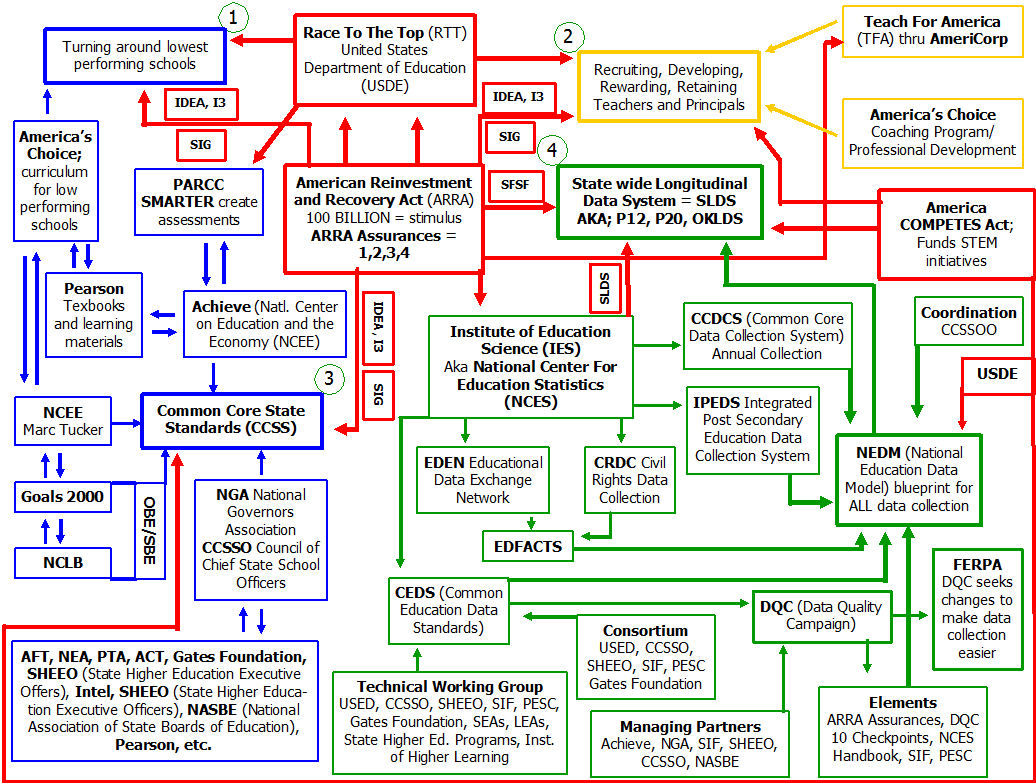
For those of you who have followed ROPE since the days (2008-2014) when we were called Restore Oklahoma Public Education (ROPE), you’ll recognize the flowchart, that Lynn Habluetzel (former ROPE Board member) and I created together to show how Obama’s Race To The Top grant program was fueling ways in which the government would track YOUR CHILDREN all under the guise of ‘helping’ them. What did Reagan say, “The nine most terrifying words in the English language are ‘I’m from the government and I’m here to help”?

This session, our ‘helpful’ legislature – particularly Representative Chad Caldwell and Senator Ally Seifried – have decided to add to the State Longitudinal Database System (SLDS) so loved by former REPUBLICAN State Superintendent Janet Baressi. Here is the text of the bill. In addition, Seifried and Dick Lowe (SB141) are directing the OSDE to issue RFP’s for a “statewide student information system”. I guess, we’re the only ones that remember the information below apparently.

I was going to publish a list of reasons why this bill shouldn’t even be considered, but I’ll just say this – WE ALREADY HAVE A STATE LONGITUDINAL DATABASE (aka Statewide Student Information System) and according to everything we learned years ago, it was set up to do all the same stuff outlined in the bill by the person responsible for setting the whole scheme up by the Obama administration in the first place, John Kraman – now the Chief Information Officer for the Mississippi State Department of Education.

Here’s what we know.

We know that the state got a Race To The Top grant for $4,997,082 to construct the SLDS in 2012.

We know that Oklahoma created a P20 Council via law to oversee the project which was supposed to have sunset (gone away) in 2015.

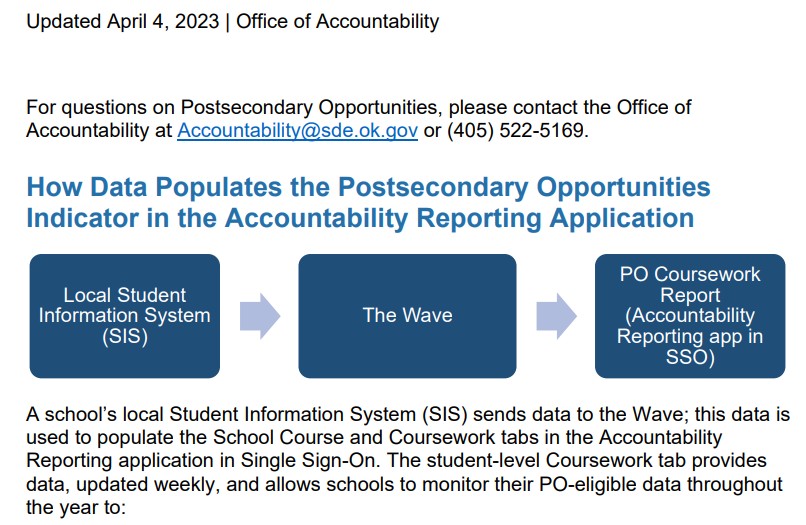
We know that The Wave is “OSDE’s primary system for collecting data from schools to perform necessary duties and functions” (Oklahoma’s SLDS). Incidentally, the link that is supposed to tell parents exactly what data is collected via The Wave is not working, which violates section C.1 of the law we helped implement in 2013 (2013 Student Data Accessibility, Transparency, and Accountability Act, 70 O.S. § 3-168) until we realized it didn’t say what we expected it to say – story on that here.

We know that the OSDE has a data governance board.

We know that the OSDE has a Data Privacy Program Plan.

Here is a list of The Wave Code Tables to give you an idea of the kind of data our SLDS is storing.

We know that the OSDE is continually updating the Schools Interoperative Framework (SIF) and has new updates ready this year (2025).

And finally, we know that The Wave allows data researchers/teachers/etc., to pull information on students regarding their post-secondary and (‘workforce’) ‘opportunities’.

In closing:

STOP COLLECTING DATA ON KIDS! THERE IS NO NEED FOR THIS UNLESS THE IDEA IS FOR THE GOVERNMENT TO EDUCATE STUDENTS FOR JOBS LIKE THE EU DOES.

And if there’s still any concern that Oklahoma needs more excuses to collect data on kids, below is the presentation I made to the House Admin rules, Government Oversight and Repealer Committee during October of 2013. It’s a MUST WATCH because it contains the flowcharts I prepared that show how the state – and the feds – collect student data.

Here is the paper that contains all the LIVE links to all the research Lynn, Julia Seay (former ROPE Board member) and I did on the SLDS during the time Oklahoma was implementing that monster.

PLEASE, PLEASE, PLEASE share this information with every parent and grandparent you can and IMMEDIATELY contact your Representative and Senator and tell them that they MUST vote NO for SB224 and SB141 and any other data collection bill in the state legislature.

Swope’s Swoop: An Oklahoma Legislator’s Attempt to Make Homeschoolers into Children of the State

Guest Post By Ann Kerr


swoo͞p: v. 1. To make a rush or an attack with a sudden sweeping movement. 2. To seize or snatch in a sudden sweeping movement.


So long homeschooling parents! We don’t need you anymore. You do not know what is best for your kids, and we are going to tell you what is best. Until further notice, all of your children’s future will rest with the State. If you still want to try to direct their education and act as their parent – EVEN though the State knows best – then you can put in a request. We promise not to send it to File 13. We will look it over, look you over, look all of your children’s various teachers over and then we might look a little more deeply. We really want to get to know you before we would allow you to teach your own kids.

We want a file on you.

If this seems a little onerous…well…you know, you don’t really have to go through this. We have some other options already in place, and we will even pay you to use them. We have those old-fashioned brick and mortar learning centers (or the more recent version – [sheet metal and bolts), we have those more modern public (charter) schools that are not bound by local school boards, which many people believe are actually for homeschoolers, (eh, eh) and now we even have private schools under our wings. Our money is flooding their pockets – and you know what that means. (Or, at least you should.)

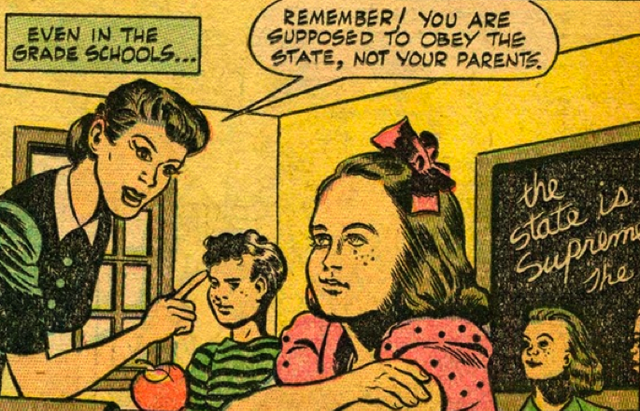
We want total control of your children. If you won’t give it to us, we will take it.

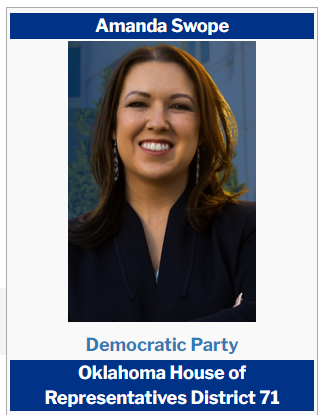
This is the power that is hoisted by House Bill 4130, filed by Representative Amanda Swope, Democrat, District 71.

Here are some of the tidbits in the Swoop.

  • Rep. Swope is classifying all homeschooling children as deprived or potentially deprived children, simply by injecting her proposal into a bill filed to amend the law regarding “Children and the Juvenile Code.” More specifically, right in the middle of a lot of definitions regarding child neglect and abuse, Rep. Swope plops in some terms to define pod schools and microschool, which completely ignore Oklahoma Constitutional law and contradict the definition of students learning “by other means.”
  • To make this clear, Rep. Swope takes Oklahoma’s Constitutional Right to educate “by other means,” changes it name and puts it in a child abuse and neglect law. This is a sudden and significant departure from the rule of law and from parental rights in Oklahoma.
  • Even more staggering is Rep. Swope’s next move to re-write the Juvenile Code section regarding records for deprived children. In an added section, Rep. Swope, evidently hopes to pass the following and make it the law of the land in Oklahoma:
    • Require parents to submit a letter of intent to the Department of Human Services in Oklahoma in order to homeschool, pod school or micro school per the new, added definitions.
    • Require parents to give not only names, but also Social Security numbers, children’s names, addresses, everyone else who lives in the home, everyone who might teach the children, and a statement regarding homeschooling.
    • Require parents to submit subsequent letters of intent with any change of schooling.
    • Require parents to submit to criminal background checks.
    • Require others in the home to submit to criminal background checks.
    • Require anyone else associated with the child’s schooling to submit to background checks and, guess where all of the information from this gross invasion of your privacy and your family goes? Rep. Swope has it covered. It will not go missing.

Rep. Swope proposes that the government be required to compile a Database of individuals, facilities and organizations that perform or assist with homeschooling, pod schooling, or microschooling.

That’s you, homeschool parents.

Rep. Swope wants all of the information on you. Meanwhile, it will just sit in an encased, secure database preserved for posterity with your beautiful signature on it, or will it? If you learned your history, you will remember that more than one country has decided that its Uncle Sam or variation thereof is better enabled to raise children than the parents.

And, what has happened, as a result?

Children were cut off from families. Children were cut off from religious training. Parents were denied any rights to raise their children according to their values.

These results are hallmarks of a communist society.

As Karl Marx and Engel’s said in the Communist Manifesto –

Communists: “Abolition of the family! …
Citizens: But, …[communists] destroy the most hallowed of relations, when we replace home education by social [education].
Communists: “The…clap-trap about the family and education, about the hallowed co-relation of parents and child, … [is] all…disgusting…”

And, so is Rep. Swope’s swoop.

Blog at WordPress.com.

Up ↑