Search

ROPE Report

Tag

CO2 pipeline

Oklahoma must stop carbon capture before its too late

Opponents of the green energy onslaught in Oklahoma have celebrated several high profile wins over the past few months. In December, the Department of Energy cancelled the Delta Plains Electric Corridor, a 645-mile long (and 18 miles wide) transmission line project that would’ve spanned the entire northern part of the state, after relentless pressure from landowners, activists, and lawmakers.

A proposed wind farm in McIntosh County was scrapped earlier this month, after intense public outcry. The Canadian company TransAlta planned a massive wind farm of 100 turbines, but scrapped the project after encountering intense pressure from activists who are becoming increasingly organized and vocal about the encroachment of green energy into our state.

In December, a judge ruled that a large wind farm of 84 turbines in Osage County must be dismantled within one year, after ruling that Enel, a renewable company currently operating several green projects in the state, failed to acquire the proper permissions to build, violating the Osage tribe’s mineral rights.

Despite these wins, there has been very little public outcry over the rapid advance of another green energy scam in Oklahoma: the carbon capture industry. How many know that the largest Direct Air Capture facility in the United States opened in Osage county back in August? The project, Bantam, passively draws carbon dioxide directly from the atmosphere via a method using heated limestone, and then captures the CO2 to be compressed into a liquid and injected deep below the surface for permanent storage, or transported via a proposed vast network of pipeline throughout our state.

In December, the New York Times dubbed carbon capture as a new “gold rush”, and thanks to the Inflation Reduction Act of 2022, which tripled the 45Q tax credit that companies receive for each ton of captured carbon, billions are being poured into this unproven and potentially dangerous technology.

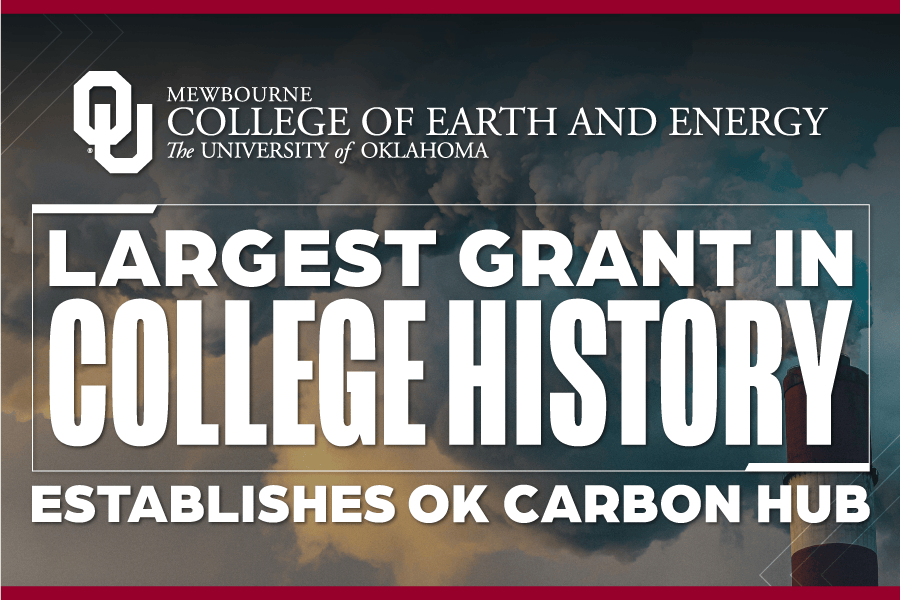
In November, OU’s Melbourne College of Earth and Energy received an $18.7 million grant from the Department of Energy, the largest grant in the college’s history, to establish the Oklahoma Carbon Hub, and researchers will investigate three separate underground storage locations to potentially inject 54 million metric tons of liquefied and highly pressurized CO2 over a period of 20 years (54 million tons may sound significant, but it is a drop in the bucket compared to the 40 billion tons of CO2 pumped into the air globally each year).

Once injected underground, this massive amount of high-pressure CO2 will require constant monitoring for hundreds of years to prevent disastrous leaks and shifts. There are currently three customers committed to providing captured carbon to be stored deep under Oklahoma: the CVR fertilizer plant in Coffeyville, Kansas, the Azure Sustainable Aviation Fuel Production Facility near Cherryville, Kansas, and the Bantam Direct Air Capture facility in Osage County.

I, for one, don’t remember this ever being on the ballot, or even being discussed with the public before proceeding with these plans. Does Oklahoma really want millions of tons of out-of-state CO2 stored under their feet, where future generations will be saddled with the burden of ensuring that the CO2 remains underground?

 A new study concludes that sequestered CO2 must be stored for 1000 years, centuries after the companies collecting on the carbon capture “gold rush” have disappeared from the earth, but the CO2 will remain, and all future generations of Oklahomans will be forced into stewardship of these wells. Put in this perspective, its easy to see how outlandish these endeavors are.

New research has found that existing carbon capture facilities appear to capture almost none of the total emission they release during operation, seemingly cancelling out the carbon that they do capture. A carbon capture project located in Decatur, Illinois, one that the DOE called “the largest demonstration of its kind in the United States”, was recently found to have captured only 10 to 12% of its total emissions each year. The facility, Archer Daniels Midland, was also found to have experienced dangerous leaks last year,

One big question that should be asked is this: what happens when our entire subsurface storage is filled to the brim with CO2? When 50 or 100 million tons are stored under our feet, will it have affected the level of atmospheric CO2 in the slightest? Once we’ve run out of room for captured carbon underground, where will newly captured CO2 be stored? Will the liquefied gas migrate to the surface, threatening the lives of anyone in the vicinity? Will our aquifers or our soil be in danger of contamination? Can this highly pressurized gas cause earthquakes? The questions are almost rhetorical. It seems clear that this is an enormous and dangerous boondoggle, and no one has a right to demand our citizens bear this level of risk.

The massive amount of money being poured into carbon capture appears to be blinding investors and legislators from considering long-term consequences and how this “gold rush” will affect no only present generations, but future generations who will inherit this ridiculous burden.

Unlike other green energy projects, carbon capture has drafted our oil and gas industry into the scam, and they’ve become some of the biggest supporters because they stand to reap the rewards thanks to large increases in the tax credit. To oppose carbon capture in Oklahoma means to oppose the oil and gas industry itself. As more investment pours into Oklahoma-based carbon capture projects, so will be the pressure to expand CO2 pipeline across the state, and the use of eminent domain to fast-track this expansion. The Great Plains Institute has been hard at work promoting the expansion of CO2 pipeline here, and they’ve even created a handy “fact sheet” to see just what might happen if this pipeline isn’t opposed soon.

Carbon capture will be probably the most disastrous “green” boondoggle this state has ever seen. The potential for deadly leaks, where the high-pressure CO2 migrates to the surface and killing everything within the vicinity, as well as aquifer and soil contamination, is enough to reject the industry in toto. The fact that Oklahoma will be expected to act as stewards of these massive reservoirs of CO2 for up to a millennium is laughable.
Did You Know? The Largest Carbon Capture Plant In The US Opened In Oklahoma, August 13th – Part 1

Shane Smith and Jenni White

August 13th, the largest DAC (direct air capture) plant in the United States opened in Shidler, Oklahoma. Not merely the largest in the nation, but the second largest in the world.

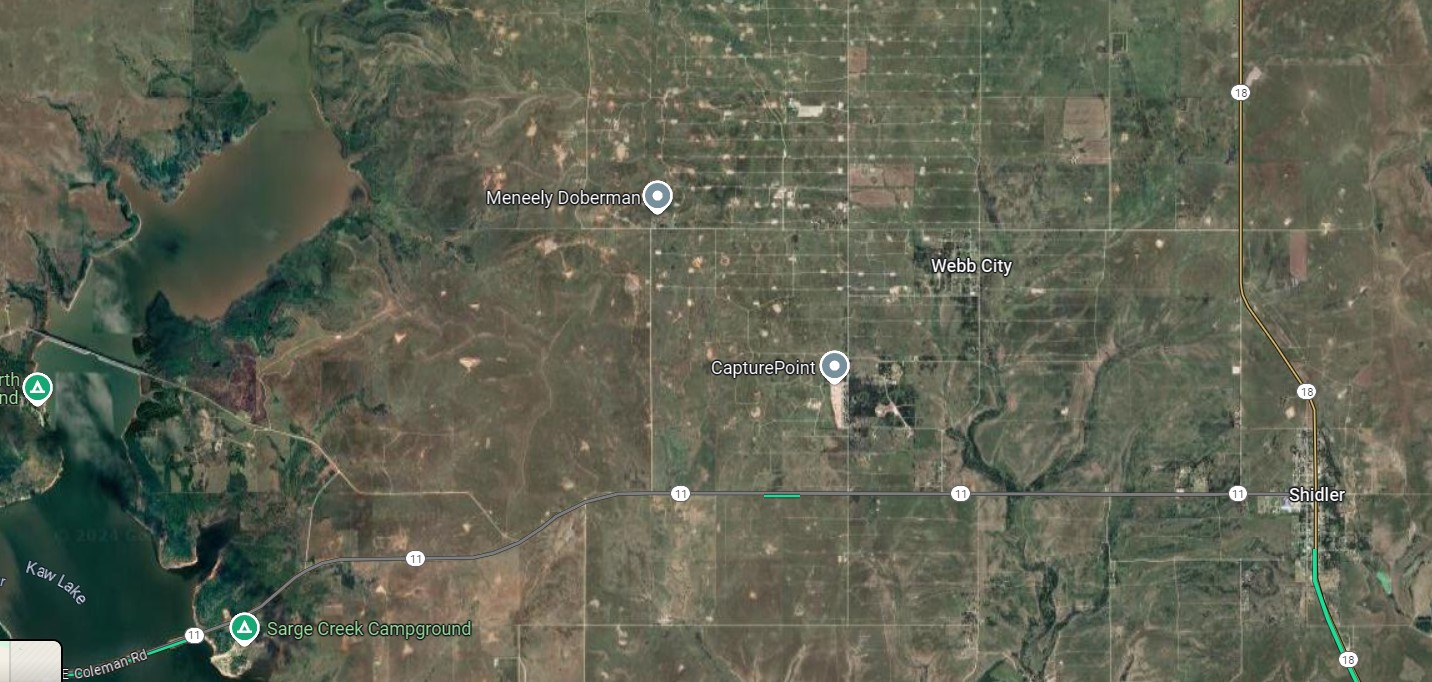
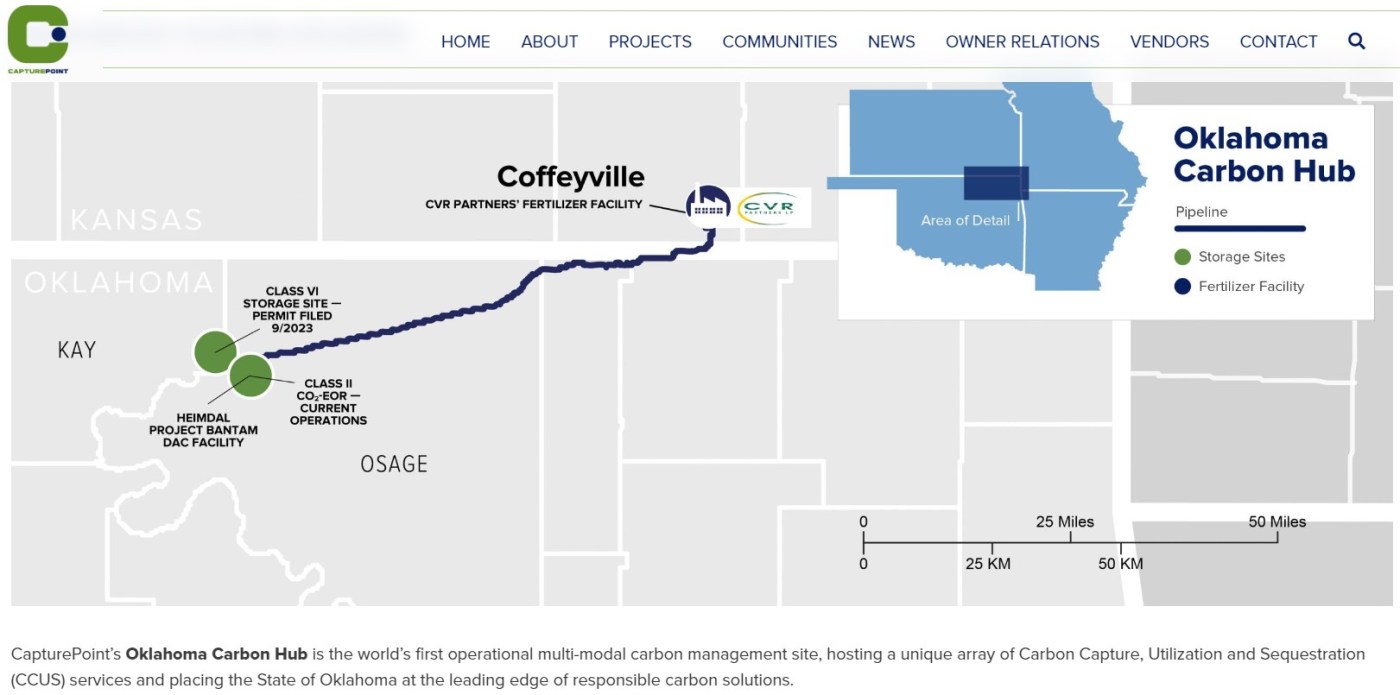
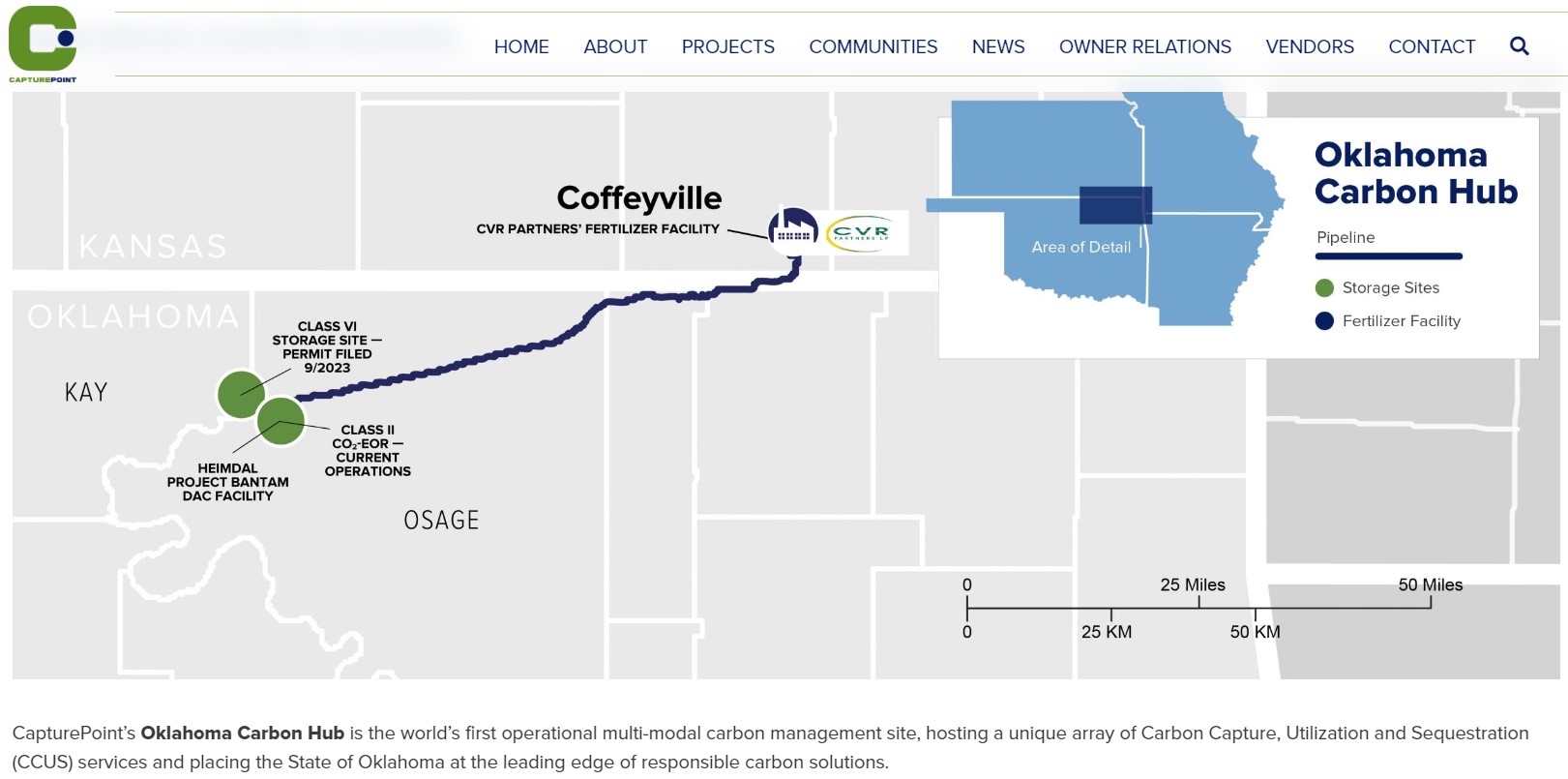
Dubbed Bantam, this facility is a project of Colorado-based Heimdal, Inc., and is located at the CapturePoint Carbon Hub in Osage county in northwest Oklahoma. The facility itself will allegedly remove 5,000 tons of CO2 every year which will be permanently stored in underground facilities being developed by CapturePoint.

This project is just one of many that have emerged since the passage of the Inflation Reduction Act of 2022, which increased the 45Q carbon sequestration tax credit (initially added to the tax code as a part of the Energy Improvement and Extension Act of 2008) for every ton of CO2 stored from $50 to $85.

A chorus of Oklahoma Republicans praised the new project, with governor Kevin Stitt stating, in a post to Heimdal’s LinkdIn page:

Other Republicans who spoke highly of the new facility include Senator Markwayne Mullin, Congressman Frank Lucas, lieutenant governor Matt Pinnell, and House Speaker Charles McCall.

According to CapturePoint’s website, the company owns and operates on 6,900 acres, but has contracted rights to 10,000 acres in Oklahoma for use as carbon storage space. CO2 is transported from CVR’s facility in Coffeyville, Kansas, via a 68-mile pipeline to CapturePoint’s Oklahoma facility for storage. 

Below is a Google map of the area showing the CapturePoint facilities in relation to Kaw Lake and the city of Shidler. (C02 + H2O yields H2CO3, carbonic acid)

Despite the fact that no local news sources covered the opening of the nation’s largest carbon capture plant and that subsequent information can only be gleaned from industry magazines, Oklahoma’s leaders have been deeply involved in making this state a home for the carbon capture and sequestration industry for some years now.

Our oil industry has been using CO2 for enhanced oil recovery since 1982.

In 2009, our state passed the Oklahoma Carbon Capture and Geologic Sequestration Enhancement Act, which set the stage for permanent storage of CO2 in Class VI wells deep under our state.

In June of 2018, then-governor Mary Fallin signed onto The Governors’ Partnership on Carbon Capture.

In October of 2020, current governor Kevin Stitt signed the “Regional Carbon Dioxide Transport Infrastructure Action Plan”, along with Kansas, Louisiana, Maryland, Montana, Pennsylvania, and Wyoming. The signatories to this plan entered into a “Memoranda of Understanding”, committing to jointly develop “the buildout of regional CO2 transport infrastructure”. According to document, “the vision of this memorandum is to accelerate, through state leadership and coordination, the deployment of regional CO2 transport infrastructure networks and the development of carbon hubs…”

On March 19th, 2021, Stitt was among several other signatories to a letter addressed to Congress in support of the SCALE (storing CO2 and lowering emissions) Act, which set the stage for a massive expansion of CO2 pipeline throughout the country. 

Last year, the Oklahoma legislature released SB200, Oklahoma Carbon Capture and Geological Sequestration Report. This report attempted to inform legislation eventually created via SB200 (Boles, Rader) regarding jurisdiction of dangerous class VI injection wells, yet according to a statement submitted by the Petroleum Alliance, “It is unclear if projects for direct air capture and sequestration are allowed under the Oklahoma Carbon Capture and Geologic Sequestration Act.”

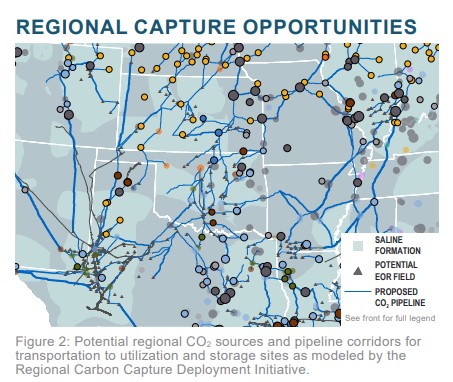
With the opening of the Bantam facility, it appears that Oklahoma is set to see an explosion of investment and build-out of CO2 pipeline throughout our state. At the Great Plains Institute website, in a document entitled, “Implementing Carbon Capture and Storage Technology”, the Institute provides a map of Oklahoma with potential CO2 pipeline corridors that crisscross our state like a spiderweb, transporting the liquified carbon dioxide.

But is this what Oklahomans want? How many residents know what carbon capture is, let alone that the world’s second largest carbon capture facility is located in their state? How would they feel if they found out?  Capture point is seeking permits for an additional two class VI (CO2 sequestration) wells in the area – one would think that eventually nearby residents would want to know that something so dangerous is near to them and Kaw Lake now, with the possibility of more to come.

These pipelines are far different from the more familiar oil or natural gas pipelines, in that the CO2 being transported must maintain immense pressure. To transport carbon dioxide via pipeline, it must first be compressed into a liquid state, known as “supercritical CO2”. This requires up to 3000 psi of compression, which, as you can imagine, is extremely dangerous. The CO2 must maintain this compression as it travels through the pipeline.

Because of this immense transmission pressure, CO2 pipelines run the risk of “running ductile fractures”, where an initial rupture creates a chain reaction as escaping CO2 converts to a gas, rapidly opening a tear along the pipe at 100 meters per second. CO2 is heavier than air. Should the pipeline rupture, any released CO2 will settle on the ground, sucking the oxygen from every living thing in the vicinity, just like it did to the people of Satartia Mississippi last year.

Could these pipelines withstand an earthquake or other unpredictable accident? What is the protocol for cleaning up a massive CO2 leak? How will first responders get close enough with their equipment to seal the leak and clear the area of the dangerous gas?

The Biden administration seems to think that a simple increase of the 45Q tax credit will magically jumpstart a green revolution, with the oil and gas industry leading the way. But, perversely, this subsidy has drafted Big Oil into the Green Agenda, with Oklahoma actively seeking to place itself at the forefront. 

An analysis by Taxpayers for Common Sense found that, from 2010 to 2019, 90% of 45Q tax credits were based on fraud. Do we have any reason to believe that this level of fraud won’t continue in expanded form as greater numbers of these facilities are built across our state?

A 2021 article from FORBES denotes no less than 6 taxpayer green boondoggles funded by American taxpayers. But then Oklahoma need look no further than Canoo – a troubled electric vehicle company to which Governor Stitt gifted 15 million Oklahoma taxpayer funds to locate to Oklahoma, only to have them struggle against bankruptcy, unable to fund themselves, let alone return an investment to the state.

Several questions need to be asked: Should Oklahoma really become a dumping ground for out-of-state CO2? How much land would be enough to even make a small dent in the amount of CO2 produced yearly? Even if a DAC facility functioned as intended, it would remove only an insignificant fraction of CO2 from the environment. The CO2 itself, once moved to a permanent underground storage, would need to be monitored for centuries to ensure that it doesn’t leak back to the surface. Who will bear liability, should the carbon dioxide leak to the surface?

A 2022 report by the Institute for Energy Economics and Financial Analysis found that these facilities fail far more often than succeed. Of the 13 carbon capture facilities examined, seven underperformed, two failed, and one was abandoned entirely. 

In a later report, the Institute for Energy Economics and Financial Analysis found that the premier Norwegian CCS facilities, the ones used to justify much of the push for expanded carbon capture, experienced significant anomalous CO2 storage behavior that could have led to a disastrous gas leak. This directly contradicts the rosy predictions of Bantam and CapturePoint’s press releases and statements from their supporters.

Another point of concern is whether these carbon capture facilities are generating more CO2 than they capture, completely undercutting the stated reason for their existence. Has this been a concern at all among the supporters of this subsidy-created gold rush? Several analyses have found that the process of capturing carbon, liquifying it, and either transporting, storing, or using it in enhanced oil recovery actually produces more CO2 emissions than it captures. 

Another question is: how much land is enough? As money continues to flow into the carbon capture industry, more land will continue to be permanently taken out of use in order to build more facilities. But it will never be enough. The International Energy Agency found that 32 billion metric tons of carbon dioxide would need to be removed from the atmosphere yearly in order to prevent global temperatures from rising a mere 1.5 celsius. It’s an impossible goal that our leaders are apparently ready to sacrifice much in a vain attempt to reach.

Tens of thousands of acres have already been scooped up by the carbon capture industry. When our leaders finally admit that atmospheric CO2 removal has been a massive, enormously expensive boondoggle, how will these carbon hubs and wells be disposed of? Is it even possible to do so safely? 

Our children and grandchildren will be forced to clean up the mess created by the futile attempt to “capture” carbon and store it. Why is our state intent on placing this burden on its future generations? Why not a nuclear reactor facility instead of carbon capture? Why not something that directly benefits the people of our state? There’s nothing more “green” than nuclear power, so why the push to instead make our state a reservoir for CO2? 

Carbon capture is a costly dead end. We need to force our leaders to realize it before its too late.

More to come…

Blog at WordPress.com.

Up ↑