
Search

ROPE Report

Tag

ai

If the Seminole Nation can ban data centers, surely we can too

While the news received very little mainstream media attention, the Seminole Nation of Oklahoma has accomplished something profound: they quickly and cleanly banned data centers on their native land. No quibbling, equivocating, or cutting backroom deals while simultaneously telling their people they were on their side, they just did it. As reported by Native News Online, the Seminole Nation had been approached by a developer with the data center proposal, followed by a request to sign a non-disclosure agreement and a letter of intent. While most Oklahoma community leaders would jump at this opportunity (they’ve virtually all been jumping), Seminole leaders held a town hall to discuss the matter on March 3rd, and vote unanimously to, 

““implement a moratorium on the advancement of generative Artificial Intelligence (AI) technology and hyperscale data center development within the Seminole Nation and within tribal lands and territories.”

What a wonderful example of single-minded courage they’ve provided for the rest of Oklahoma. Can we live up to it? While it’s been slow in coming, signs of resistance are beginning to pop up around the state. Tulsa and Oklahoma City have both passed temporary moratoriums on construction of new data centers, to address shortfalls and gaps in zoning regulations, which highlights the exploitative nature of the data center land rush: they’re taking advantage of areas with lax zoning laws around the country. It’s now common knowledge that developers actively seek out areas with easily-wooed council members, along with overly-lenient zoning laws and an executive and legislature hypnotized by “growth” at any cost. More than anything we need elected leaders slightly less willing to sell our state down river. Seems like a low bar, but one that vanishingly few of our leaders appear willing to clear.

Thanks to this plague of moral cowardice, data center development is running wild like an invasive species in the Sooner State. Every week we hear of a new proposed data center, and we find out that some small town council has been in talks for months, and they’ve already signed the NDA and letter of intent, all under the noses of the people they’re supposed to represent. By the time the plans are made public, the data center seems inevitable. Protests, lawsuits, council meeting crowds, there is a feeling of futility among communities, who feel as if they’ve been kept out of the loop on purpose. They, who will be forced to foot the bill in higher utility bills and a generationally blighted landscape, get no say in the matter. 

In the United States alone, around 4,000 data centers already exist, and 1,500 to 3,000 are being planned. Contrast this with the fact that the country with the next highest amount is Germany, with only 500. China, who we’re constantly being told is the reason we’re building these facilities at such a break-neck pace, has only around 400. What is going on here? Who, and what, are these for? What could possibly justify the enormous resource drain that data centers inflict on the communities they move into? 

Last year, data centers in the US consumed roughly 224 terawatt hours of electricity, or 4.5% of the total electricity supply of the US for that year. By 2030, that electricity consumption is expected to reach 17%. But given the rapid pace of data center construction, that number could reach much higher. 

In 2025, US data centers drained over 260 billion gallons of water from the total supply.  Google’s data center campus near Pryor, Oklahoma, alone used 1.1 billion gallons of water in the same year. Also last year in Texas, data centers used a staggering 25 billion gallons of water. Is this really sustainable? The question seems rhetorical. There’s an unsettling realization occurring that no one allowing these data centers to be built is giving the slightest thought to long-term consequences of allowing our power and water to be drained in this way. 

The Seminole Nation of Oklahoma has shown us that data centers are not inevitable. So why are we being made to believe that they are? Why are so many being built here compared to other countries? What are they going to be used for, and will it benefit us or enslave us within a digital panopticon? Myself and others are getting a very bad feeling about this rapid and unchecked rise of AI data centers, and what comes after this AI infrastructure in put into place. Not merely in resource drain, but consequences for privacy and civil liberties. With our every movement tracked and recorded, can it reasonably be said that privacy will cease to exist even just a few years from now? Will every facet of our lives be catalogued, judged, even predicted? Will AI be used to assign each of us a social credit score? Does freedom and prosperity really seem compatible in slightest with this rapid rise of an AI oligarchy? 

Our elected leaders, for the most part, appear slavish in the face of Big Tech. Whether it’s our schools, city councils, state and federal legislatures, few are willing to just say no. 

The Age of Apathy must come to an end. We have to wake up and fight back. Anything less would be an insult to our heritage of American liberty, and to  the legacy that we wish to pass on to our descendants.

Oklahoma’s Data Center Disaster

“You can’t drink data”. The quote from Tulsa Rep. Amanda Clinton encapsulates what many, probably most, Oklahomans feel as they struggle to comprehend the full-scale invasion of data center growth currently underway in their state. “Invasion” is an accurate term to describe what is happening, as large corporations descend on Oklahoma to exploit our relatively cheap electricity, water, and gullible city councils who are cajoled into entering into murky agreements with faceless megacorps, and in the process selling out their community and surrounding population for…what, exactly? The data center invasion is something that nobody asked for, much less the thousands of residents who feel they are being completely ignored by their elected leaders when they rubber stamp these water-and-electricity devouring atrocities. What benefit do they gain that will offset the inevitable rise in their monthly bills and blight the land near their homes? We can smell a scam coming a mile away, and we can’t help but feel powerless when we’re muscled out of the deal-making entirely. We understand that we will be the ones footing the bill for these facilities, and more than likely the last in line to reap any benefits.

Gov. Kevin Stitt is fully onboard with the data center incursion, touting “economic growth” as he always does when opening another door for large corporations to exploit our state’s low-cost resources. In his 2025 State of the State address, Stitt stated that he wanted “Oklahoma to be the high-tech capital of the world”. I think we should take his word for it. That may sound great to him, but to the rest of us it rings ominous.

Each day, a typical hyperscale, AI data center will consume roughly as much electricity as 100,000 homes, and around 5 million gallons of water. The larger data centers are expected to use 20 times as much electricity. According to one study, data centers in Texas consumed 49 billion gallons of water in 2025, and are expected to use as much as 399 billion gallons each year by 2030. In 2024, US data centers accounted for 4% of all the energy usage in the entire nation, or 183 TWh (terawatt hours). By 2030, that number is expected to jump to 426 TWh. Is this dramatic rate of increase in energy consumption really sustainable, and what does it mean for residents?

Construction of large data centers have proceeded at a break-neck pace in our state, and few residents have had the time to even understand what is happening to their communities. The lack of knowledge has been an advantage to the metastasizing industry so far, because when Oklahomans do realize what’s happening, they almost universally oppose it. What’s in it for them? How does “data” improve their lives in the slightest? The sheer cost of electricity, water, and land that these data centers consume is staggering, and many wonder how our electric grid and water reservoirs could ever supply the needed resources without averting a total disaster.

According to www.datacentermap.com, 37 data centers currently operate in Oklahoma. Many of these are small facilities that our grid can handle. But the new data centers are “hyperscale”, dedicated to processing unheard-of amounts of information for AI purposes, and will use millions of gallons of water, and more electricity per day than most Oklahoma cities. 

Four hyperscale data centers currently in the planning phase or already under construction are located in Claremore, Coweta, another on the outskirts of Owasso, and another just outside of Sand Springs. Dubbed ‘Project Mustang’, Project Atlas’, ‘Project Clydesdale’, and ‘Project Spring’, all four complexes will be located within 20 miles of each other, and are projected to use vast amounts of water and electricity each day.

Project Mustang is planned 300-acre data center, estimated to use 1.5 million gallons of water per day. Project Atlas, a $1 billion, 200-acre data center, will use an estimated 400 MW of electricity per day. Project Anthem will be located on 304 acres and is projected to use 2 million gallons of water per day. Project Clydesdale will span roughly 500 acres, and use an estimated 7 million gallons per day. The developer, Beale Infrastructure, has not publicly disclosed estimated electricity demand for the complex.

Google’s Project Spring is set to be a massive, 827-acre hyperscale data center located just outside of Sand Springs. Despite overwhelming public opposition, the Sand Springs city council approved rezoning for facility in a 6-1 vote. Beau Wilson, to his credit, was the lone dissenting vote. Local grassroots group Sand Springs Alliance filed a lawsuit, alleging violations of annexation policies. Residents voiced they concerns about a doubling of their utility bills, concerns that fell on deaf ears.

One point of great contention is the fact that many city councils and counties sign non-disclosure agreements with data center developers long before the public learns anything at all, and before the backroom deals begin to take shape. Details of a deal for a planned data center in Stillwater was kept under wraps for months before the public was made aware that the new facility would be a Google-owned data center. Almost every planned data center has been wrapped in vague wording, almost up to the moment that the deal is inked. 

The real questions that are never answered clearly is: is this sustainable? Do we have enough water and electricity long-term to allow these enormous facilities to operate in our state without devastating consequences for Oklahoma residents? What the residents who understand the issue want to know is simply this: what are our leaders getting us into?

The biggest AI companies in the world are bypassing our Legislature entirely, going straight to small city councils with their slick presentations about how their gargantuan facility will somehow benefit their community. Councilmembers see dollar signs, and not much else, apparently. Is it really appropriate for city councils to hold such consequential decision-making power over these ventures when the outcome could very well lead to a doubling or tripling of utility bills, or at worse, ecological disaster? And when those councils appear to completely disregard the voices of their residents, it is appropriate to ask whether they should be stripped of this power entirely.

Thankfully, several Oklahoma legislators have taken notice of this ominous development, and have offered legislation to pump the brakes on the data center invasion. Tulsa Rep. Amanda Clinton has filed a host of bills aimed at creating transparency. HB 3392 would require the Oklahoma Corporation Commission to conduct studies of the long-term impact of these large load data centers on the communities they operate in. The bill recently passed out of Committee to a unanimous vote. HB 3394 would require the Commission to keep a detailed database of all data centers in the state. HB 3397 would “quantify the electricity needs of large-load electric users, such as data centers and other industrial operations, measure their impacts and find ways to ensure these large-load users pay their fair share”, according to Clinton.

State Senator Ken Sacchieri filed SB 1488, which would impose a moratorium on data center construction until November 1st, 2029.

Rep. Brad Boles filed HB 2992, the Data Center Consumer Ratepayer Protection Act of 2026, requiring data centers to pay for their own infrastructure costs, rather than offloading it on current residents through rate hikes. 

Rep. Mickey Dollins filed HB 3917, which would force large load electricity consumers to pay a surcharge during peak electricity demands. The bill passed unanimously out of the House Appropriations and Budget Natural Resources Subcommittee and now heads to the House Appropriations and Budget Committee before being slated for a vote.

The big lie surrounding this issue is that data centers are inevitable, and we should just accept it, and let them be built. But we know that this isn’t inevitable, and we do have the power to direct the destiny of our communities if we organize and oppose them. A planned data center in New Brunswick, New Jersey, was just defeated after intense pushback from local residents. Another data center project in Monterey Park, California, was scrapped after a sustained and organized opposition campaign was waged by local residents. Data Center Watch reports that $64 billion of data center projects have been successfully opposed across the nation. 

It is possible, if only there is a will.

Data Center Deluge

Though I’m writing a larger article to be more specific about the issues of data centers, I wanted to get my interview with some of my neighbors about a possible data center landing in our town of Luther, Oklahoma, up on the website.

Recently, it’s come to our attention that our town had been approached by a company called Beltline Energy. They are headquartered in Atlanta, Georgia and have been creating solar installations for a number of years. In fact, all their solar installations are referred to as “farms” and include information about how it was a “converted” from some kind of actual farm – timber farm, peanut farm, or simple agricultural property – and how the “conversion” was, “for this private landowner to create consistent, recurring lease revenue for 20+ years”. Because it’s always about money – not the environment and most certainly not about neighbors.

Apparently, Beltline Energy created some kind of application for their solar “farms” that they believe translates to running a data center so, guess what? Yes, they are wanting to “convert” their business to building data centers.

Just think, little Luther’s (the Census has us listed as under 2000 residents) farmland could be the guinea pig for Beltline Energy’s NEW data center model. That’s gotta be good, right? (insert eye-roll).

Now, let’s think further, this company doesn’t make their investor/investors available. On their website it says, “Beltline benefits from a single, well-capitalized development partner.” Who is that? Shouldn’t we be able to find out if we want? After doing a pretty thorough search of the internet, I couldn’t find anything about who was providing their funding source. More than likely taxpayers – in the way of a tax credit of some kind – will be at least part of the funding source.

As I said, I’m working on a larger article about data centers and I will write more about the ridiculous amount of taxpayer dollars some are getting, and the schemes being put in place to make sure these data centers are seeming to return an ‘investment’ to their surrounding community, when in actuality, it’s more a return to taxpayers what was taken from them for the initial tax break.

For now, below is a video of the Town of Luther meeting shot by local activist and donkey milk dairy owner, Saundra Traywick during which the ‘idea’ of the data center was broached. Terry Arps is the Mayor of Luther.

We attending Lutherites didn’t know at the time of this meeting that Mayor Arps had signed a non-disclosure agreement with Beltline before entering the meeting. It is interesting to hear him say numerous times how transparent and open this process will be. How transparent can a process be under an NDA?

Our video can be found on both our YouTube and Rumble channels, but I’ll embed it below for ease of viewing. Below that, I will embed the NDA and the emails resulting from the FOIA request. I will also leave you with the following list of concerns for ANY data center:

  1. How much water will it use?
  2. How much energy will it use?
  3. How much noise will it make? (The Mayor has suggested it will make less than the Red Bud Power plant less than a mile from many of our residences and the site to which the data center will be adjacent – sadly, that is often quite loud)
  4. Where will the money come from to build it?
  5. What are the regulations from the state or federal government surrounding anything having to do with the data center (spoiler: there are none)
  6. How exactly will the data center provide the money to the community they are promising? Is it just a refund on tax revenue offsets?
  7. Will there be any kind of pollution associated with the data center?

Obviously, there are many more questions, but below are the podcast and the documents as promised.

20 YO Kennedy Laplante Garza Socially Influences While Working To Stop Backyard Data Center

This morning, Michael and I welcomed our youngest guest to the podcast. Youngest, maybe, but who would know. Kennedy Laplante is one of the most mature people under 25 I’ve ever met.

Currently the Director of Youth Outreach for the Oklahoma State Republican Party, Laplante wasn’t always involved in politics. An Oklahoman by way of California (through Arizona!), Laplante originally got involved in Oklahoma politics to impress a young man she was dating. Studying up on current events to hold her own in conversations, she realized that she had concerns about the issues she was studying. Though she may not have been immersed in politics at a younger age, she was old enough to remember that her family wanted out of California largely because of over regulation and lack of freedom and seeing similar issues in Oklahoma made her uncomfortable. Wasn’t Oklahoma a Red State?

Attending Republican women’s meetings steered her activity in local politics, while speaking out on social media about the issues important to her gave her a following of over three thousand people on Facebook alone.

Last Thursday (before the Independence Day holiday), she found that the County Commissioners in her area were set to approve a data center on 500 acres a mile from her home at a 9am meeting the Monday after the holiday. Seeking out other social media influencers who had been tackling the issue for advice, Laplante rapidly put together some of her own social media posts and rounded up enough people to attend the meeting.

Below is a clip of Laplante talking about how important it is to speak up. You are your own expert – especially if a data center is about to plop down in your backyard. Don’t wait for an expert, be your own!

Throughout our conversation, it became clear that Laplante was mindful and deeply concerned about her adopted state and what she saw happening within its borders.

Part of our conversation steered toward party politics and her thoughts on what that looked like in the state today. Below, Laplante makes several comments not unlike those Michael and I have often made on the podcast when I asked her what her age cohort seems to be thinking about Oklahoma politics today.

Please watch the full live conversation with Kennedy here on our YouTube and Rumble channels. It’s absolutely worth the time to hear this bright young lady advocate for Republican principles and standing for what she believes in.

Also, if you’d like to sign the petition Kennedy has set up against the data center, please find it here. You can also find her on Facebook – and I suggest you do! She’s the future and I’d start following her ASAP.

Why is Gov. Kevin Stitt pushing an AI tutor into Oklahoma schools?

This past February , governor Kevin Stitt’s Education task force, dubbed the “Human Potential for Future Industries Task Force”, announced that an AI math tutor program would be introduced into select Oklahoma schools in March, with the goal of rolling it out in participating districts statewide for the 2025-2026 school year, allegedly at no cost to the schools themselves. The program, “Synthesis AI”, is the creation of Josh Dahn and Chrisman Frank, co-founders of Synthesis, and they both attended the February task force meeting to promote their product.

Oklahoma Secretary of Education Nellie Sanders, who chairs the task force, is quoted in a recent OKBusinessVoice article: “Our current education system isn’t built for the future—it’s barely built for the present,”… “Oklahoma’s students are full of untapped potential, and it’s our job to ensure they have the right opportunities to thrive. This task force is focused on breaking away from outdated, one-size-fits-all education models and create real-world pathways that prepare students for their future. Oklahoma will proudly become the first state to put Synthesis’ priceless, one-of-a-kind piece of technology in our classrooms— and I couldn’t be more excited for our teachers, students, and parents. I’m grateful to Josh and Chrisman for their partnership.” (highlights mine)

Something to note here: Synthesis AI has never before been used by a school district in the nation, meaning that Oklahoma students will be using an AI tutor that remains untested in a school setting. Are our schools to be a laboratory for this unproven technology, and can we really afford to go in blind on such an endeavor?

Stitt, who dubbed the AI tutor as “revolutionary”, is quoted as saying, ““Every student needs to be prepared to leave school college-ready or career-ready. That isn’t happening for too many Oklahoma students,”…“We want kids to develop their God-given talents and apply them in high-demand industries right here in Oklahoma. I’m grateful to Secretary Sanders and her task force for doing their part to ensure students go from classrooms today to careers tomorrow.”

Every parent wants their child to succeed, but we must be wary of misguided attempts at a solution that ends of making the situation worse. Initial research on the use of AI in the classroom has not produced glowing results, and in fact has shown that AI has resulted in poorer performance outcomes than tried-and-true education strategies.

Chrisman Frank, the co-founder of Synthesis AI, praised his meeting with Stitt’s task force in a post on X: “Thrilled to partner with visionary Governor@GovStitt and Education Secretary @NellieSandersOK to bring the magic of the Synthesis AI tutor to Oklahoma schools and families. Tutor will be available to ALL third grade students in the state this fall. Proud to work with the administration to serve the people of the great state of Oklahoma!”

So the Synthesis AI Tutor is a done deal for Oklahoma’s students? According to Chrisman’s post, it is. The replies to Chrisman’s X post seem suspiciously bot-like. Did he pay for artificial engagement on what is arguably his most important post on X, as co-founder of an AI startup that could potentially be used across the nation?

The task force released what it considers to be “priority actions”, and it reads like the familiar, meaningless buzzword glop we’ve seen elsewhere:

  • Strengthening workforce-aligned education by integrating industry-driven skills into curricula.
  • Expanding hands-on learning through apprenticeships, internships, and immersive learning experiences.
  • Leveraging artificial intelligence, virtual reality, and other emerging technologies to create immersive classroom experiences.
  • Assessing teacher preparation programs to ensure Oklahoma educators are equipped to meeting evolving student needs.

Long, hard experience shows that these wildly-optimistic bullet points never deliver. Parents and legislators should be very wary of anyone promising Heaven on Earth in order to push through another education “revolution”, when students here are already struggling to read and perform math at grade level. Long before “Ed Tech”, schools were able to successfully teach math, reading, and reading comprehension. Something terrible has happened along the way that has resulted in plummeting scores across the board. Rather than the savior, many point to just this type of Ed tech as the culprit.

In an article entitled, “The EdTech Revolution Has Failed”, Jared Horvath argues that, since the widespread introduction of internet-connected devices into the classroom beginning in the 2010s, student scores have dropped across the board. Rather than a mere coincidence, Horvath places the blame on EdTech itself, citing multiple large-scale studies that equate the omnipresence of internet-connected devices in the classroom with a significant drop in learning.

The logical solution, albeit one that no one in the business of education wants to hear, is to remove Ed Tech from our classrooms entirely, not double or triple-down on what has clearly been a massive boondoggle.

If an AI math tutor is indeed “revolutionary”, then Oklahoma should require proof, rather than allow students here to themselves become the test subjects. Untested, experimental EdTech has no place in Oklahoma schools, and our government should understand that before pitching us headlong into uncharted waters, when we are barely keeping our state’s students afloat as it is.

New Feature: Weekly News Headlines And Commentary – Week of 12.30.24

Every week for our newsletter, I compile a list of news articles and add a bit of commentary. Because I just need another thing to do in the week, I’m going to begin posting those here on the website as well. Hopefully, this posting will make it easier for readers to share!

PS: HAPPY NEW YEAR!

Are state report cards too good to be true?

KTUL Tulsa – A really good story about how Oklahoma Superintendent Ryan Walters has allowed school report cards to be changed to show students performing MUCH better than they are in reality. This is truly awful and yet, not only has it happened, but even after the public has been notified, nothing appears to be in the works to restore transparency and solve the problem.

The New House Committee System of Consolidated Power: A Death Blow To Real Wind Turbine Reform?

Jason Murphey – Recently, our new speaker-elect, Kyle Hilbert, chose to make sweeping changes in the way committees in the House are constructed. Murphey explains the problem with the new system – basically that the people will be locked out (which is what Representative Tom Gann warned when he ran against him for Speaker). Please read and share.

Gann Proposes Sweeping Reforms To Restore Transparency To House Of Representatives

Oklahoma House Media – Tom Gann essentially explains what he would have done if he were speaker and what SHOULD be done now that speaker-elect Hilbert will take the reins of the House (unless there is a mutiny and the House members turn on Hilbert and vote for Gann – I suggest we all get on our knees and pray for that outcome). Again, please read and share. Knowledge can translate to power if it is used correctly.

Oklahoma To Obtain Drone Monitoring Systems After Mysterious Sightings In Other States

Oklahoma Voice – From the article: “Drones and unmanned aerial systems are an exciting new industry here in Oklahoma,” Stitt said. “We want to make sure that industry has room to thrive.”

Because the technology is new, the state doesn’t have all the measures in place to ensure protection from those who wish to cause harm, Stitt said.

“The activity happening in New Jersey and across the country is unsettling,” Tipton said in a statement. “While we’ve only had a few reports of drone activity in Oklahoma, we want to be ready in case the need arises.”

If you don’t see how absolutely RIDICULOUS the nonsense in yellow is, I’m not sure what to do to help you. Drones are absolutely the WORST for breaching personal liberty/privacy and here is our Governor using unknown tax dollars for unknown surveillance purposes. FILE UNDER REALLY BAD FOR OKLAHOMAN’S PERSONAL LIBERTY AND PRIVACY.

‘Godfather of AI’ Geoffrey Hinton Warns of Existential Threat to Humanity Within A Decade

Breitbart – If you’ve not seen the movie Terminator (and if you haven’t, where have you been?) you’ll not really understand the horror AI can become. Once Skynet became aware, it declared war on humanity, creating robots with titanium skeletons covered in human skin, to seek out and destroy any humans who had survived the nuclear war it started to remove them from the earth.

I get it. It was a movie. But I would like to draw attention to one thing – a person actually – George Orwell. If Orwell could so accurately predict the hell of authoritarian government that today we’re able to describe many government programs as ‘Orwellian’, let’s not be so quick to overlook Cameron and Gayle Hurd’s tale of computer programming gone awry.

Not only that, but AI is a HUGE energy hog and will require “even more energy than we thought“. Where will that come from? Wind turbines? Solar installations? Toxic lithium batteries? Oklahoma legislators must get a handle on this NOW and we must make sure they do.

Osage Tribe Wins Again, Federal Judge Orders “Ejectment” Of 84 Wind Turbines By Next December

Robert Bryce; Substack – While this is certainly a win for the Osage tribe, who have been fighting this fight for years apparently, this is also a spectacular win against WIND ENERGY if for no other reason than this; Enel (the Italian wind energy company responsible for the turbines) has said it will take 300 million dollars to remove 84 turbines. That’s 3.6 million dollars per turbine.

Now think…you are a landowner who signs a contract for a wind turbine on your property. Are you going to be required to come up with 3.6 million dollars to remove that turbine once it’s broken beyond repair? Food for thought, huh?r

Blue Whale Materials Bartlesville expansion moving forward

FOX 23 News – So THIS is why Governor Stitt was in South Korea recently – to sign yet ANOTHER OUT OF STATE company to come here. So glad Oklahoma is “open for business”, Governor Stitt. Thanks to the dispersal of MORE tax dollars to new, private businesses – this time by the DOE in the amount of 100 million dollars – Blue Whale Materials can come into Bartlesville and recycle lithium batteries. Lithium is toxic to humans and the environment and has been the cause of numerous fires from solar installations to airplanes. Why do we keep chasing the GREEN AGENDA and putting Oklahomans at risk? I’m gonna guess dollars, because Blue Whale is – at best – only going to employ 100 people. But then, isn’t that what Canoo said, only to leave Oklahoma high and dry on every one of its promises?

What Homeschoolers Need To Know About the “Make Homeschool Safe Act”

HSLDA – Representative Amanda Swope and former Representative Joe Dorman of the Oklahoma Institute For Child Advocacy (I won’t help them out by providing a link to their organization), spent an entire interim study warning legislators about the hidden dangers of homeschooling, more than likely in preparation for legislation to curtail the practice in order to ‘make Oklahoma children safe’. Of course this is nonsense. Oklahoma is the only state in the union that promises unfettered homeschooling by way of its constitution and if you don’t believe me, visit our friends at the Constitutional Home Educators Alliance. Homeschoolers aren’t the ones in the news on a continual basis facing allegations of sexual – and other – misconduct with students. We need to watch out for this kind of legislation that would stifle the liberty Oklahoma homeschool students are famous for. Amanda Swope has since left the legislature, but OICA will not rest until the practice of schooling our own children has been hamstrung in the name of…wait for it…’safety’. Please continue to follow us for updates.

Recent Studies Freeze Climate Alarmist Claims

PJ Media – Just another reason why Governor Stitt should abandon his whole, “more of everything” approach to energy in Oklahoma. CO2 is good. Climate changes on a regular basis. End of discussion.

Seifried files bill empowering schools to adopt ‘bell to bell’ cell phone policies

Oklahoma Senate Media – Legislators to anyone asking them for public school legislation that would stop Common Core, or SEL, “We believe in LOCAL CONTROL. That’s for the school board to decide.” Oh, okay, WELL WHAT ABOUT THIS THEN? Massive overreach. Individual school boards should decide cell phone policy. What a giant bunch of baloney! Let’s make sure to tell Ms. Seifried that school boards decide school policy and that she should quit meddling in school board business.

Pretty Shocking: Oklahoma All-In On ESG and Green Energy!

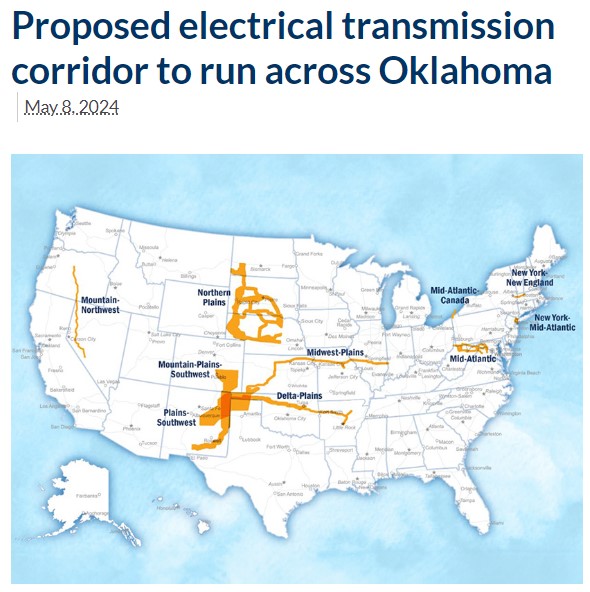
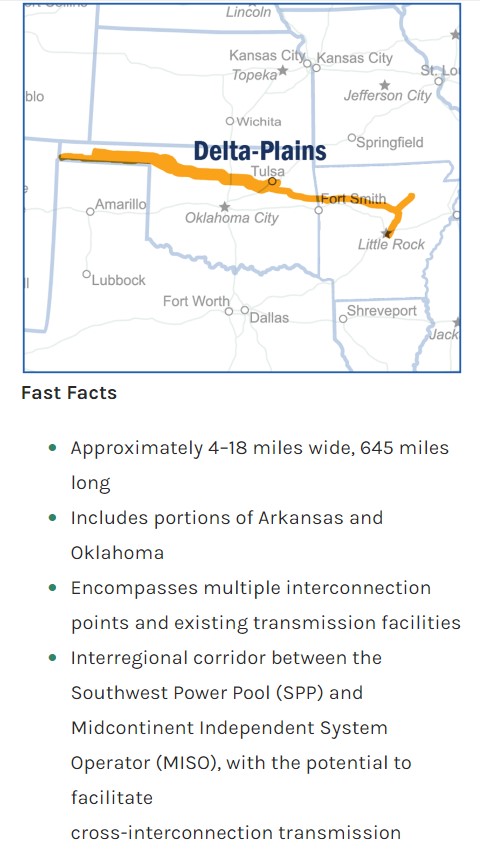
While researching the ‘green agenda’ in Oklahoma and companies attempting to install wind turbines in the east central part of the state, Saundra Traywick – owner of the states only donkey dairy – was stunned to find plans to erect a miles wide, hundreds of miles long, electrical transmission corridor being planned for the northern part of the state.

Traywick couldn’t believe that kind of thing would happen in Oklahoma, so she began to do some further digging.

Thanks to the Obama/Biden administration, the federal government is printing large sums of cash to enrich states who create legislation to advance the green agenda – wind turbine (30 million) and solar installations (7 billion – and more money for ), carbon capture pipelines (251 million), hydrogen gas extraction (7 billion).

You see, all of these will be needed to create green the energy necessary to avert climate change, and all this green energy will be shipped along these giant electrical transmission corridors to wherever the government deems it necessary to go.

Governor Stitt is quite apparently putting Oklahoma on board the green agenda train and so are many private companies getting many millions of dollars in private investments and state tax incentives to take over private land via eminent domain and boot farmers and private property owners off their land.

Now, if this sounds like some kind of conspiracy and you’re unclear how that can happen, check out the American Stewards of Liberty pamphlet, “30×30 Land Grab“. This puts all the pieces together and explains how the taking of private lands for ‘wilderness protection’, as well as wind turbine, solar, transmission corridors and carbon capture pipelines to satisfy the ‘green agenda’ WEF mission to get to carbon net zero by 2050.

Here’s Oklahoma’s involvement:

Senate Bill 1021 written by former Senator Kim David (who is now conveniently a Corporation Commissioner) and Former member of the House, Mark McBride and signed into law by Governor Stitt on April 20, 2021, established the Hydrogen Production, Transportation, and Infrastructure Task Force (OK H2 Task Force) “to research and report on the viability of hydrogen production and use within the state and for export.”

Here are the meeting minutes from the first meeting, held July 19th, 2021.

Here is the final report of the Task Force which included this recommendation, “Develop incentives for established energy companies to build capabilities in carbon capture vertical (from sequestration to equipment manufacturing and services)”.

Two problems here, public money incentives and carbon capture.

But then the recommendations go on to say, “Determine Oklahoma’s carbon sequestration potential storage capacity, de-risk the timeline for Class VI permitting, and provide processes for all stakeholders involved in sequestration to provide a pathway for implementation.” WHAT?

It goes on and I won’t bore you with the details, but do you remember Secretary of Education Nellie Sanders and Goveror Stitt’s, “TASK FORCE TO UNLOCK STUDENT POTENTIAL“? Well, I have no doubt that it’s to help train state students in the hydrogen – and other green projects we want to create using printed money from the OBAMA/BIDEN/HARRIS administration – since that was yet another suggestion by the Hydrogen Task Force.

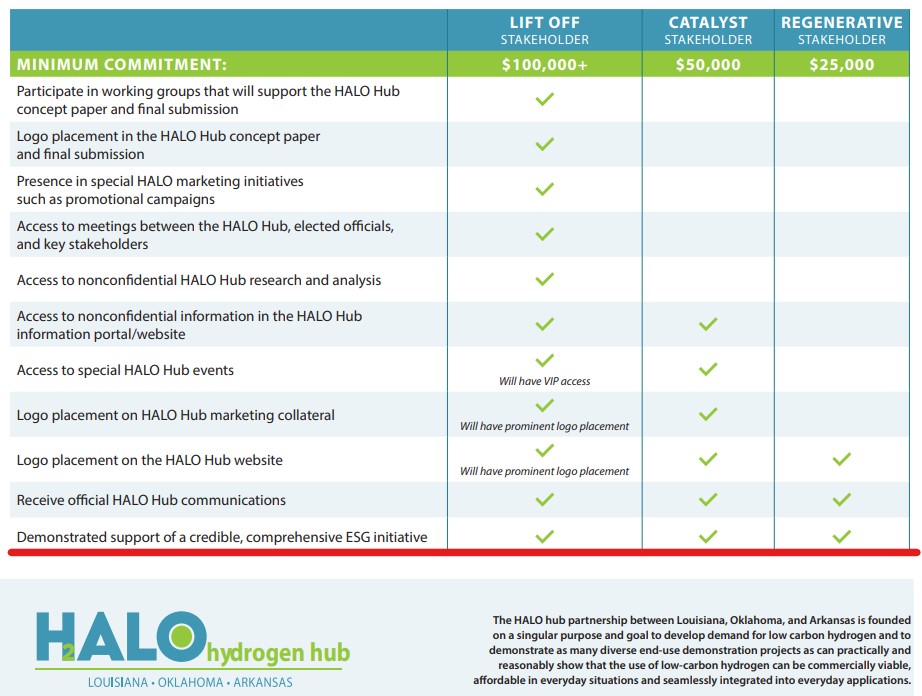
Now, in 2022, the Hydrogen Task Force parlays it’s work into creating the Halo Hydrogen Hub comprised of Oklahoma, Louisiana an Arkansas in order to compete for the 7 billion dollars in hydrogen funding mentioned above.

This is from a document called, “Support Opportunities”. This is where this whole thing gets dicey on NUMEROUS levels. This is a public/private partnership – like so many of the federally subsidized green projects are. Remember Obama’s Solyndra which was partially financed by our very own George Soros character, George Kaiser? Well, 570 MILLION taxpayer dollars went missing on that project. Where did it go? Has there been an accounting? Someone got it – the investors?

So there’s a problem, once investors get involved, there is no transparency because they’re not subject to open records requests – just the part subsidized with state or federal money.

And yet another problem – ALL INVESTORS HAVE TO SUBSCRIBE TO ESG! WHAT? Didn’t Oklahoma pass an Anti-ESG law? Yes, we did. Granted an Oklahoma judge blocked it, but the AG is attempting to appeal. So was that bill passed to FOOL THE PUBLIC? If not, how could Oklahoma be in an organization to get federal energy funds that would require investors to have an ESG plan?

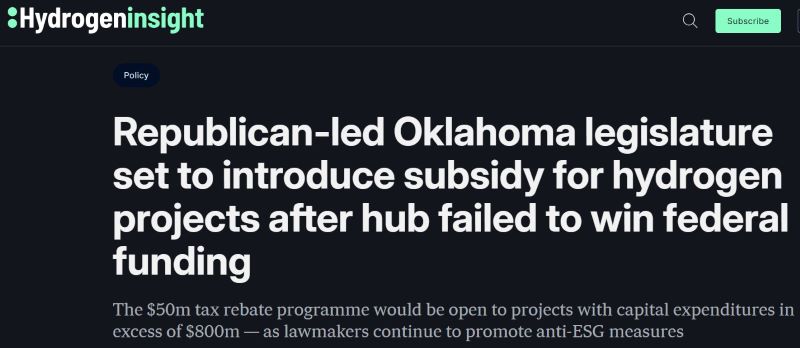
Unfortunately (not really, the state shouldn’t go begging the OBAMA/BIDEN/HARRIS administration for ANYTHING!), the states didn’t win the money, so it’s now set out to provide subsidies for hydrogen producers. Could it be we didn’t ‘win’ because we’re ALREADY #4 in the nation for “providing net electricity generation from renewable sources”. What the heck are we doing all this for then, excepting the LOVE OF MONEY?

And so, as the Hydrogen Task Force waited with bated breath to hear back from their daddy, the Federal Government about how much money they were going to print and send Oklahoma to back the WEF’s 2050 Carbon Net Zero grift, Governor Stitt was quoted as saying, “In Oklahoma, we want more of everything,. By leaning into the hydrogen future, we can further diversify our energy portfolio and meet our future domestic energy demands.”

I read that like this, “To hell with all you crazy people who want to keep your property and not get poisoned by leaking carbon dioxide from a carbon capture pipeline, be scarred by the continuous thwacking noise of turbine blades against the Oklahoma wind, fight a solar panel fire it will take days to put out, or deal with the hum and electrical discharge from an overhead high tension electrical corridor, we just need more stuff we can get money from the federal government for!”

If you read it like this too, you’d better stay on top of what’s going on at the capitol this next year – NO MATTER WHO IS ELECTED TO THE PRESIDENCY – because they’re going to be trying to create a whole bunch of laws to make it easier for these ‘green energy’ grifters to do business in your backyard.

Now that you have the whole story backed up and cited so you’ll believe what I’m trying to warn you about, watch this video with me and Michael and Saundra as we walk through the whole green agenda grift while talking about the coming corridor – if we don’t do something to stop it.

Blog at WordPress.com.

Up ↑