The bill now creates a board of 10 members from 7. One will be the Secretary of Education who will be the chair plus, five members shall be appointed by the Governor by and with the advice and consent of the Senate, two members shall be appointed by the Speaker of the House of Representatives, and two members shall be appointed by the Pro Tempore of the Oklahoma State Senate.]. It also changes the way items may be added to the agenda. If three or more Board members wish to add an item to the agenda, they may – it does not have to be approved by the State Superintendent who is the chair of the board. (it was not heard 5.8)
This is a problem because if the governor has five appointments to the Board and the governor is interested in making changes to the Oklahoma State Department of Education, policy or procedure, he could conceivably ask Board members to take that issue to the full board by asking for an item to be added to the agenda. As we’ve seen, Governor Stitt – who has about a year left on his term – has made radical changes to the board in just this year alone because he didn’t like collecting data on illegal children (even though we already do that) so that conception isn’t really out of the question.
During committee hearings, Caldwell claimed the SDE under State Superintendent Ryan Walters’ (R) supports SB 224. We reached out to Supt Walters who denied any public support and asserted his agency’s neutrality concerning the bill.
“I have never publicly supported the bill. Not sure where that would be coming from,” said State Supt Ryan Walters of SB224. “SDE has always been neutral on the bill. We are required to provide data to legislators when they request it.”
OEQA’s claims of having “worked collaboratively with SDE, Regents, OESC, and CareerTech to advance the development of a Statewide Longitudinal Data System (SLDS)” are also exaggerated.
When asked if he had personally attended any meetings with any OEQA personnel concerning SB 224 or a centralized database over the last year, Walters replied, “No, I was not personally involved in that.”
Until today, the Superintendent of Public Instruction had not made a comment – publicly – about whether or not he supported the bill.
Now, put the two things together.
WHAT IS JEB BUSH’S INVOLVEMENT WITH OKLAHOMA AND SB224?
Let me be clear – I do not definitively know. What I’m about to report is pure speculation, but speculation that deserves real consideration.
We know that Jeb Bush has a long history of involvement with Oklahoma education policy. He was heavily involved in pushing Common Core here in our legislature. We know that Superintendent Barresi and others got a free trip to Bush’s – then Foundation for Educational Excellence, now ExcelInEd – during her tenure. We also know that he has come to Oklahoma – at least once – to push school “choice” in 2021.
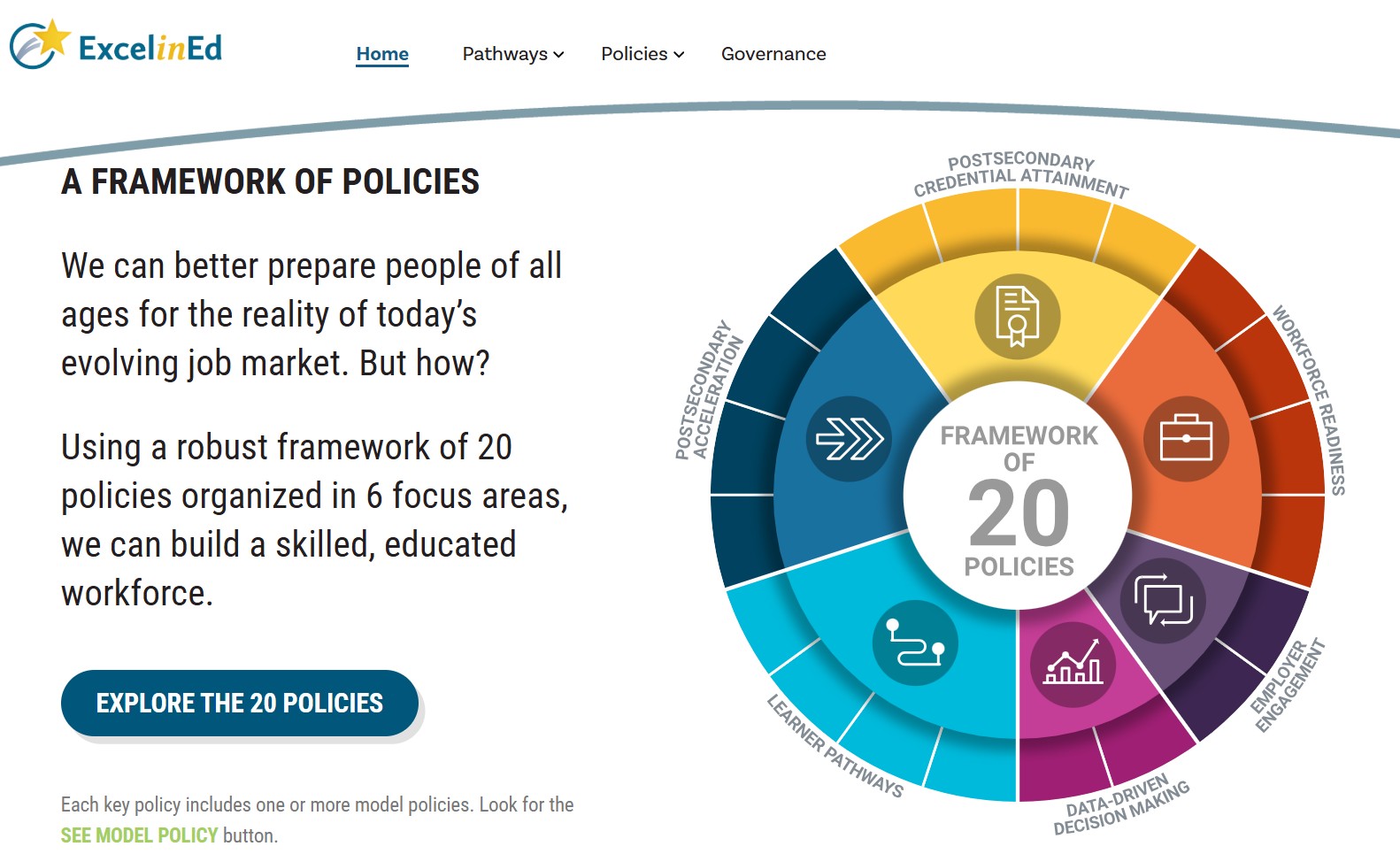
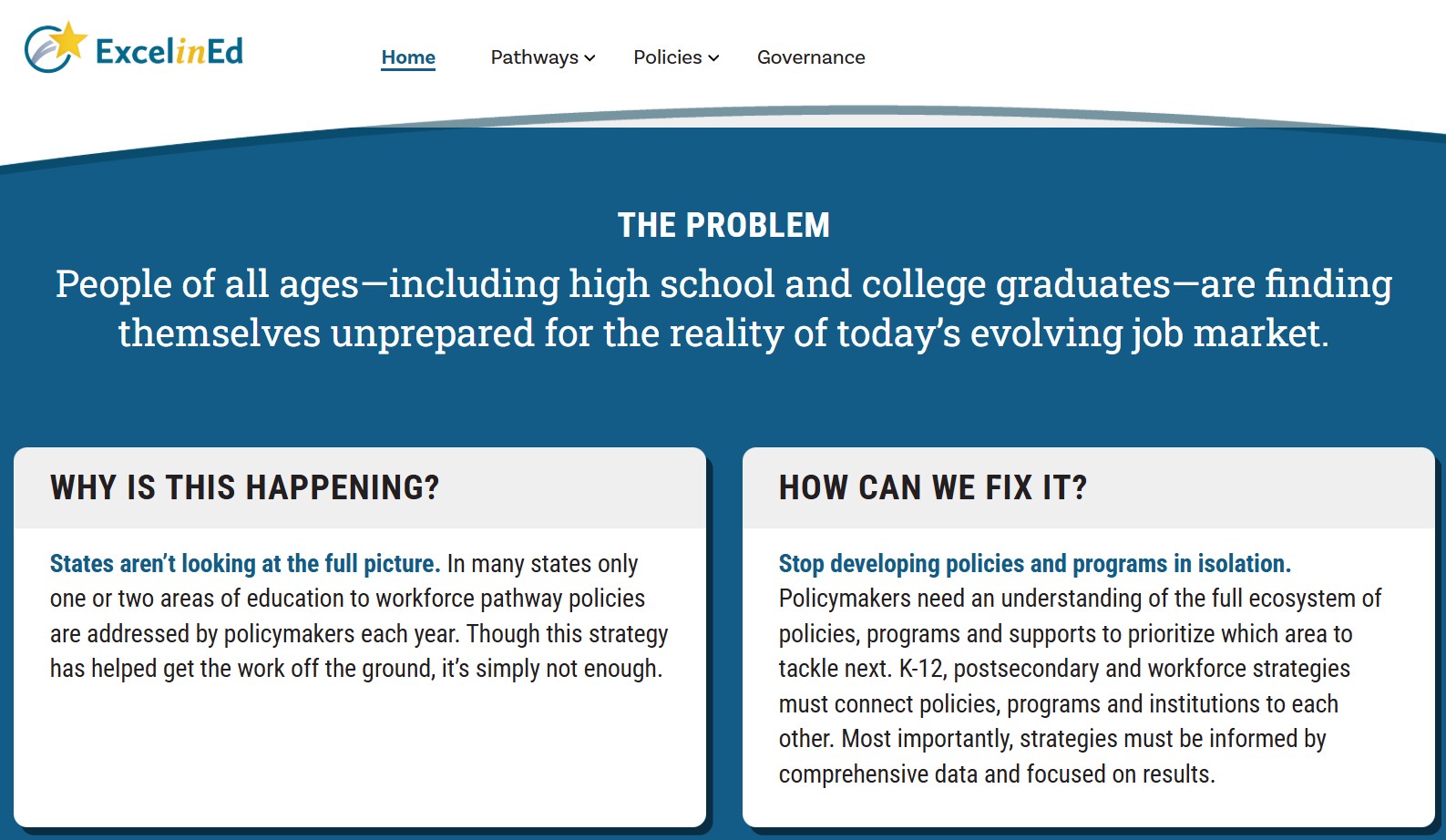
So, this initiative by the non-profit ExcelInEd organization run by Jeb Bush, has a MODEL POLICY that states can use to create an initiative in their state to allow kids to be tracked from birth through workforce to make sure they can get a job.
No, scratch that – make sure our businesses have the workers they’ll need to keep their business open, pay taxes and wine and dine legislators to create policy to help them do business. Listen below.
Notice “How Can We Fix It?”. Gosh. That sounds a whole lot like what bill SB224 is attempting to do, doesn’t it?
Here’s the Power Point program all about Oklahoma where – shockingly so much legislation stacks up to mesh with the intent of Bush’s initiative. Look specifically at the last three pages on data collection. So uncanny!
BOTTOM LINE
Do we know that Jeb Bush is influencing Oklahoma education? No. Do we have enough evidence to believe so? YES.
I fought hard to have Oklahoma repeal the Common Core State Standards from law. I never really thought anything had been accomplished afterward, because teachers/schools went right back to using them and there was nothing to make them stop. After reading the contents of a search I asked Grok to run for me, I’m having second thoughts.
Groks analysis indicated that the 2014 Common Core data repeal and NCLB waiver revocation “created policy turbulence, potentially disrupting COWIBs alignment with Oklahoma Works’ educational goals. Political resistance to federal mandates may have complicated WIOA implementation”.
So, call your Senator and Representative RIGHT NOW and tell them you
don’t want Oklahoma to be like every other state,
you don’t want your kids to be trained to fill a job, you want your kids to be educated so they can make up their own mind about what they want to be when they grow up
and Oklahoma doesn’t need an out-of-state globalist, policy-monkey ,wrenching up Oklahoma’s education policy.
We MUST defeat SB224 and keep the Oklahoma State Department of Education data from being hooked up with Workforce data (collected at the Department of Commerce) at the Oklahoma Educational Quality and Accountability board, helping to create the Planned Economy our overlords – like Bush! – want!
I’m not a huge fan of AI, but I’ve been a researcher since 1990 and this tool has helped me find data more quickly and completely than I ever have before.
Today, because I’m still trying find a way to explain that SB224 is NOT FOR Oklahoma’s kids, but to satisfy a broader need to plan the economy on a national level, I asked Grok “does the federal government require states to codify the need to connect education and workforce data”? I got a long, in-depth, very interesting answer. So, is this to help Oklahoma’s kids, or get more federal grants? I’ll let you be the judge.
Grok’s answer:
The federal government does not explicitly require states to codify into state law a specific mandate to connect education and workforce data as a condition for receiving federal grants. However, federal policies, grant programs, and regulations often incentivize or require states to establish systems for linking education and workforce data to meet reporting, accountability, or performance goals. These requirements can typically be met through administrative actions, interagency agreements, or data systems like Oklahoma’s Data Sharing Hub (DASH), without necessarily codifying the connection into state statutes. Below is a detailed analysis based on available information:
Federal Context for Education and Workforce Data Integration
Relevant Federal Laws and Programs:
Workforce Innovation and Opportunity Act (WIOA, 2014):
WIOA is the primary federal law governing workforce development programs. It requires states to develop integrated data systems to track participant outcomes across workforce, education, and training programs (e.g., Title I for adults, Title II for adult education, Title IV for vocational rehabilitation).
States must report performance metrics, such as employment rates, earnings, and credential attainment, which often require linking education and workforce data. For example, WIOA’s performance accountability provisions (29 U.S.C. § 3141) mandate data collection and reporting, which may involve connecting education records (e.g., high school or college completion) with employment outcomes.
While WIOA encourages states to establish data-sharing agreements or systems, it does not explicitly require codification into state law. States can comply through administrative frameworks, such as memoranda of understanding (MOUs) between agencies or platforms like DASH.
Every Student Succeeds Act (ESSA, 2015):
ESSA requires states to report on student outcomes, including college and career readiness indicators, which may involve linking education data to workforce outcomes (e.g., post-secondary enrollment or employment).
States receiving ESSA funds must submit state plans and comply with accountability requirements, but these do not mandate codifying data linkages. Instead, states often use existing data systems or establish new ones to meet federal reporting needs.
Perkins V (Carl D. Perkins Career and Technical Education Act, 2018):
Perkins V funds career and technical education (CTE) programs and emphasizes aligning education with workforce needs. It requires states to report on CTE student outcomes, such as employment or post-secondary success, which often necessitates data integration.
Like WIOA, Perkins V encourages data system interoperability but does not require states to pass laws mandating data connections. States can use administrative tools or data-sharing platforms to comply.
Higher Education Act (HEA):
The HEA governs federal student aid and includes reporting requirements for post-secondary institutions, such as graduation rates and employment outcomes. Some grant programs under HEA may encourage data linkages to track student success, but codification is not a requirement.
Federal Grant Conditions:
Federal grants, particularly those tied to WIOA, ESSA, or Perkins V, often include conditions related to data collection and reporting. For instance, WIOA grants require states to submit annual performance reports that integrate education and workforce data (e.g., 20 CFR § 677.155).
These conditions typically focus on outcomes rather than prescribing how states achieve them. States can meet requirements through data-sharing agreements, longitudinal data systems (SLDS), or platforms like DASH, without codifying policies into law.
Some competitive grants, such as the U.S. Department of Education’s State Longitudinal Data Systems (SLDS) Grant Program, explicitly fund the development of integrated data systems. While these grants require states to build capacity for data linkages, they do not mandate legislative codification. Instead, they emphasize technical and administrative solutions.
The Department of Labor’s Workforce Data Quality Initiative (WDQI) provides grants to enhance state data systems for tracking workforce and education outcomes. WDQI encourages states to link data across agencies but allows flexibility in implementation, typically through administrative means rather than statutory mandates.
Family Educational Rights and Privacy Act (FERPA):
FERPA (20 U.S.C. § 1232g) governs the privacy of education records and impacts how states link education and workforce data. States must ensure compliance with FERPA when sharing student data, which may require data-sharing agreements or secure systems like DASH.
While FERPA imposes strict requirements on data handling, it does not mandate codification of data-linking policies. States can address FERPA through administrative protocols or interagency agreements.
State Longitudinal Data Systems (SLDS):
The federal government has supported SLDS development since 2005 through the Institute of Education Sciences (IES). SLDS grants aim to create systems that link early childhood, K-12, post-secondary, and workforce data to inform policy and improve outcomes.
While SLDS grants require states to build and maintain these systems, the focus is on technical infrastructure and data governance, not on passing state laws. States can establish SLDS through executive action, agency collaboration, or platforms like DASH.
Oklahoma’s Context and DASH
Oklahoma’s Data Sharing Hub (DASH):
As noted in your previous question, DASH is Oklahoma’s platform for secure interagency data sharing, managed by the Office of Management and Enterprise Services (OMES). It supports data integration for various state functions, including those tied to federal grants.
DASH likely facilitates compliance with federal reporting requirements under WIOA, ESSA, or Perkins V by enabling secure data linkages between education agencies (e.g., Oklahoma State Department of Education) and workforce agencies (e.g., Oklahoma Employment Security Commission).
There is no evidence that DASH’s operation or Oklahoma’s participation in federal grants requires codifying a mandate to connect education and workforce data. Instead, DASH serves as an administrative tool to meet federal expectations for data integration and reporting.
Oklahoma’s Approach:
Oklahoma has pursued data integration through initiatives like the Statewide Longitudinal Data System (SLDS), supported by federal grants. These efforts focus on technical and administrative solutions, such as data governance frameworks and interagency MOUs, rather than legislative mandates.
State laws, such as those governing data privacy or agency operations, may indirectly support data sharing (e.g., compliance with FERPA or state data security standards), but there is no specific Oklahoma statute mandating education-workforce data linkages as a condition of federal funding.
Does Codification Ever Occur?
Federal Incentives, Not Mandates:
While the federal government does not require codification, it may incentivize states to formalize data-sharing frameworks to ensure sustainability or compliance. For example, SLDS or WDQI grants may encourage states to establish governance structures, which some states codify into law for clarity or permanence.
States like Tennessee and Kentucky have passed laws to formalize SLDS or data-sharing governance (e.g., Tennessee’s P-20 Council), but these are state-driven initiatives, not federal mandates. Oklahoma has not taken this approach, relying instead on administrative tools like DASH.
State Discretion:
States may choose to codify data-sharing policies to address privacy concerns, ensure long-term funding, or align with federal grant requirements. For instance, a state might pass a law to clarify agency roles in data sharing or to comply with FERPA. However, this is not a federal requirement but a state policy choice.
Limitations and Variability
Grant-Specific Requirements: Some federal grants may include conditions that indirectly require data linkages, such as reporting on employment outcomes for CTE students under Perkins V. These conditions focus on outcomes, not codification, but states may codify policies to streamline compliance.
Privacy and Security: Federal laws like FERPA and the Privacy Act (5 U.S.C. § 552a) impose strict requirements on data sharing, which may necessitate state-level policies or agreements. However, these can be administrative rather than legislative.
No Universal Mandate: There is no blanket federal requirement for states to codify education-workforce data linkages. The emphasis is on functional data systems and compliance with reporting requirements, which states can achieve through various means.
Conclusion
The federal government does not require states to codify into state law a mandate to connect education and workforce data to receive federal grants. Instead, laws like WIOA, ESSA, and Perkins V, along with grant programs like SLDS and WDQI, encourage or require states to integrate data for reporting and accountability purposes. States can meet these requirements through administrative actions, data-sharing agreements, or platforms like Oklahoma’s DASH, without passing new laws. While some states voluntarily codify data-sharing frameworks, this is not a federal mandate but a state choice. In Oklahoma, DASH likely supports compliance with federal data requirements, but there is no evidence of a codified mandate tied to federal funding. If you have a specific grant or program in mind, I can analyze its requirements further.
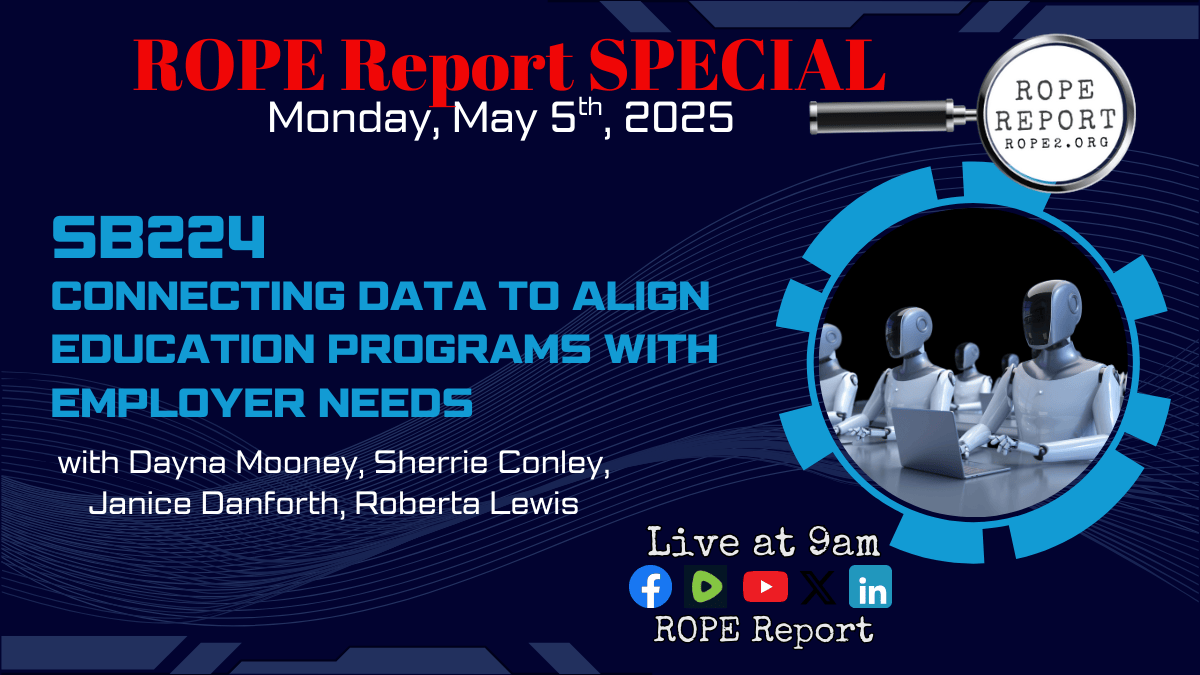
This is a post that will go with several other posts to come, but because we’ll be going live on Monday morning at 9am to talk about this specific issue (5.5.25), I wanted to be able to get this timeline I constructed out into the public view so the discussion was easier to follow.
The information below is just in a raw format, but it was information I collected via internet searches and using the AI research tool, GROK on X. I have saved all that information, so if you have questions, I can help answer those with the saved information.
Also, I’ve included URL linkages wherever I can so that you can see where the information came from and how to get their yourself.
The BOTTOM LINE?
Oklahoma is pushing federal Workforce policy as education and has been THROUGHOUT the years since the 1990’s assuredly. It doesn’t matter if you’re a Republican or a Democrat, this timeline makes it very easy to see how the Powers That Be, direct policy statewide (regardless of the 10th Amendment) through the carrot and string approach of federal grants to be used to create federal programming.
There is NOTHING good about tracking students across the years of their lives while saying that we’re doing it for them. WE’RE NOT! We’re doing it because the Powers That Be want a PLANNED ECONOMY which will enrich their toady friends and the useful idiots that carry their water, while making the poor poorer, decimating the middle class and turning our children into cogs to fit into the planned economy jobs machine.
SB224 was about using DASH – OMES new data sharing hub – to fit the State Longitudinal Database System holding educational data together with the Data Quality Workforce Initiative holding employment and workforce data – TOGETHER to create a seamless way of sharing data on kids from cradle to the grave. It sounds crazy, but I’ve put enough of the policy below for you to determine whether that assertion is crazy or not.
The worst part is that our STATE GOVERNOR is selling this as something good for kids. IT’S NOT! It’s good for business. Kids should be educated classically in as many subjects as we can stuff into their little heads and then they can use that information to INFORM THEIR OWN DECISIONS ABOUT WHAT THEY WANT TO DO. We don’t need the government MINIMALLY educating our students (What? Proficiency ratings are above 50% in reading and math? No.) so they know just enough to think that they’re deciding what they want to be when they grow up when the counselor at school gives them ‘suggestions’. We need WELL-EDUCATED kids.
If the repeal of Common Core from state law and the inability to secure an NCLB waiver caused the state an inability to secure a completed SLDS (to create widgets of Oklahoma kids that are only educated to fill the need for jobs), WHY WOULD WE WANT TO HOOK THESE TOGETHER NOW? Oklahomans didn’t like it in 2014, but they’re going to want that now? Not only that, but if we did that back then, what could we do NOW if we unite against this?
Help us STOP SB224. Share this. Share the video from Monday morning. Let your senators know they’ll be primaried if they vote for this nonsense. Educate others about what is going on in this state. We made a difference with Common Core – we can do it again!
1965 – President Lyndon Banes Johnson creates the first Elementary and Secondary Education Act (ESEA) to dovetail with his War On Poverty. It has been reauthorized every 5 years since.
1990 – President George H.W. Bush created Goals 2000 after he signed an international agreement entitled, “World Declaration on Education for All” 42 (EFA), the result of a summit sponsored by the United Nations, called “The World Conference on Education for All”
Included the call for the nation’s FIRST State Longitudinal Database to track student progress
1990 – Oklahoma legislature creates the Office of Accountability
Tasked with overseeing school performance through the Oklahoma Educational Indicators Program (OEIP) and the Oklahoma School Performance Review program (OSPR)
OEIP developed standards to gauge performance of schools
Required by Goals 2000 legislation
1994 – Bill Clinton’s ESEA called, “Improving America’s Schools Act of 1994. Also created School-To-Work Opportunities Act and the Goals 2000 Act in conjunction with the ESEA
School boards and elected legislators would be bypassed as applications would be made and federal funds received by state Governors and their appointees on workforce development boards.
A computer database (aka Labor Market information System) would be used into which school personnel would scan information about students and their family including medical and psychological data that could be shared from the school to others deemed important in the student’s education
1995 – Oklahoma Commission for Teacher Preparation (OCTP) created by legislature (HB1549)
Created teacher preparation system
The non-profit, Oklahoma Workforce Investment Board, Inc. (OWIB) was formed in1998 and established under the Workforce Investment Act of 1998 (WIA), which required states to establish state workforce investment boards to oversee workforce development programs.
2001 – George W. Bush – renames Clinton’s ESEA, “The No Child Left Behind Act”
Included Adequate Yearly Progress (AYP) required testing public school students in 3rd, 8th and twice in high school. State set benchmarks they then had to meet with 100% proficiency. Schools missing target two years in a row were put on a “needs improvement list”. If schools didn’t make AYP, funding could be removed.
Needed database to collect test scores at a minimum
1st slds undertaken in Florida as a pilot project
2002 the Statewide Longitudinal Data Systems (SLDS) Grant Program, authorized under the Educational Technical Assistance Act of 2002 and launched in 2005 by the U.S. Department of Education’s Institute of Education Sciences (IES). This program provided grants to states to design, develop, and implement longitudinal data systems, starting with the first round of funding in fiscal year 2005, which awarded $265 million to 41 states and the District of Columbia by 2009.
2006 – Created the Governor’s Council for Workforce and Economic Development (GCWED – codified by Senate Bill 1397 (2006) to comply with federal and state workforce development priorities – especially the WIA (1998)
The GCWED was created to support the GOVERNOR’s economic and workforce development vision (such as the initiative Oklahoma Works under Governor Mary Fallin in 2013)
2007 – National Chamber of Commerce “Leaders and Laggards” report gave Oklahoma an “F” in accountability, academic achievement and data quality
Oklahoma received an A for its teaching force
Oklahoma had no alignment between educational outcomes and workforce needs
2009 – Barrack Obama – did not reauthorize NCLB, but created a grant process called Race To The Top. States competed for funds from the American Recovery and Reinvestment Act (ARRA) funds for 4 reforms
Including “building data systems that measure student growth and success, and inform teachers and principals about how they can improve instruction”
RTT Early Learning Challenge began to collect testing data on infants, toddlers and preschoolers enrolled in preK programs
2009 – Governor Brad Henry, takes State Fiscal Stabilization Funds from the Obama Administration including to create STATEWIDE P–16 EDUCATION DATA SYSTEMS.— (A) ESTABLISHMENT OF SYSTEM.—Each State that receives a grant under subsection (c)(2) shall establish a statewide P–16 education longitudinal data system. https://www.congress.gov/110/plaws/publ69/PLAW-110publ69.pdf
2009 – Educational Accountability Reform Act created by SB111 (Republican legislators) and signed into law by Governor Brad Henry
Created in part due to Chamber of Commerce F grades in their “leaders and laggers” report
Transferred management of student data, determination of Adequate Yearly Progress (AYP from NCLB), cut scores for tests, and oversight for academic standards and testing to the Office Of Accountability created in 1990
Centralized data
2010 – Workforce Data Quality Initiative (WDQI) grant for 1 million dollars from the Department of Labor to “support the creation of data systems linking workforce and education data to evaluate training and employment outcomes
2012 – Oklahoma applied for an NCLB Waiver under Republican Chief For Change, State Superintendent Janet Barresi and Republican Governor Mary Fallin, Chair of the National Governor’s Association – we did NOT get a waiver
implementation of the A-F School Grading System (and Common Core, etc) and data collection
It will strengthen the OSDE’s ability to link students with teachers, programs, interventions and outcomes and allow the OSDE to link P-12 data with education data from other agencies.
2012 – Oklahoma Office of Educational Quality and Accountability (OEQA) created
Governor Mary Fallin signed SB1797 which consolidated the Office of Accountability and Oklahoma Commission for Teacher Preparation into the Oklahoma Office of Educational Quality And Accountability
Now under supervision of the State Secretary of Education
7-member Board created to govern the office (Commission For Educational Quality and Accountability
The OEQA uses the SLDS and National Assessment of Education Progress (NAEP) to create the school report cards
2013 – Governor Mary Fallin, announces through her position as the Chair for the National Governor’s Association, creates the America Works: Education and Training for Tomorrow’s Jobs, which spotlights improving education and workforce training systems and aligning those systems with the needs of individual state economies.
2014 – Federal Workforce Innovation and Opportunity Act (WIOA) – replaced Workforce Investment Act (WIA) of 1998
States required to strengthen their workforce systems by aligning them with economic development goals, emphasizing business-led strategies and improving data-driven decision making
2014 – Governor Mary Fallin creates Oklahoma Works
“Under the Workforce Innovation and Opportunity Act (WIOA), the Governor of each State must submit a Unified or Combined State Plan to the U.S. Secretary of Labor that outlines a four-year workforce development strategy for the State’s workforce development system.
This linked WDQI and SLDS to track education plus workforce outcomes
Provided the framework for a statewide coalition to connect education, training and job opportunities
Five goals – one of which was to “enhance data-driven decisions by using longitudinal data systems to track outcomes and evaluate program effectiveness
Oklahoma Works influenced education policy, including charter school expansion (moving Oklahoma’s charter law ranking from 37th to 10th nationally) and literacy improvements via the Reading Sufficiency
Grok
The initiative’s data-driven approach informed performance-based budgeting, shifting state funding to programs with proven outcomes Grok
The SLDS – which integrated K-12, postsecondary and workforce data gave Oklahoma Works the data to align education programs with employer needs – Grok
Changed the Central Oklahoma Workforce Board (COWB – 1998) to the Central Oklahoma Workforce Investment Board (COWIB) still a non-profit organization covering 9 counties in central Oklahoma
Board is composed of business leaders, county commissioners and representatives from education and community organizations
According to GROK the WDQI and SLDS grants are NOT CONNECTED which is a problem for implantation of its mission
GROK also says that the 2014 Common Core data repeal and NCLB waiver revocation “created policy turbulence, potentially disrupting COWIBs alignment with Oklahoma Works’ educational goals. Political resistance to federal mandates may have complicated WIOA implementation”.
2015 – State ‘reaffirmed’ Governors Council for Workforce and Economic Development in order to meet updated Workforce Innovation and Opportunity Act federal mandates in order to receive federal workforce grants.
2021 – National Chamber of Commerce calls on states to adopt the America Works Agenda to “address the nations worker shortage”
Introduce 4 ‘immediate action’ items
Help Americans acquire the skills they need to fill today’s open jobs
Improve education and job training opportunities for the jobs of tomorrow
Remove barriers to entering the workforce
Expand the workforce through immigration reform
Under number 2 we are told that every state needs Learning and Employer Records (LERs): In addition to providing a verified and authenticated record of employment history for every American worker, support the ability of education, training, and credentialing providers to produce a digital record of learning that is based on open and available data standards and used to empower learners and workers with information about their skills and qualifications.
2022 – Oklahoma’s WIOA State Plan for 22-23 is filed
Introduces ICAP: The Individual Career and Academic Plan (ICAP) was recently developed for the state’s PK- 12 system by the Oklahoma State Department of Education (OSDE) with input from students, families, educators and other partners. The ICAP equips students with the awareness, knowledge and skills to create their own individualized, meaningful exploration of college and career opportunities. In order to reflect students’ changing passions, aptitudes, interests and growth, the ICAP is a flexible, evolving document. The ICAP incorporates labor market data into occupational exploration materials to allow students to make informed decisions about education and training for future career goals.
2022 – Oklahoma Public Resource Center Commissions the Office Of Educational Quality and Accountability Transformation Proposal
Recommendation 2 was to Provide impactful P-20 (SLDS) information
Recommends that OEQA become a data hub for student data
Recommends using the Oklahoma Data Matrix visualization tool
Recommends the use of the Baldrige Excellence Framework for P-20 institutions across Oklahoma
Must have access to the data that follows a student throughout and beyond their formal participation in the education system
a data hub also helps address another core desired outcome of the stakeholder engagement process by not just knowing where kids are now, but where they are six years after high school or college graduation
2023 – Governor Stitt creates Executive Order 2023-21 to transfer the Oklahoma Office of Workforce Development under the Oklahoma Employment Securities Commission
The Oklahoma Employment Securities Commission is designated as the single point of funding and accountability for the WIOA federal Department of Labor workforce grants
2024 – Oklahoma’s WIOA required long range plan for 24-27 states the following on page 119
Improve Access to and Sharing of Data: Oklahoma recognizes the weaknesses it has faced in the past regarding access to and the possession of data critical for the success of the workforce system. We are committed to identifying and acting on opportunities to systematize the sharing of data among partners in the workforce system, to coordinate resources expended on data research and evaluations, and to expand tools available at both the state and local levels to include dashboards and other modern technologies. The main objective of these efforts is to strengthen the aligned efforts of the core, required, and additional workforce system partners for more effective outcomes.
2024 – Oklahoma’s WIOA State Plan for 24-25 is filed
Vision includes: Becoming more data-driven, using independent and objective data to drive workforce transformation.
Coordinating and “braiding” WIOA funds to drive the state’s workforce strategy
Goals include: Preparing an educated and skilled workforce and meeting employers’ skilled workforce needs go hand in hand. Oklahoma will achieve innovation and efficiency through alignment, collaboration, and education. All entities are working together to drive collective and meaningful outcomes.
2024 – Oklahoma Works, Governor’s Council for workforce and Economic Development votes to accept the plan: minutes of meeting January 19th, 2024
Discussion & Vote to approve policy informing/establishing publicly OESC’s Authority to administer the WIOA programs including policy and procedure. – this allows OESC as the agency to administer the program to DOL, standing in accordance with the Workforce Act, signed by Governor Stitt, on August 10, 2023. Chair Gray motion for a vote, Stan McCabe move the motion and David Reid seconding the motion, with all voting aye, no opposed. No further discussion.
2024 – Governor Stitt signs Executive Order 2024-24: creating a Task Force on Human Potential for Future Industries to go through 2027
Mandates coordination between Oklahoma Office of Workforce Development and Oklahoma State Department of Education, Oklahoma State Regents for Higher Education and Career Tech to align curricula with high-demand occupations.
Requires use of Oklahoma SLDS and DASH (data sharing hub at OMES) to integrate education, workforce, and economic data
Supported by MOU – Data Sharing Agreement (DSA) among 9 agencies which, according to GROK are NOT LISTED IN AVAILABLE RESOURCES
Possibly OSDE, OESC, OK dept of commerce, OSDH, Oklahoma office of workforce development
Cannot find the exact members of the task force – only the criteria are found in the EO
Not able to find any meeting agendas or minutes
2024 – October meeting of Oklahoma Works, Governor’s Council for Workforce and Economic Development speaker, Chad Warmington from the Oklahoma State Chamber
Warmington also addressed House Bill 621, which led to the creation of a new workforce commission, with its priority being the recruitment of a CEO to lead these initiatives. A secondary priority is enhancing workforce data. Warmington stressed the importance of building a strong workforce infrastructure, particularly in preparing K-12 students to be career-ready by the time they graduate. He shared Superintendent of Oklahoma City Public Schools’ vision that students should be ready to “Employ, Enroll, or Enlist” upon graduation, and he talked about the need for schools to align their programs with the state’s workforce requirements.
Our focus has been to establish OEQA as a central hub for data, analytics, and actionable information—fostering a culture of data driven decision-making that supports systemic improvements, transparency, and accountability.
With the launch of Power BI dashboards and progress toward integrating data across K-12, higher education, and workforce sectors in a Statewide Longitudinal Data System (SLDS)
2024 – December – OMES creates DASH – Data Sharing Hub in conjunction with Google (for analytical tools) and Cloudflare (for security)
According to GROK, DASH supports secure data sharing for Oklahoma Works and OLDS, but specific developer names are undisclosed
Rolled out to 6 unnamed agencies with plans for more agency use
According to GROK, DASH was needed to share data to align education and workforce programs according to Governor Stitt’s EO 2024-24 and Oklahoma Works
2025 – Oklahoma State Chamber of Commerce 2025 Legislative Priorities states:
Support improving K-12 Graduation Requirements to include Career Ready, Advanced Placement, and concurrent academic credit options.
Advocate for partnerships and the integration of workforce system partners, resources, and strategies supported by state funding, that utilize data driven strategies for skill alignment and credential attainment, ensuring alignment with economic development goals and employer needs.
Oklahoma has a data sharing agreement (DSA) among NINE state agencies which are unnamed according to GROK.
Oklahoma also has specific Memoranda Of Understanding (MOU) with
Oklahoma State Department of Education
Oklahoma Employment Security Commission
Oklahoma Department of Commerce and Local Workforce Boards including The Governor’s Council For Workforce and Economic Development
Oklahoma State Regents for Higher Education
Oklahoma State Department of Health
Oklahoma Department of Labor
The State Data Platform and DASH
DATA PROTECTIONS – listed
Government Transparency Act of 2019
Oklahoma Computer Data Privacy Act
Oklahoma Student Data Accessibility, Transparency and Accountability Act
MOUs are to align with HIPAA, FERPA and Workforce Innovation and Opportunity Act (WIOA)
DATA CONCERNS
GROK was asked “do the Government Transparency Act of 2019, Oklahoma Computer Data Privacy Act, Oklahoma Student Data Accessibility, Transparency and Accountability Act, FERPA, and HIPPA protect individual data in Oklahoma.
The following is copied from the result
Critical Examination
Strengths:
Robust Framework: The five laws collectively cover diverse data types (student, health, consumer, government), ensuring comprehensive protection in OLDS and DASH, as seen in COWIB’s secure data use.
Interagency Coordination: DSA and DASH, supported by the Government Transparency Act, streamline secure data sharing, aligning with Executive Order 2024-22’s focus on personalized learning.
Compliance Mechanisms: Audits (Student Data Act), penalties (Computer Data Privacy Act), and public disclosures (Government Transparency Act) enhance accountability, reducing misuse risks.
Weaknesses:
Re-Identification Risks: FERPA and HIPAA exemptions allow de-identified data sharing, but indirect identifiers (e.g., ZIP code, race) could enable re-identification, especially in small Oklahoma communities.
Enforcement Gaps: FERPA’s rare use of funding penalties and HIPAA’s federal oversight may limit state-level accountability, while the Computer Data Privacy Act lacks a private right of action.
Transparency Limitations: Sensitive MOUs or audit details may remain non-public to avoid security risks, as allowed by the Student Data Act, reducing full transparency.
Narrative Scrutiny:
Oklahoma’s narrative of robust data protection is largely accurate, given the layered legal framework, but overstated due to re-identification risks and enforcement weaknesses. The 60% attainment goal’s stagnation (~30%) suggests data protection alone cannot address systemic educational barriers.
The business-led focus of Oklahoma Works and GCWED may prioritize employer data needs, potentially straining privacy protections, though FERPA and HIPAA compliance mitigates this.
Political controversies, such as Stitt’s Executive Order 2023-31 (anti-DEI) or the 2024 OMES audit citing mismanagement, may erode public trust in data systems, despite legal safeguards.
Sources and Further Inquiry
Primary Sources:
Oklahoma Statutes, Title 74, § 3122 (Government Transparency Act), Title 70, § 3-168 (Student Data Act), via www.oscn.net.
U.S. Department of Health and Human Services HIPAA guidance (www.hhs.gov/hipaa).
Secondary Sources:
Oklahoma Office of Management and Enterprise Services (dash.ok.gov) for DASH and DSA details.
Central Oklahoma Workforce Innovation Board (cowib.org) for workforce metrics.
CaseGuard on Oklahoma’s Student Data Act (caseguard.com, April 6, 2022).
McAfee & Taft on HB 1030 (mcafeetaft.com, March 9, 2023).
Contact for Verification:
OMES Data Services: 405-521-2141 or data.services@omes.ok.gov (mailto:data.services@omes.ok.gov) for DASH and DSA.
OEQA: 405-522-5399 for OLDS and student data policies.
OSDH: 405-426-8000 for HIPAA MOUs.
Oklahoma Attorney General: 405-521-3921 for HB 1030 enforcement.
Accessing Details: Request MOUs or audit reports via the Oklahoma Open Records Act (51 O.S. § 24A.1 et seq.) through OMES or OSDH. Visit oklahoma.gov for transparency policies.
An Analysis of Recent Education Reforms and The Resulting Impact On Student Privacy
“Our system isn’t tapping into the potential of every student. That’s what we’re setting out to change,” Oklahoma State Secretary of Education, Nellie Sanders said. “Artificial intelligence, virtual reality and other emerging technologies can offer Oklahoma students a learning advantage. We’re going to explore ways to personalize curricula to interest, expand apprenticeship programs and define universal soft skills so our students are ready to lead us into the future.”
Tuesday, April 29th, SB224 – Creating the Oklahoma Education and Workforce Statewide Longitudinal Data System – was brought to the floor for a House vote following passage in the Senate 33 to 13. The bill failed in the House 35 to 56 with 7 absent.
At that time, author Representative Caldwell captured the bill to be reheard at a later time.
Thursday, May 1, the bill came to the House floor again, where it was voted down Ayes: 46 Nays: 37.
Then, a Motion to Rescind THAT vote was adopted Ayes: 51 Nays: 32.
The measure THEN passes Ayes: 51 Nays: 36 without the emergency clause.
Representative Tom Gann – who argued against the bill on the floor – wrote a Press Release concerning the unprecedented THREE votes the bill received on the 1st. That press release was read live on the air after it was sent, but Gann was advised that it would NOT be placed on the House website for publication. Please see below for a copy of that press release.
Rep.-Tom Gann, R-Inola Issues Statement on Bonus Vote of SB224 and Warns of the Dangers of Setting New Policy
Representative Tom Gann released the following statement on the unprecedented bonus vote taken by the house on Thursday on Senate Bill 224.
“On Thursday, May 1, 2025, Representative Kyle Hilbert, Speaker of the House, took actions regarding SB224 that did not align with the House Rules of the 60th Legislature.
House rules dictate that once a bill is defeated it is not eligible for additional consideration. The House vote to defeat SB224 was considered final action under the rules.
However, Hilbert, while presiding over the house allowed an additional bonus vote to occur by which the bill was approved. This breaks with years of clearly established House precedent that prevents never ending bonus votes on failed legislation and opens up a Pandoras box of potential abuse.
What other bills will be allowed a bonus vote?”
The relevant house rule and written precedent are attached to this release.
House Rule 6, Bills And Resolutions,
6.8 – Final Action
(a) The following action shall constitute final action on any bill or resolution:
1. committee recommendation, including any oversight committee recommendation or any policy committee recommendation of “Do Not Pass”;
2. if a motion to reconsider the vote on Third Reading orFourth Reading fails to prevail or expires;
3. if a motion to table the motion to reconsider prevails; or
4. if a vote is taken on Third Reading or Fourth Reading and no notice is served to reconsider the vote.
(b) If final action is such as to defeat a bill or resolution,no other bill or resolution having the same effect and covering thesame specific subject matter shall be considered by the House ofRepresentatives during either session of the current Legislature.
Page 53
On page 209 of Precedents
6.8 – 4 (2010) Motion to Rescind May Not Be Used to Avoid Final Action
Rule – House Rule 6.8, paragraph (a) states in part:
(a) The following action shall constitute final action on any billor resolution:
…a motion to reconsider the vote on Third Reading or FourthReading [that] fails to prevail…
History – Representative Nelson moved to reconsider the vote whereby Senate Bill 2207 failed, which motion failed of adoption. Representative Nelson moved to rescind the vote whereby the reconsideration motion failed.
Representative Reynolds raised a point of order stating that the motion to rescind was dilatory.
Wednesday, April 30th, during the regular ROPE Report podcast, Jenni and Michael discussed Senator Kendal Sacchieri’s Senate Resolution 18.
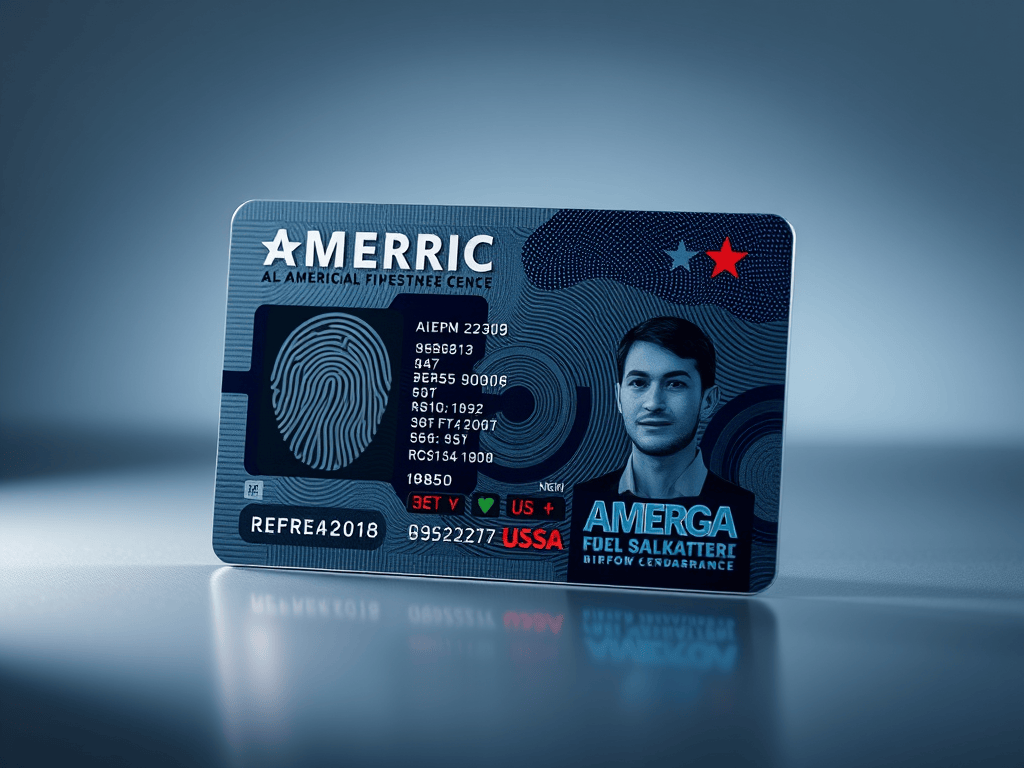
Here is the Introduction: A Resolution affirming Oklahoma’s right to opt out of the federal REAL ID system; supporting the state’s obligation to offer residents a meaningful choice between REAL ID-compliant and -noncompliant identification; and opposing unwarranted collection and sharing of personal data.
As a person who has been VERY CONCERNED about the religious aspects of the REAL ID, I’ve also been angered that Oklahoma did away with the protections offered citizens in legislation from 2007 that would have delayed REAL ID implementation for Oklahomans. Unfortunately, our legislature sold us out to the feds in 2017 with a bill former Congresswoman, Governor Mary Fallin (R?), was only too happy to sign so that Oklahomans ‘could’ fly.
Though we have a law currently on the books (47 OK Stat § 6-110.3) that says essentially the same thing as the resolution put forth by Sacchieri, it is my hope that this is the first step in moving the legislature toward a RELIGIOUS EXEMPTION FOR ANY BIOMETRIC DATA OF ANY KIND.
NO American citizen should have to provide biometric ID to the government for ANYTHING, let alone travel. If you don’t know anything about REAL ID, please tune in to our podcast, Friday, May 16th (at 9am) as we welcome REAL ID expert, Twila Brase from the Citizens Council for Health Freedom. In the meantime, CALL YOUR SENATOR AND ASK THEM TO HEAR THIS RESOLUTION!
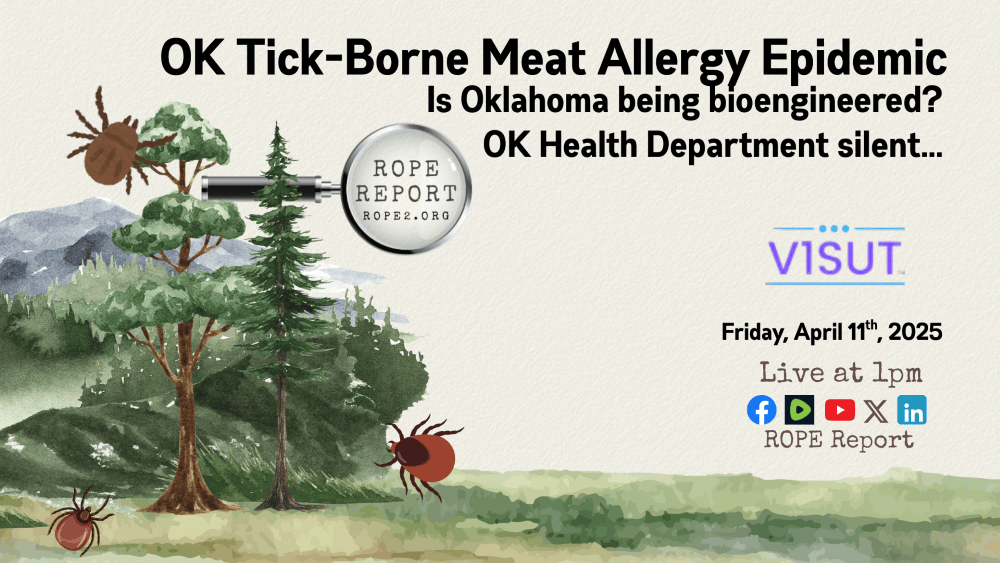
Friday, April 11th, our friend and stellar researcher, Mary, with V1SUT Vantage came on to talk about tick-borne illnesses in Oklahoma. I was really looking forward to this because, back in the early 90’s I worked for the Oklahoma State Health Department as an Epidemiologist for a couple years.
During my time there, I wrote a paper, “Ticks and Tick-borne Diseases in Oklahoma”, which won the Charlotte S. Leebron Award from the Oklahoma State Medical Association. This is an actually hysterically funny thing to discover, when you get to one part in the video and you hear me misremember the type of organism causing tick diseases as a protozoan and not a bacteria! I’m going to plead “the hard drive is full”, but good grief THAT was embarrassing! LOL
To see the full video, find it on our Rumble and YouTube channels. You won’t want to miss the full podcast. It was SO informative – in a scary, horrifying way!
Also very interesting is the FACT that during the time I was working toward my Bachelor’s and Masters in Biology – nor during the time I was employed as an Epidemiologist at the OSDH – was I ever taught, nor did I read, or have information shared with me at all, that matched what Mary said during the podcast about the etiology of tick diseases. How believable and unbelievable all at the same time! It’s really SHOCKING, frankly, what we’re finding has been hidden from us by this government that steals our money to keep itself running!
Basically – and to recap the episode – Mary told us that tick-borne diseases are really bioweapons created on Plum Island, New York, by many of the Nazi scientists the US government gave safe harbor. Just think. To many, this sounds completely nuts, but remember, so many people STILL won’t believe that COVID-19 was a manufactured bioweapon even though it’s now pretty conclusively KNOWN to have originated in the Wuhan laboratory in China!
It’s also an odd thing to think that, of all the experimentation we know, AND SUSPECT, the US has done with bioweaponry, Americans wouldn’t think any of it would either get loose, or be specifically used on us. Yet so many refuse to believe.
In this clip, Mary talks about the history of tick-borne diseases. It’s a short video, but fascinating!
In the next clip, Mary describes the spread of Alpha-Gal, the syndrome produced in the Lone Star tick, by Lyme disease. Unfortunately, this syndrome is EXPLODING here in the US, with one of the main symptoms being that people who are bitten can become ‘allergic’ to eating meat, sometimes becoming either violently ill with gastric symptoms or even histamine reactions that can cause anaphylaxis! In fact, I have a friend, whose mother is required to carry an Epi-pen everywhere in the event she accidentally eats something that might have touched or otherwise contain a meat product.
In this video, she talks about a scientist, S Matthew Liao, who actually gives a Ted Talk indicating that science could save the planet from climate change if we could make humans allergic to meat, and wow, isn’t it amazing that the Lone Star tick is the vector for a bacteria that seems to cause that in some people bitten. Good grief! It’s unbelievable where we have come in the world today. I’m actually happy my grandparents were dead. All of them would have had a fit to learn about THIS information.
If you’d like to read more, find Mary’s article on her Substack, here. And don’t forget to SHARE!
April 11th, the Department of Homeland Security released a short clip of its Trump-appointed head, Kristi Noem, commanding that all Americans must obtain a REAL ID before May 7th, in order to board domestic flights and enter federal buildings. These national ID cards, in her words, “prevent fraud and enhance security. Please do your part to protect our country.” To hear Noem speak like this, utilizing the mummified vernacular of Bush-era neoconservatives, two decades after the REAL ID Act was first passed, brings back a hideous nostalgia. How is anyone still taking this seriously?
REAL ID was passed into law in 2005 amid the hysteria of the War on Terror, a hysteria we’ve long ago emerged from. Despite this, DHS and the TSA are still hellbent on forcing a national ID card upon us. Why? Surely not to “prevent fraud and enhance security”. We’ve done just fine the past twenty years, so why do we need it now? The answer is we don’t. But they, our federal government do. They want all our information compiled in one tidy bundle, linking all state driver’s licenses together in one big database, for their ease in accessing all of our information immediately.
In response to Noem’s announcement and the coming deadline, Kentucky Congressman Thomas Massie posted on X:
“Real ID isn’t needed and won’t stop terrorists from hijacking planes. Most of the 9/11 hijackers held Saudi, UAE, Egyptian, or Lebanese passports. Real ID is a national standard and database of IDs that is primarily a tool for control of Americans. Trump shouldn’t enforce it.”
Resistance against REAL ID has been surprisingly vigorous over the past two decades. At one time, 25 states rejected the notion of a mandatory federal ID card, and announced their noncompliance. 15 states had laws on the books prohibiting compliance with the REAL ID Act. But as the years went on, non-compliant states began to lift their ban on REAL ID, including Oklahoma in 2017. It’s mind-boggling that agencies that should have been abolished years ago are bloated and thriving to this day, and wielding a vulgar and unchecked amount of power over the rights and privacy of American citizens.
Noem’s ridiculous announcement that the Trump administration would begin enforcing the REAL ID Act is very alarming. Is Trump’s “Golden Age” ushering in a return of domestic authoritarianism? The DHS and the TSA were products of War on Terror hysteria, and have long outstayed their welcome. The TSA famously has never captured a single terrorist, but has succeeded tremendously in humiliating travelers with strip-searches, while stealing hundreds of thousands of dollars in items from luggage from the moment of creation. A quick Google search produces endless news articles of TSA agents pilfering anything and everything from unwitting fliers. If you’re a frequent flier, you know first-hand that the TSA agents aren’t exactly the best and brightest among society. More often than not, they look and behave like thugs, drunk on the power trip they receive from barking commands all day. Despite this, the TSA is now acting as the DHS’ muscle, enforcing REAL ID at our airport gates for domestic flights.
Most Americans have no idea the scope of danger inherent in REAL ID, hence their nonchalant attitude. “Compliance” could mean anything, depending on the year, the political temperature, or whether or not we’ve found ourselves in another national emergency. Personal records required for a REAL ID could, in the future, contain information on gun ownership, vaccination and medical records, employment, wealth, and all manner of biometrics. The list of requirements for compliance will grow steadily each year. Just watch. The list of “checkpoints” throughout the country will only grow. For now, it’s federal buildings and airports. In the near future, it could (and probably will) be the doctor’s office, your job, your children’s school. If we awake to find ourselves in the midst of another pandemic panic, what will DHS do with its power over our ID cards? It doesn’t take much imagination to see that we’d exist at the mercy of the federal government at the merest hint of a national crisis.
REAL ID means the federal government has us by the throat. Failure to comply means a revocation of your Big Brother hall pass that you previously used to navigate Uncle Sam’s panopticon. You will no longer exist as a functioning member of society. In this sense, REAL ID makes an American social credit system much more a possibility than before. A central bank digital currency moves much closer to reality as well. The type of control that the federal government is striving for can’t have the loopholes or exit ramps that the cash economy provides.
Trump’s victory has lulled many conservatives into indifference over privacy-obliterating legislation like REAL ID. If Biden had been re-elected, their tune might be different, but because their team is in control, there’s no need to worry. Let’s hope that conservatives reawaken to these very real issues of privacy and freedom before its too late.
Ask yourself: does our government care more about protecting us, or controlling us? This is rhetorical. The sole reason for the REAL ID is to enhance our government’s ability to monitor and compel obedience from every American citizen. REAL ID makes us less safe, because it dramatically diminishes our freedom, exposing us to the whims and insane ideologies of anyone who gains power in the future. The Constitution exists to prevent this sort of thing, do you think Kristi Noem’s heard of it?
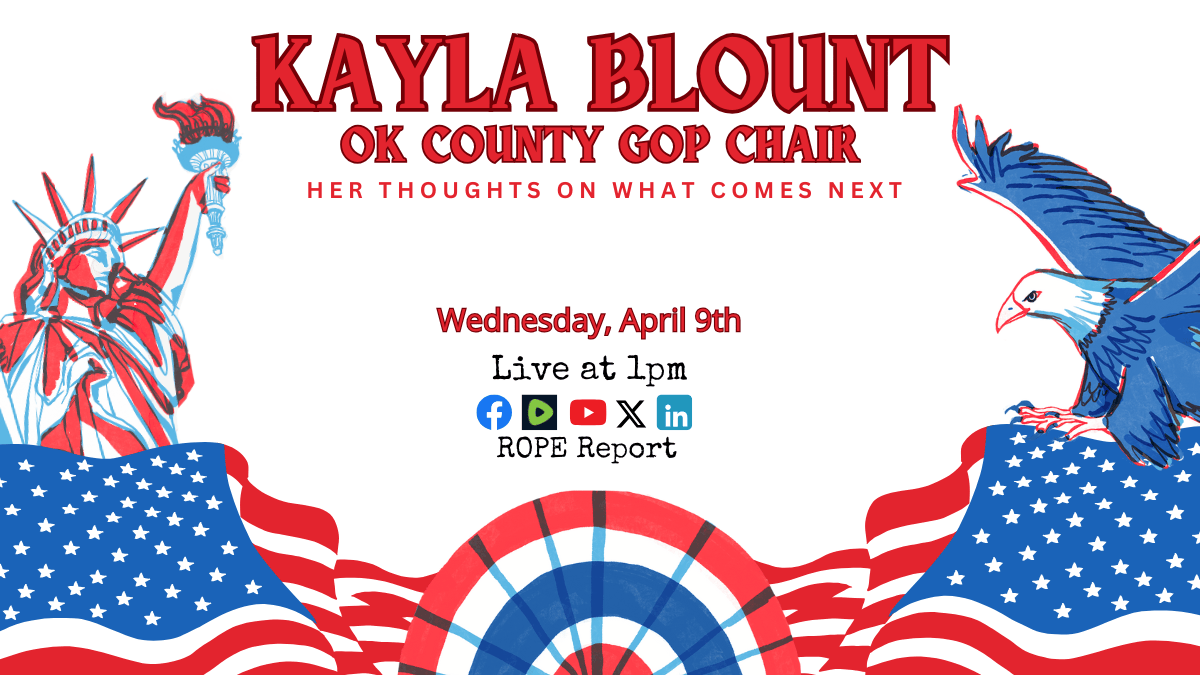
Michael and I were excited to welcome the new Oklahoma County GOP Chair to the program on Wednesday (4.9.25) to talk about her plans and vision for the Oklahoma County GOP going foward.
We’ve had Kayla on several times previously to talk about insurance issues because of her work as an Independent Insurance Agent with her firm 317 Insurance Advisors, but this was an entirely different podcast.
It was great to hear Kayla’s vision for the OKCOGOP. You should watch the entire live broadcast to get the full flavor (YouTube, Rumble), but she has two main foci – one is communication and the other bottom-up leadership.
In the clip below she talks a bit about the fact that she wants to grow the party, but she doesn’t want prospective Republicans just checking a box – she wants them to believe in the Republican ideals.
We also talked a lot about communication. There has been such a divide in the Republican party for so long that she wants to make sure people are communicating and not just talking at one another. I’ve long said that leading Republicans is like herding cats. Everyone is an individualist with their own way of doing things to the point that sometimes even the things we should be working together on get waylaid because of someone else’s idea of the way it should be! The commies on the other hand follow each other bleating all the way off the cliff!!! Communication needs to build up the party and not tear it down. We don’t have the time for that!
In this clip, Kayla talks about the necessity to stop just griping on social media and start communicating with our legislators. If they don’t know how we feel, they’ll vote how they want – or worse – how the LOBBYISTS want!
We also talked a bit about the fact that our legislature killed a very good bill against the spreading of HUMAN CRAP on farmland (SB3). Maybe – if more of us had spoken out on that issue, we wouldn’t have to worry about whether that hamburger we’re eating was fed on hay grown in HUMAN CRAP. Truly. It is important to not just gripe – but to DO SOMETHING.
It was clear from visiting with her, that Kayla – and her Vice-Chair Donna Rice-Johnson (whom I’ve known since we were about 10! LOL) have a plan and are ready to execute that plan. If you haven’t been involved in a while for one reason or another, give it another try. Go to the OKCOGOP website, or contact Kayla directly at chair@okcogop.com to get on the email list and to find out if there’s anything you can do to help her – and Donna – get things off to a great start!
Oh, don’t get me started on this two-tiered committee system dreamed up by the House leadership this year. If you haven’t seen my critique of the House on Organizational Day, you might want to take a bit to at least listen to that. It was a phenomenal specter of what we’ve now seen as the House and Senate begin to hear each other’s bills and head for the legislative finish line.
You might even follow that up by reading this overview of what happened to at least one of our House members this year – not a single one of Representative Jim Shaw’s bills were heard on the floor. Not. A. One. In fact, I make the argument that, in a way, everyone in his district should throw their own little Boston Tea Party because I couldn’t find a better current day example of Taxation Without Representation. Honestly, disgusting – but again – I think those of us who have watched politics for a time could have seen that coming.
Navigating even one committee in the House’s smoke-and-mirrors system is challenging enough, especially when certain privileged legislators can kill bills without proper consideration. Navigating two committees, however, is mighty difficult for grassroots legislation lacking institutional support. Such legislation will most certainly struggle to pass through the closed-door decisions of two separate committee chairmen, either of whom can single-handedly halt a bill’s progress.
This essentially created a new layer through which grassroots legislation could be killed without the people closest to the Speaker having to get their hands dirty by refusing to give the bill a hearing before the full house.
So, back to Murphy’s article? What was that case-in-point bill, killed by the system?
It was House Bill 1043. And it was a vital proposal, based on an already enacted Florida law, that closes the loophole by which illegal invaders of our nation are using blue-state driver’s licenses to drive on Oklahoma roads.
Nineteen states reportedly offer driving privileges to the invaders, including New Mexico and Colorado, states that border Oklahoma.
The need for House Bill 1043 became very apparent when Oklahoma City Democrat Arturo Alonso-Sandoval, in declaring his opposition to the reform, reportedly claimed that “many” are using out-of-state licenses.
If Alonso-Sandoval is correct, Oklahoma’s roads are likely buzzing with those who have been enabled by blue states to bypass our driving laws and regulations. They are presumably living in Oklahoma but aren’t following the requirement that Oklahoma residents must obtain an Oklahoma driver’s license to drive on our roads. They’ve found a blue-state-enabled loophole and once again, a way to get around the laws and regulations by which the citizens are governed.
This disrespect for our laws, is sure to have consequences. Anyone who has been in Oklahoma City traffic recently, has no doubt taken note that something is now very wrong: it’s almost impossible to drive through that city without encountering an insane driver who has no regard for the traffic laws—almost as if they have no reason to respect the laws or fear of their enforcement.
House Bill 1043, by Jenkins of the House and Bullard of the Senate, would have closed that blue-state-enabled loophole by refusing to recognize these illegal alien driver’s licenses.
The bill was heard in the public safety committee where it was unanimously approved.
At that point, the legislation should have advanced to the house floor for a hearing before the full house.
But that’s where Hilbert’s new system—and one tyrannical super committee chairman—stood in the way. That chairman, Robert Manger, recently eked out a narrow election win after declaring to his constituents that he was 100% conservative. How, or what he based that on, is unclear, but it was just enough of a head fake to eke out a victory. But what is known, is that according to The Oklahoma Constitution’s Conservative Index—which since 1979 has been Oklahoma’s gold standard for gauging the voting of legislators—Manger actually scored a mere 60% conservative score in 2024.
————————————————-
But no, the self-declared 100% conservative, Manger, simply refused to as much as give the bill a hearing in his committee.
Thus House Bill 1043 provides us with the perfect case-in-point of how Kyle Hilbert’s new committee system is functioning. It’s another new hallway of smoke and mirrors added to the already crazy house that is the House of Representatives.
So, if after reading that, you can’t see your way to become involved in the 2026 elections in order to get some of the worst offenders of this system out, then please move to another state – like Colorado or California – they’re already ruined. In the meantime, follow those of us reporting on grassroots efforts and let’s push back with everything we have. This is getting nuts.