Wednesday morning, Michael and I welcomed Trenton Rippey of Young Americans for Liberty to the program. We had a great conversation – not only about what YAL does – but about what we should all be doing if we’re going to turn American around from the brink of economic and social destruction. You can find the entire interview on our Rumble and YouTube channels. I definitely suggest watching the entire interview and then passing it on to young people you know.
It was so great to listen to someone younger talk about the problems they are seeing in the country, what they are doing to try and solve those and how important it is to involve others in changing the system.
In the clip below, Trenton talks about how sometimes, all younger people need is to know there are people out there who think like them. Because college campuses are usually bastions of unfree thought that propagandize leftist ideals, it helps for young, conservative people to find a community of likeminded people and YAL can be that.
He also talks about the fact that his generation is finally realizing that no one (human) person is coming to save them and that they have to do it themselves.
In the clip below, Trenton talks about how hard it is to find out about true economic liberty – the free market economy – on college campuses because of the way it’s taught – or should I say ISN’T taught.
It was great to have Trenton on and to hear him talk about the power of following principles over politics – that saving the country isn’t Red or Blue, it’s about the principles of liberty.
In the first video above, he also talks about how YAL members aren’t accepting compromise on liberty issues anymore. For examples, property taxes are WRONG according to the Constitution of the US and the ideals of our Founders, and so are income taxes. They don’t want a percentage reduction in either tax – they want them abolished period. And who doesn’t really, it’s just that we’ve been putting up for too long with the idea that we have to compromise to get what we want.
Trenton makes us remember that our elected officials are not Kings and Queens to be genuflected to with a kiss on their ring. Elected officials are elected TO WORK FOR THE PEOPLE – to be SERVANTS of the people – not corporations with well-funded lobbyists.
Again, it was refreshing to hear a younger person understand the principles of liberty and have a desire to see those expressed – the way they should be – in our government of The People, by The People and for The People! Help a young person get connected to YAL TODAY!
Okay. Trick question, but that’s (I hope obvious) to make a point here. Sometimes when the shrieking about something is so loud you have to put your hands over your ears (hypothetically), it’s Kabuki Theater, not reality.
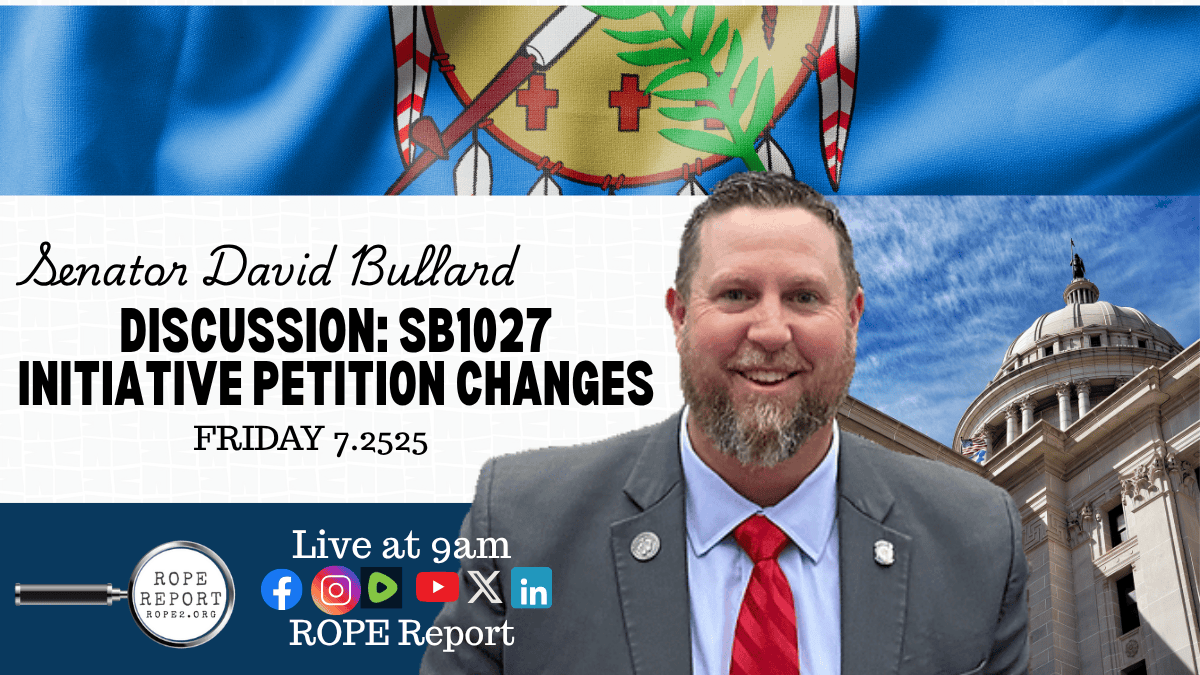
The shrieking SB1027 received was LOUD and varied. There were even conservatives up in arms. Consequently, we had the author of the bill – Senator David Bullard – on with us to WALK US THROUGH the bill. You can see the full live video on our Rumble and our YouTube channel.
Early on in the bill’s legislative cycle, I had an elected official call me and ask what I thought of the bill. I hadn’t read it, so I read it quickly (it’s not a big bill) and decided pretty early on in my reading that Bullard was on to something. I never had a problem with the bill from the beginning – it made sense to me.
Lots of state questions that have made it to the ballot have defied my ability to figure out how they got there. They just didn’t make sense for Oklahoma. Criminal justice ‘reform’, medical marijuana and the expansion of Medicaid are a few that pop into my head virtually immediately.
I’ve known we’ve had a problem writing our gists (the gist of the question is the ‘explanation’ you see on the ballot) for a long time. If you can’t read the gist of the state question and know EXACTLY what you’re voting for (or against), there is a HUGE problem. Citizens get snookered that way. They think they’re voting one way, but then they weren’t voting the way they thought they were voting because they didn’t understand the gist.
The first part of SB1027 fixes that (don’t forget, NEW LANGUAGE in a bill is UNDERLINED).
Section 2 amends the existing language to specify that YOU MUST BE A REGISTERED OKLAHOMA VOTER to circulate an initiative petition in Oklahoma. This is huge. Part of the biggest problem we’ve had with initiative petitions is that people come into Oklahoma from outside the state with initiative petitions that will try to change Oklahoma values – do you REALLY believe MOST people in Oklahoma wanted medical marijuana, or expanded Medicaid?
Section 3 does several things:
Any person collecting signatures HAS TO display a statement saying whether or not they’re getting paid to collect signatures.
If you feel you were duped by the petitioner and/or you didn’t understand the gist as it was written, you can petition the Secretary of State (SOS) to have your name removed from the petition.
Any organization paying a person to collect signatures SHALL LIVE IN THE STATE and any person being paid to collect signatures SHALL LIVE IN THE STATE and SHALL DISCLOSE TO THE SOS WHO IS PAYING THEM and they can’t be paid per sheet or signature, they must be paid an hourly wage. (This is huge for accountability.)
Anyone paying petition circulators SHALL turn in a weekly summary of expenditures to be published on the SOS website until conclusion of the petition.
Petitions amending state statute SHALL have 11.5% the number of votes cast during the most recent statewide general election for Governor for each county.
Petitions amending the Oklahoma Constitution SHALL have 20.8% the number of votes cast during the most recent statewide general election for Governor for each county.
Section 4 adds that the ballot title may not contain words or euphemisms (etc.), that would confuse or deceive voters.
Section 5 declares the law to have severability (if one part is struck down, the rest stays).
Section 6 declares the law to be in effect for any initiative petition upon which the SOS has not yet set a circulation date and section 7 declares an emergency so that it can take effect upon passage.
Now, seriously. Where is/are the problems here? Why wouldn’t we want petitioners to live in the state, declare who’s paying them and not get paid by someone – or organization – who/that doesn’t live/reside in the state? You don’t really want to understand the State Question (or initiative petition) you’re voting for (or signing)? Come on. This is a no-brainer.
The only thing about which there was some concern during the podcast, was how the law would be monitored – how do we make sure initiative petitioners are following the law? There were a couple of ideas mentioned during the podcast and Senator Bullard asked people to send him the suggestions that were voiced, but truly, it’s up to WE THE PEOPLE! We need to be informed (and now that you are, you need to inform your neighbor) of the provisions in this now state law.
The other thing that’s up to WE THE PEOPLE is NOT to put a bunch of garbage on social media that isn’t true. In the clip below, Bullard talks about how the ‘talk’ about the bill ran over the ‘truth’ of the bill. We can’t do that. We need to READ THE BILLS OURSELVES, not just push the ‘share’ button from our social media page.
Learn to look up bills on the state legislature webpage, or on a webpage called LegiScan. It’s not hard. All you do is type in the number of the bill on which you want information and it pops right up! You can read everything from the number of amendments the bill has to the number of votes the bill has. Truly, this is something EVERY member of WE THE PEOPLE need to learn how to do for themselves. We can’t trust social media, but we can trust ourselves.
Now, just because I want you to know what the bill says for yourself, here it is below. Read it and SHARE this post with your friends and neighbors today!
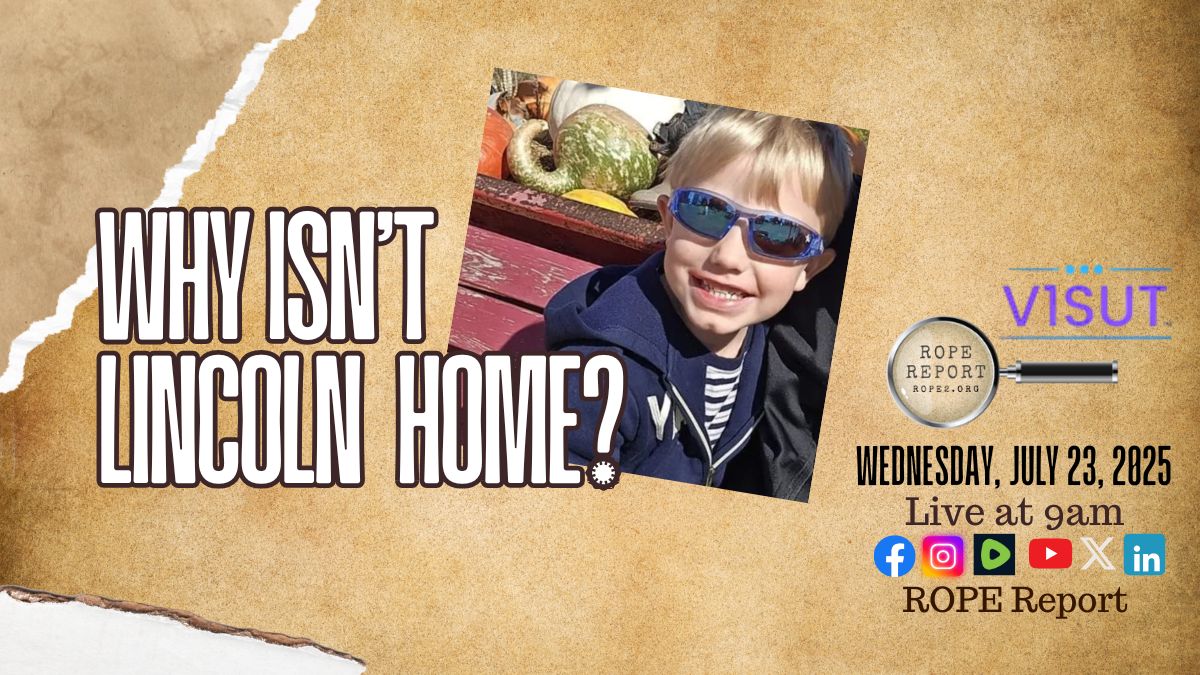
SCROLL TO THE BOTTOM TO FIND OUT HOW YOU CAN TAKE ACTION TO HELP RETURN LINCOLN LOCHMAN TO HIS PARENTS!
Our guest for today’s live podcast was our friend Katy Smith with V1SUT (Rumble, YouTube).
Though she’s been on the program to talk about Lincoln Lochman before (June 25, 2025), today she updated us on the case. It’s still ugly and DHS is still completely at fault for removing a baby from his parents and essentially trafficking him to a same sex couple – one of whom was indicted twice for child sex crimes.
Today, Katy talked about two new developments in the case that make everything worse and DHS even more at fault. They are so mindboggling and just flat wrong, I cut two shorts out of the full podcast in order to put a fine point on them.
The first one has to do with DHS just flat not following their own laws, but then again, I think we’d find that this happens quite a bit with government agencies. After all, who oversights government agencies like DHS? More government? Yup. Hmmm. Government oversight of Government – that has to end up with We The People coming out on top, right? LOLOLOL
So how UNFUNNY was that? Can you imagine being Lincoln’s parents and realizing that a government agency has your child and they are not even following the law – meaning if they were, YOU WOULD HAVE YOUR SON BACK? That’s just awful.
But then, there’s this…
Even though Oklahoma DHS is mandated to keep children with their parents, if they can’t, they are mandated to keep them within the child’s family. Here again, the Lochman’s get screwed. DHS completely ignores the emails coming from Andrew’s brother and put Lincoln with a same sex couple, one of which COULDN’T KEEP HIS HANDS OFF MALE BABIES. If the world were even sort of fair, heads would be ROLLING at Oklahoma DHS, but as it is, Governor Stitt-appointed head of OKDHS, Jeffrey Cartmell, refuses to answer any of Katy’s inquiries.
In all honesty, this is one of the most horrific cases of GOVERNMENT ABUSE AND MALFEASANCE I’ve seen in some time. If you’re interested in helping the Lochman’s get Lincoln back to them, Katy has put some information together to help us do that. And, as she says in the video, do not forget that WE ARE ALL STATUTORY REPORTERS, meaning that once we know a child is being abused we MUST report that abuse.
Here’s how we’ll report:
Call the Oklahoma Oklahoma Child Abuse Hotline: 1-800-522-3511, or make a referral by email to: inforeferral@okdhs
Because Lincoln has been traced to Kansas, also call the Kansas Protection Report Center Child Abuse Hotline: 1-800-922-5330 (there is no email referral)
This is Lincoln’s information:
Child’s name: Lincoln Harrison (adoptive name), Lincoln Sarver Lochman (birth name)
Child’s date of birth: 12/15/2020 (Age 4)
Risk of harm: Sexual abuse
Caregiver: Ryan Marcus Harrison (formerly Ryan Marcus McManigal)
Address: 5516 N SANDKEY CT WICHITA, KS
Caregiver’s place of employment: Heartspring,8700 E 29th St N, Wichita, KS 67226, United States
When you make your report, you can say something like this:
I’m part of a group of concerned citizens who are increasingly concerned about Lincoln Lochman’s whereabouts and safety. His current caretaker was married to a man twice arrested for child molestation. We are very concerned about his health and safety and want him rightfully returned to his parents Andrew and Gardenia Lochman in Oklahoma.
When you are finished making your report, request the agency respond to you with a referral or case number so that you can follow up to get the status of the report you made.
Though I’m writing a larger article to be more specific about the issues of data centers, I wanted to get my interview with some of my neighbors about a possible data center landing in our town of Luther, Oklahoma, up on the website.
Recently, it’s come to our attention that our town had been approached by a company called Beltline Energy. They are headquartered in Atlanta, Georgia and have been creating solar installations for a number of years. In fact, all their solar installations are referred to as “farms” and include information about how it was a “converted” from some kind of actual farm – timber farm, peanut farm, or simple agricultural property – and how the “conversion” was, “for this private landowner to create consistent, recurring lease revenue for 20+ years”. Because it’s always about money – not the environment and most certainly not about neighbors.
Apparently, Beltline Energy created some kind of application for their solar “farms” that they believe translates to running a data center so, guess what? Yes, they are wanting to “convert” their business to building data centers.
Just think, little Luther’s (the Census has us listed as under 2000 residents) farmland could be the guinea pig for Beltline Energy’s NEW data center model. That’s gotta be good, right? (insert eye-roll).
Now, let’s think further, this company doesn’t make their investor/investors available. On their website it says, “Beltline benefits from a single, well-capitalized development partner.” Who is that? Shouldn’t we be able to find out if we want? After doing a pretty thorough search of the internet, I couldn’t find anything about who was providing their funding source. More than likely taxpayers – in the way of a tax credit of some kind – will be at least part of the funding source.
As I said, I’m working on a larger article about data centers and I will write more about the ridiculous amount of taxpayer dollars some are getting, and the schemes being put in place to make sure these data centers are seeming to return an ‘investment’ to their surrounding community, when in actuality, it’s more a return to taxpayers what was taken from them for the initial tax break.
For now, below is a video of the Town of Luther meeting shot by local activist and donkey milk dairy owner, Saundra Traywick during which the ‘idea’ of the data center was broached. Terry Arps is the Mayor of Luther.
We attending Lutherites didn’t know at the time of this meeting that Mayor Arps had signed a non-disclosure agreement with Beltline before entering the meeting. It is interesting to hear him say numerous times how transparent and open this process will be. How transparent can a process be under an NDA?
Our video can be found on both our YouTube and Rumble channels, but I’ll embed it below for ease of viewing. Below that, I will embed the NDA and the emails resulting from the FOIA request. I will also leave you with the following list of concerns for ANY data center:
How much water will it use?
How much energy will it use?
How much noise will it make? (The Mayor has suggested it will make less than the Red Bud Power plant less than a mile from many of our residences and the site to which the data center will be adjacent – sadly, that is often quite loud)
Where will the money come from to build it?
What are the regulations from the state or federal government surrounding anything having to do with the data center (spoiler: there are none)
How exactly will the data center provide the money to the community they are promising? Is it just a refund on tax revenue offsets?
Will there be any kind of pollution associated with the data center?
Obviously, there are many more questions, but below are the podcast and the documents as promised.
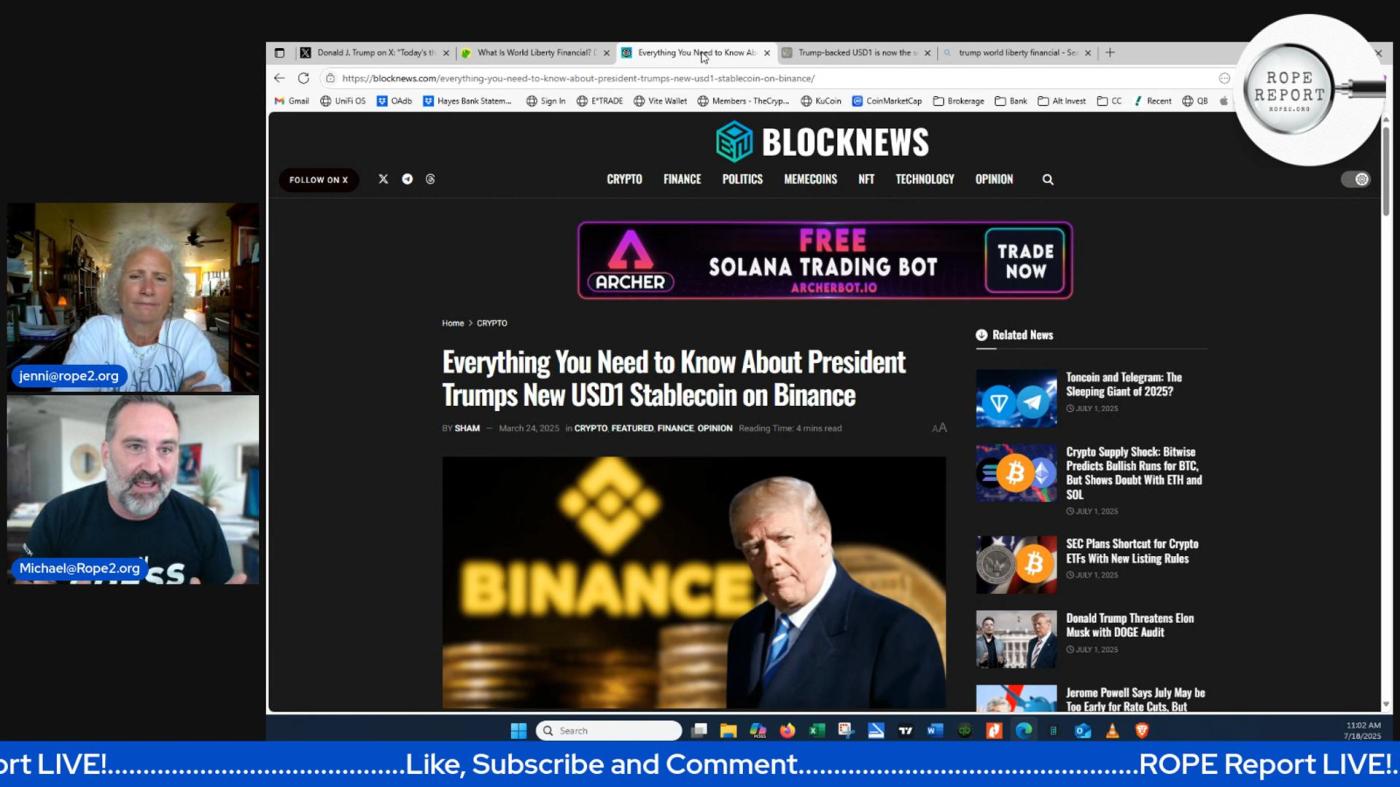
After our regularly-scheduled podcast with Senator Kendal Sacchieri, Michael and I talked about one of his favorite topics – cryptocurrency. Specifically what’s been going on in Congress with cryptocurrency legislation. (Find the video here on our YouTube channel)
The press release from the White House on that day says it will do five things:
MAKE AMERICA THE LEADER IN DIGITAL ASSETS
PROTECT CONSUMERS IN THE DIGITAL MARKET
ENSURE U.S. DOLLAR GLOBAL RESERVE CURRENCY STATUS
COMBAT ILLICIT ACTIVITY IN DIGITAL ASSETS
DELIVER ON PROMISE TO MAKE AMERICA THE CRYPTO CAPITAL OF THE WORLD
Unfortunately, I’m no expert on digital coins. Michael is a BitCoin guy and knows quite a bit about the market, but I don’t. Consequently, you’ll see in our video that I’m wearing an expression much like that the audience noticed on our podcast with Dr. Eric Snyder – extreme concentration with a side of bewilderment.
I have, however, done some due diligence to add to our podcast, researching a bit as a follow up.
It also created a “presidential working group to create a federal regulatory framework governing digital assets (including stablecoins), and evaluate the creation of a strategic national digital assets stockpile.”
Because an EO can’t become law, that January, the GENIUS Act was created. In GENIUS Act May Take Over SEC’s Power On Digital Assets: What It Means For Finance, FORBE’S author Zhang defines some terms and fleshes out why the GENIUS Act is important – mainly because of the shift in economic thought and action to the digital realm from a solely Fed-guided policy.
Here’s where it gets tricky. As you can see in the video, Michael plays a video of President Trump literally hawking a stable coin from World Liberty Financial – a company in which President Trump has a financial interest. In fact, just this year – in April – President Trump hosted a special dinner for investors in his meme coin (stable coin).
In this X Post from an account called Finance Bro, we can see Donald Jr explaining that we need to have cryptocurrencies in order to stop the financial logjams created by banks. Essentially arguing that banks are old school and cryptocurrency is fast and easy and so much easier to use than banks.
‼️MASSIVE DEVELOPMENT: #XRP MENTIONED BY PRESIDENT TRUMPS SON!! SWIFT TO REPLACED!! BANKS ARE OUTDATED!! AUGUST 1ST IS A MASSIVE DATE!!!‼️
July 17th, the House not only passed the GENIUS Act, in a 308-222 vote, it also passed The Digital Asset Market Clarity Act of 2025 in a 294-134 vote and the Anti-Central Bank Digital Currency (CBDC) Act in a 219-210 vote. While the GENIUS Act went on to receive the President’s signature, the Digital Asset Market Clarity Act must be passed by the Senate and signed into law by the President.
During the vote on the GENIUS Act, a group of conservative Republicans including Chip Roy and Margery Taylor Green, refused to vote for the bill saying that it did not protect the American people from a government cryptocurrency. In fact, the vote was held open the longest of any vote – 8 hours – in order to get the hold outs to come to some consensus.
Of course, it’s long been an argument of conservatives that a government cryptocurrency would be tantamount to a national digital currency. Thanks to the Patriot Act and its requirements to protect Americans from ‘terrorism’, any government digital currency would essentially track every transaction made by an individual in their account, giving government unprecedented surveillance over the assets of individual citizens. Not only that, but without an option of cash – which is essentially surveillanceless – there were would be no way to privately conduct a financial transaction. This is a huge problem for a people living under the Constitution, but what do I know? I’m just a poor citizen who wants the government out of my business.
And so, President Trump struck a deal with the Conservative holdouts that the Anti-CBDC Act would be attached to the National Defense Authorization Act, which has to pass to fund the Defense Department. Still and all, however, the NDAA hasn’t been heard by either the House or Senate. It’s currently in its markup period, during which things get added and things get taken away. Not only that, but during the voting process there are always amendments to the bill either adding or removing existing text. Consequently, there are decent chances that the Anti CBDC legislation WON’T make it to Trump’s desk. This is frightening, frankly.
Certainly, all of this is concerning. And certainly, with what we’ve all been through during the Biden Administration’s crackdown on everything individual liberty, it’s easy to feel as though we’re getting screwed again here. Additionally – even though the President’s people have said that none of this is conflict of interest because his children handle his estate (yes, that’s what was said) – it’s pretty galling that no one in the Republican party is calling this out. It has a HORRIBLE look and if this were Biden or Obama doing this, everyone I know in the Trump camp would be having a sheer meltdown over it. I’m not okay with that. I HATE HYPOCRISY and this is textbook hypocrisy.
In the end, I think we’re just going to have to watch and wait, but we’re going to have to PAY ATTENTION to what’s actually going on and not what we’re being told. And learn about cryptocurrencies because we must – knowledge is power!
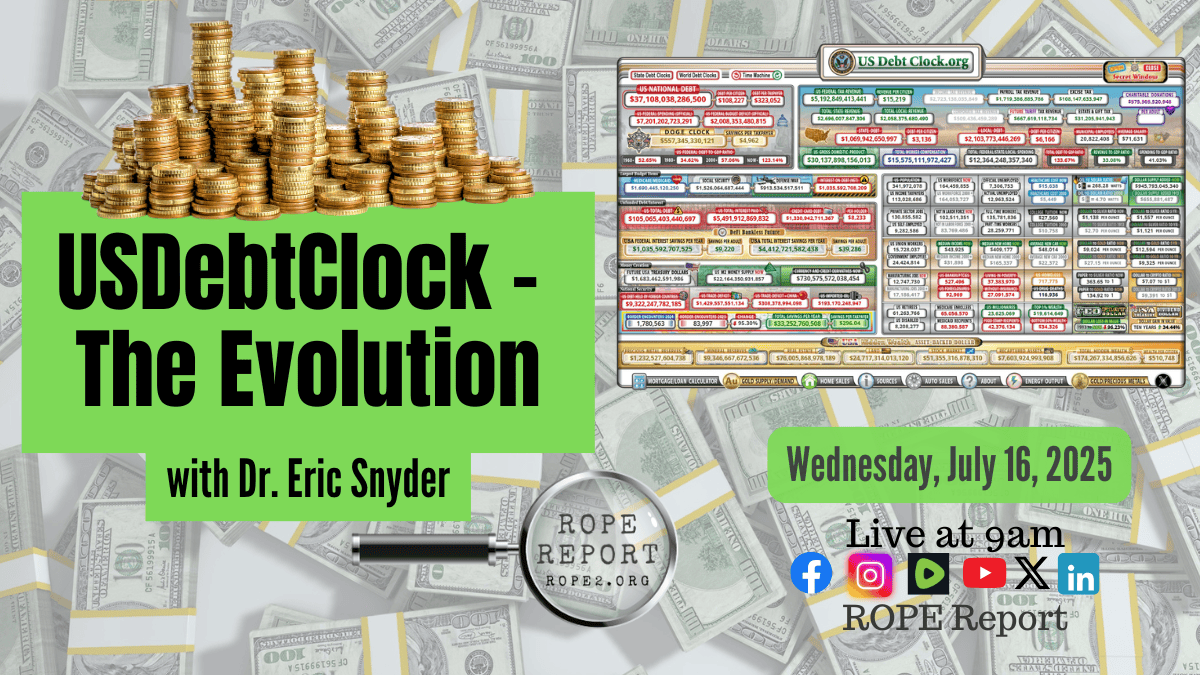
This morning, our conversation with guest Dr. Eric Snyder was EYE-OPENING! So much to talk about. In fact, I had all intentions of having this blog up before 3pm today, until I started going down conspiracy theory rabbit holes as follow-up to our discussion.
Dr. Snyder has his Ph.D. in Educational Policy from the University of Kentucky and has been a professor at OU and worked at a private school in Norman. He’s no slouch. In fact, you have to watch the entire video (here on YouTube and Rumble) to hear what he has to say. I warn you, however, you may have to play and replay to really think on the things he’s saying.
Suffice it to say, the dollar bill you have in your pocket is virtually meaningless. It’s not tied to any actual commodity (something like oil, gas, gold, silver, copper, etc.), which gives it the term ‘fiat’. Here’s what Investopedia says about ‘Fiat’ currency:
Key Takeaways
Fiat money is a government-issued currency that is not backed by a commodity such as gold.
Fiat money gives central banks greater control over the economy because they can control how much money is printed.
Most modern paper currencies, such as the U.S. dollar, are fiat currencies.
One danger of fiat money is that governments can print too much of it, resulting in hyperinflation.
YIKES. Not a whole lot to feel comfortable about when you really think about it.
Over the many years in this country, we have had a whole lot of monetary policy and arguments about a central bank (The Fed). In fact, we’ve had two other central banks before The Fed. Both were dissolved and the US went back on Treasury-backed coinage.
In the clip below, Eric talks about what the dollar SHOULD be based on based on actual US monetary law – yes, I know how disappointing it is to think that the US doesn’t follow its own laws (insert eye-roll).
I asked Grok for the list of monetary policy over the length of the United States. I’ve pasted what it said at the bottom of this blog so you can at least look into the Acts yourself and determine what YOUR government has done to your way of life – or not…?
During our discussion with Dr. Snyder, we talked about all kinds of things that people often shut down as conspiracy theory. Because I know that the people who write the monetary policy at the Congress and The Fed benefit in some way from the policy (or they wouldn’t write it – apologies to the three Congressmen and Senators that actually work for The People), I wanted to be sure I wasn’t shutting down any of Dr. Snyder’s ideas without at least trying to vet them.
What I found was so interesting. When I asked Grok about whether the United States of America and the United States were different, it told me that it was a conspiracy theory. When I asked DuckDuckGo’s AI answer man, it didn’t say that. It said they were the same entity, but gave me the following information, which I thought was quite fascinating and could actually be taken two ways:
Definitions of the United States
United States
Refers to a federal corporation or an agency, department, or entity of the U.S. government.
United States of America
Refers to the country as a whole, which includes all 50 states and the District of Columbia.
Key Differences
Aspect
United States
United States of America
Definition
A federal corporation or entity
The country comprising 50 states and D.C.
Usage
Often used in legal contexts
Commonly used in general contexts
Geographic Scope
Not specifically geographic
Includes all states and territories
The terms can sometimes be used interchangeably in casual conversation, but they have distinct meanings in legal and formal contexts.
Kind of interesting, huh? In fact, he talks about that in the video clip below – along with a theory that President Trump is moving us to an asset-backed dollar.
I’m going to pack in a bunch of links and information I found rabbit-trailing this afternoon after our interview with Dr. Snyder.
Here is a link to the President’s Order to establish a Sovereign Wealth Fund. Dr. Snyder was wrong here, this isn’t law yet, it has to be approved by Congress, but DJT most certainly did order it. We’ll have to hope they’ll do just that. It definitely seems like a move in the right direction.
This is a GREAT article about the perpetual union and what that means, and of course, here’s the link to the US Debt Clock. Man, I went down a rabbit trail on that! I’ve posted below a very interesting PDF that you can download from the Debt Clock site itself if you click in the upper right hand corner where it says, “Secret Window”. It’s QUITE an interesting slide show. You’ll want to read it either there or below.
I have to say, the differences between Grok and DuckDuckGo AI assistant answers was fascinating – especially when asked about conspiracy theories. DDG doesn’t seem to be as resistant to those ideas, while Grok is happy to tell you right up front – dude, you’re a moron, that’s a conspiracy theory. LOL
My favorite was when I asked both about The Fed. I asked, “is the federal reserve a private or government entity”. Grok gave me numerous pages detailing how the Fed is not private, but isn’t government and only conspiracy theorists think it’s private and that bankers are making interest money off the loans it provides the government (paraphrasing in my own way). DDG, however, gave me the following answer and a couple of points to flesh it out:
The Federal Reserve is not privately owned; it is a unique entity that combines both public and private characteristics. While the Board of Governors is a government agency, the 12 regional Federal Reserve Banks operate like private corporations, with member banks holding stock in them.
The same thing happened when I asked, “are silver prices being manipulated on the market”. Grok came back with a ‘some say yes, some say no’ answer, while DDG basically said, “yup and here’s how”, providing some pretty good evidence showing it was.
SO! All that to say, DO YOUR OWN RESEARCH ON ALL THIS, but realize that the basis of what Dr. Snyder said in the video is true – our money is as detached from reality as Joe Biden and if we don’t get it back on the nation’s weights and measures law, the devaluation of the dollar will steadily continue until we’re all spending 30 bucks just to get a loaf of bread.
Please share this information with your elected representative. I have all belief that few know all the information covered here and it shows. Our Governor and legislature continue to GIVE tax dollars to private businesses while NOT protecting the property and right to the gains of their own industry, every citizen fundamentally has. We MUST stand and protect ourselves and our future posterity.
*Major Monetary Policy Acts of the United States
Coinage Act of 1792 (An Act Establishing a Mint, and Regulating the Coins of the United States)
Purpose: Established the U.S. Mint and defined the U.S. dollar as the official currency, based on a bimetallic standard (gold and silver).
Key Provisions:
Created the U.S. Mint to produce coins, setting standards for gold, silver, and copper coinage.
Defined the dollar in terms of silver (371.25 grains of pure silver for a dollar coin) and established a gold-to-silver ratio of 15:1.
Authorized the Treasury to oversee coinage, laying the foundation for federal control over currency.
Impact: Provided the first formal monetary system, ensuring a standardized currency for the new nation. It tied the dollar to precious metals, influencing monetary policy until the 20th century.
National Banking Acts of 1863 and 1864 (An Act to Provide a National Currency)
Purpose: Created a national banking system and a uniform national currency during the Civil War to finance the Union and stabilize the economy.
Key Provisions:
Established nationally chartered banks, regulated by the newly created Office of the Comptroller of the Currency (under the Treasury).
Authorized national banks to issue National Bank Notes, backed by U.S. government bonds, creating a uniform currency to replace state-issued notes.
Imposed a 10% tax on state banknotes (1865 amendment), effectively phasing them out.
Impact: Centralized banking and currency issuance, reducing the chaos of state banknotes. It laid the groundwork for a federal monetary framework but lacked a central bank, leading to financial panics (e.g., 1907).
Coinage Act of 1873 (An Act Revising and Amending the Laws Relative to the Mints, Assay Offices, and Coinage of the United States)
Purpose: Revised U.S. coinage laws, effectively moving the U.S. to a gold standard by demonetizing silver as a monetary base.
Key Provisions:
Ended the free coinage of silver, making gold the primary standard for the dollar.
Reduced the role of silver dollars, limiting them to trade purposes (e.g., for international commerce).
Impact: Known as the “Crime of 1873” by silver advocates, it sparked controversy among populists and farmers who favored bimetallism to increase money supply and ease debt burdens. It shaped monetary policy debates leading to the Federal Reserve’s creation.
Gold Standard Act of 1900 (An Act to Define and Fix the Standard of Value)
Purpose: Formalized the gold standard as the basis for U.S. monetary policy, clarifying the dollar’s value and stabilizing currency.
Key Provisions:
Defined the dollar as 25.8 grains of gold (90% pure), equivalent to $20.67 per ounce of gold.
Required all currency (including paper notes) to be redeemable in gold.
Reaffirmed the Treasury’s role in maintaining gold reserves to back currency.
Impact: Solidified the gold standard, reducing monetary flexibility but ensuring international confidence in the dollar. It constrained money supply, contributing to calls for a central bank to manage liquidity.
Federal Reserve Act of 1913 (An Act to Provide for the Establishment of Federal Reserve Banks)
Purpose: Created the Federal Reserve System to serve as the U.S. central bank, addressing banking panics and providing a flexible monetary policy.
Key Provisions:
Established the Federal Reserve with a Board of Governors (a federal agency) and 12 regional Federal Reserve Banks (owned by member banks).
Authorized the Fed to issue Federal Reserve Notes as legal tender, backed by gold and government securities.
Gave the Fed authority to conduct monetary policy (e.g., setting interest rates, controlling money supply) and act as a lender of last resort.
Created the Federal Open Market Committee (FOMC) to manage open market operations (formalized later in 1933).
Impact: Fundamentally reshaped U.S. monetary policy by creating a central bank with tools to stabilize the economy, manage inflation, and respond to crises. It remains the cornerstone of modern U.S. monetary policy, as discussed in your question about the Fed’s structure.
Banking Act of 1933 (Glass-Steagall Act)
Purpose: Reformed the banking system post-Great Depression to restore confidence and separate commercial and investment banking.
Key Provisions:
Created the Federal Deposit Insurance Corporation (FDIC) to insure bank deposits, protecting against bank failures.
Prohibited commercial banks from engaging in investment banking (e.g., underwriting securities), reducing speculative risks.
Strengthened Federal Reserve authority over member banks, including control over interest rates on deposits.
Impact: Stabilized the banking system and influenced monetary policy by enhancing the Fed’s regulatory role. The separation of banking functions was partially repealed in 1999 (Gramm-Leach-Bliley Act), but FDIC insurance remains a key stabilizer.
Banking Act of 1935 (An Act to Provide for the Sound, Effective, and Uninterrupted Operation of the Banking System)
Purpose: Strengthened the Federal Reserve’s control over monetary policy and restructured its governance.
Key Provisions:
Centralized monetary policy authority in the Board of Governors, reducing the influence of regional Reserve Banks.
Formalized the FOMC as the primary body for setting monetary policy, including open market operations.
Expanded the Fed’s ability to adjust reserve requirements for banks, enhancing control over money supply.
Impact: Consolidated the Fed’s power to conduct monetary policy, making it more responsive to economic conditions. It solidified the modern structure of the Fed, as discussed in your question about its hybrid nature.
Employment Act of 1946 (An Act to Promote Maximum Employment, Production, and Purchasing Power)
Purpose: Established federal responsibility for promoting economic stability, indirectly shaping monetary policy.
Key Provisions:
Declared it the government’s responsibility to promote maximum employment, production, and purchasing power.
Created the Council of Economic Advisers to advise the President on economic policy.
Impact: Influenced the Fed’s monetary policy by emphasizing employment alongside price stability, leading to the Fed’s dual mandate (formalized later in 1977). It set a broader economic context for the Fed’s actions.
Federal Reserve Reform Act of 1977 (An Act to Promote the Public Welfare)
Purpose: Clarified the Federal Reserve’s objectives and increased its accountability to Congress.
Key Provisions:
Formalized the Fed’s dual mandate to promote maximum employment and stable prices.
Required the Fed to report semiannually to Congress on monetary policy objectives and plans.
Mandated greater transparency in Fed operations.
Impact: Codified the Fed’s responsibility to balance inflation control with job creation, shaping modern monetary policy. It increased public oversight, addressing concerns about the Fed’s independence raised in works like The Creature from Jekyll Island.
Humphrey-Hawkins Full Employment Act of 1978 (Full Employment and Balanced Growth Act)
Purpose: Expanded on the 1946 Employment Act by setting specific economic goals and requiring detailed Fed reporting.
Key Provisions:
Reaffirmed the Fed’s dual mandate (maximum employment and price stability) and added goals for economic growth and balanced trade.
Required the Fed Chair to submit biannual Monetary Policy Reports to Congress, detailing economic conditions and policy plans.
Set numerical targets for unemployment (4%) and inflation (3% by 1983, 0% by 1988), though these were largely aspirational.
Impact: Strengthened the Fed’s accountability and transparency, formalizing its role in achieving specific economic outcomes. The reporting requirement remains a key feature of Fed-Congress relations.
Dodd-Frank Wall Street Reform and Consumer Protection Act of 2010
Purpose: Reformed financial regulation post-2008 financial crisis, enhancing the Fed’s role in monetary policy and financial stability.
Key Provisions:
Strengthened Fed oversight of systemically important financial institutions to prevent crises.
Created the Consumer Financial Protection Bureau (CFPB), funded by the Fed but independent in operation.
Expanded GAO audits of the Fed’s emergency lending programs while preserving monetary policy independence.
Established the Financial Stability Oversight Council (FSOC), chaired by the Treasury Secretary, with Fed participation, to monitor systemic risks.
Impact: Enhanced the Fed’s regulatory powers and coordination with the Treasury (as discussed in your question about their separation), while addressing public concerns about transparency. It modernized monetary policy’s role in systemic risk management.
Why is this important? Because of the tag line – Oklahoma was going to offer SEVEN HUNDRED MILLION of YOUR tax dollars to get the plant here. Fortunately, everyone and their dog in Topeka, Kansas, offered more taxpayer dollars than Oklahoma and the plant went to Topeka.
As so many of us fighting the ‘green agenda’ have said – most of these deals are done via non-disclosure-agreements (NDA’s) that leave neighbors of the plant/project/etc. almost completely in the dark as to what has been promised to the plant/project/etc., though the neighbors (i.e. tax payers) are paying for it and will have to live with it as part of the “people in their neighborhood“.
Here we have a plant that was ready to go, but then had to scale back because people are deciding to scale back on EV purchases and because President Trump has put the kibosh on EV subsidies through the Big Beautiful Bill. The plant has already spent taxpayer dollars to get up and running. What’s going to happen to the rest of Panasonic’s community promises of jobs, etc. with the scaleback?
This is just one of the many reasons why OKLAHOMA should NOT be pumping taxpayer dollars into private businesses – in so many cases, taxpayers aren’t getting what they paid for. But who cares, right? It’s not the Governor’s money, or the Commerce Department’s money…
There’s no reason to sue when the Supreme Court has said that taxpayer funds can’t fund religious education.
“The plaintiffs and their legal counsel — who include attorneys from the American Civil Liberties Union, Americans United for Separation of Church and State, and the Freedom from Religion Foundation — declared victory while dropping their case”. The Oklahoma Parent Legislative Advocacy Coalition was also involved.
Sadly, these are all left-of-center organizations that hate Christians and religion. I’m a conservative Christian, so they don’t represent me – other than my viewpoint that the state should not fund religious schools. Here’s why:
My God is a jealous God and if I had autonomy over my purse I would not ever financially support another religion. It’s America. You do your own religion. But don’t do it on my dime. When the government takes my money by force and gives it to a church outside the sphere of my religious belief, I’ve funded a religion whether I meant to or not. I vote. The government is of the people, by the people, for the people. How I can say I have absolutely no say against that is mind-blowing.
The government controls what it funds. During COVID, lots of churches closed down because their state told them to. People quit going to church because they were simply told, “you can’t” and lots of people listened. I do not want my government controlling religious institutions of any kind. Churches are to be the pillar of the state. They can’t be that when the government tells them “you can’t”. Churches should make the state accountable to the people and to God. They can’t if the government tells them, “you can’t”.
It is against the Oklahoma State Constitution to use tax dollars to subsidize religious schools. How did a bunch of attorneys decide that the highest land in the nation can just change Oklahoma’s Constitution and not its people. Who knows? Maybe Oklahomans would decide to change the state Constitution to allow that, but we wouldn’t have known because Oklahoma school choice pushers – Governor Stitt, etc. – wanted to remove The People from the government by making an end-around to the Supreme Court. Nope.
So, obviously, I’m thankful the Supreme Court deadlocked and the School Choice pushers were thwarted.
Well, the Ethics Commission actually did their job and slapped Shelley Zumwalt on the wrist.
In a story that personifies – for me – the absolute horror show that is the Oklahoma government revolving door of agency heads making the round of government agencies (Stitt appointed Zumwalt to three positions: the Oklahoma Employment Security Commission, the Oklahoma Department of Tourism and Recreation, Secretary of Tourism, Wildlife and Heritage – a Cabinet secretary position), Zumwalt was fined $20,000 by the State Ethics Commission and told she can’t work for the state FOR THE NEXT TWO YEARS. Just enough time for Governor Stitt to be removed from office by term limits (thankfully) so that he can’t appoint her to anything else.
As the head of the OESC, Zumwalt created contracts with a business run – in part – by her husband. But don’t worry, neither she nor her husband benefitted, according to Zumwald and the Ethics Commission.
About this situation, AG Drummond said, in April of 2024: “This level of self-dealing represents an unforgivable breach of trust that disqualifies Ms. Zumwalt from overseeing the expenditure of our tax dollars,” Drummond said. “She should resign immediately and cooperate fully with my office as I seek to determine whether any Oklahoma statutes were violated.”
But, never fear, our intrepid AG will not now investigate Ms. Zumwalt because he’s satisfied – after the Ethics Commission ruling – that no crimes were committed here. Come on. Seriously? State Auditor Cindy Byrd’s office found that she violated the rules on conflict of interest by issuing contracts to a company of which her husband was vice-president.
So, breaking the rules isn’t committing a crime? Rules put in place to protect taxpayers from contract-fixing? Why have rules then? What are those supposed to do exactly? Provide a typist somewhere something to do entering it into a database? Again. Slap on the wrist. Yawn. Sigh. Who cares? It’s just taxpayer money…
Why has somebody at the Oklahoma Statewide Charter School Board not created an agenda item for closing Epic Charter Schools? My word. This school has been mismanaged from the word “go” and cost taxpayers MILLIIONS and MILLIONS of dollars. Why does this keep happening? Why is the OSCSB LETTING it happen?
Cindy Byrd’s office performed the original audit. Now, Chair Bryan Shellem and the OSCSB have decided to hire an outside auditor to examine the school’s books. This is concerning. The ‘right’ auditor has to be found. So many state agencies and governments use auditors to obtain generalized information that doesn’t provide meaningful results to taxpayers. It will be interesting to follow this story to find out how EPIC will be audited now – and by whom.
“They smoke to relax. They watch to escape. They become lethargic, less motivated, more isolated. Not because they don’t care; but because they’re chemically rewarded for not caring.”
This is a HUGE and IMPORTANT statement. In point of fact, every dad (and mom) needs to read this OpEd in the Daily Oklahoman today and ACT ON IT. Young men in our society are being turned into zombies and we’re effectively letting this happen. Unfortunately, too many parents don’t care as much as this letter-writer. Please read this short editorial and take it to heart.
We’ve had Yvette on the show before. She and her husband produced the movie, “Schoolhouse Rocked: The Homeschool Revolution“, a documentary about the rise and possibilities of homeschooling.
Yvette – and Aby Rinella – just released this list of homeschool curriculum picks and planning tips! JUST IN TIME FOR YOU TO DECIDE TO HOMESCHOOL INSTEAD OF GOING BACK TO YOUR PUBLIC SCHOOL!
Check these out and opt for staying home with your kids. It was the best thing I EVER did and I wouldn’t take it back for all the money in the world. In fact, the only downside I EVER found to having my kids with me 24/7 was that when they finally grew up and flew out of the nest, it was just SO LONELY. Having them around was just the best! I recommend it HIGHLY.
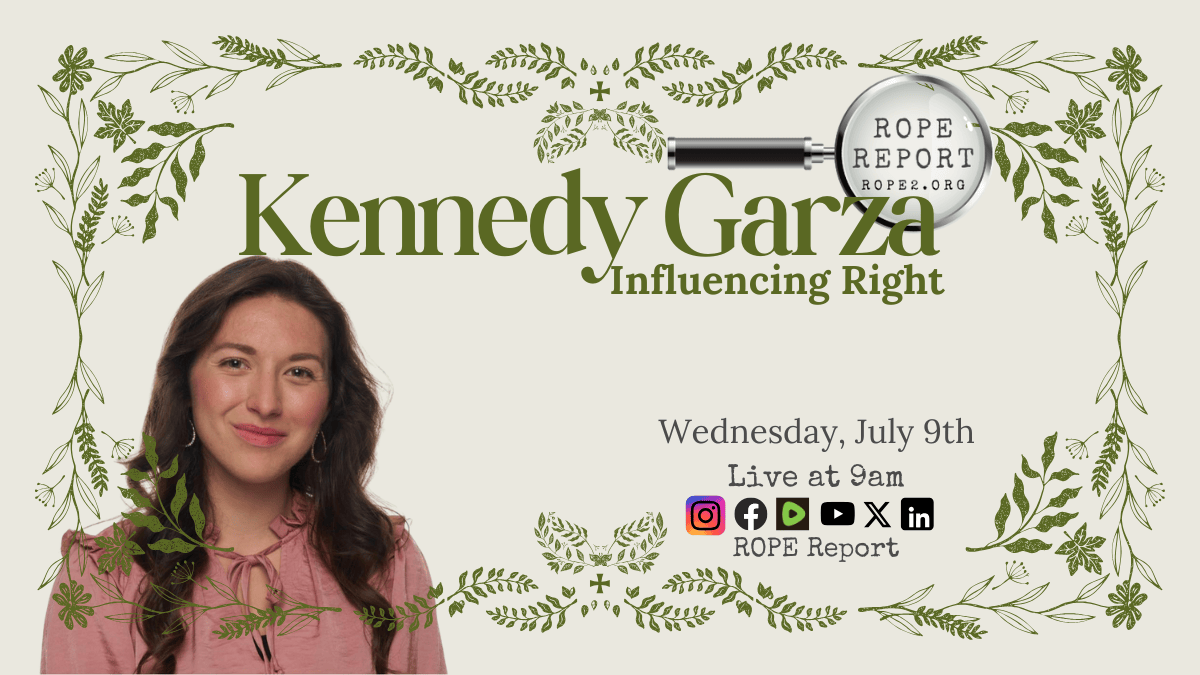
This morning, Michael and I welcomed our youngest guest to the podcast. Youngest, maybe, but who would know. Kennedy Laplante is one of the most mature people under 25 I’ve ever met.
Currently the Director of Youth Outreach for the Oklahoma State Republican Party, Laplante wasn’t always involved in politics. An Oklahoman by way of California (through Arizona!), Laplante originally got involved in Oklahoma politics to impress a young man she was dating. Studying up on current events to hold her own in conversations, she realized that she had concerns about the issues she was studying. Though she may not have been immersed in politics at a younger age, she was old enough to remember that her family wanted out of California largely because of over regulation and lack of freedom and seeing similar issues in Oklahoma made her uncomfortable. Wasn’t Oklahoma a Red State?
Attending Republican women’s meetings steered her activity in local politics, while speaking out on social media about the issues important to her gave her a following of over three thousand people on Facebook alone.
Last Thursday (before the Independence Day holiday), she found that the County Commissioners in her area were set to approve a data center on 500 acres a mile from her home at a 9am meeting the Monday after the holiday. Seeking out other social media influencers who had been tackling the issue for advice, Laplante rapidly put together some of her own social media posts and rounded up enough people to attend the meeting.
Below is a clip of Laplante talking about how important it is to speak up. You are your own expert – especially if a data center is about to plop down in your backyard. Don’t wait for an expert, be your own!
Throughout our conversation, it became clear that Laplante was mindful and deeply concerned about her adopted state and what she saw happening within its borders.
Part of our conversation steered toward party politics and her thoughts on what that looked like in the state today. Below, Laplante makes several comments not unlike those Michael and I have often made on the podcast when I asked her what her age cohort seems to be thinking about Oklahoma politics today.
Please watch the full live conversation with Kennedy here on our YouTube and Rumble channels. It’s absolutely worth the time to hear this bright young lady advocate for Republican principles and standing for what she believes in.
Also, if you’d like to sign the petition Kennedy has set up against the data center, please find it here. You can also find her on Facebook – and I suggest you do! She’s the future and I’d start following her ASAP.
If you haven’t read – or subscribed to – the Ramblings of a Domesticated Warrior Substack, please do. She has so many really good short and sweet, but informative, articles about things that are happening in Oklahoma and what those things can mean for Oklahomans.
Today, I found this in my inbox: The Foreign Land Loophole: Why SB 1705 Still Doesn’t Protect Oklahomans. I’m not going to synopsize the article, it’s short, but let me just say that I’ve written about this numerous times – the fact that the legislature passes bills that are meaningless when it comes time for Oklahomans to depend upon them to protect their liberty or property. Oh, these bills make great news clip fodder for the author, but they don’t actually DO what they mean for Oklahomans. Read the article, you’ll see what I mean.
The next is from David Arnett and his Substack, “Straight Up” – another Substack to which you should subscribe! Today, he’s written, “Tulsa County Data Center Opposed” about the opposition to a new data center planned for the Tulsa area. Who is opposing? Arnett does a great job of summarizing the issue and who is involved. If you don’t think this is important to you because you don’t live in Tulsa, I’m warning you – data centers are the next big thing to come to your neighborhood with all their baggage. You will definitely want to know what’s going on in Tulsa in case it shows up in YOUR backyard.
Again, these are quick and informative reads that give you definite insight into things happening here in Oklahoma right now. Please read and share!