Search

ROPE Report

Month

January 2022

The Problems With “School Choice”

Every legislative session in Oklahoma, the topic of “School Choice” rears its head. People become “School Choice” advocates because they believe the concept will put parents back in the driver’s seat for their children’s education. But what does the term “School Choice” actually mean?


EdChoice, an organization that has been touting “School Choice” for many years, provides this definition: 

School choice allows public education funds to follow students to the schools or services that best fit their needs —whether that’s to a public school, private school, charter school, home school or any other learning environment families choose.

This makes sense to me. School Choice has to be about MONEY. It can’t be about a choice of schools, because Oklahoma has a near smorgasbord of choices to provide parents for schooling their children. Let’s look at them:

  • Here in Oklahoma, our Constitution makes it clear that parents have the absolute right to direct the education of their children through homeschooling. Homeschooling is an educational choice.
  • Oklahoma has 1784 public schools. Last session (2021) SB783 was passed. This law allows parents to be able to transfer their child/children among public schools instead of them being assigned to a school according to their zip code. Transfer amounts to a choice.
  • Here in Oklahoma, we have a thriving private school network of 96 schools. Parents who are able and would like to do so, may CHOOSE to send their child/children to a private school. 
  • Oklahoma also has a thriving Charter school network – some brick and mortar – and others virtual. Parents can choose whether or not to send their child/children to either type of charter school.

So, it seems it would be hard to be an Oklahoma parent who then argues you don’t have much of a choice as to where you sent your child to school. Yes, not all parents can afford to homeschool or put their child/children in private school, yet that doesn’t negate these as valid choices and many parents work hard to scrimp and save in order to keep their children home or send them to a private school.

Fortunately, Oklahoma has a HUGE NUMBER OF SCHOOL CHOICES available to parents, so why do we continually talk about “School Choice”?

Returning to EdChoice’s definition, because legislators feel that parents should be able to send their children to ANY school they want, something that can only happen if tax dollars are appropriated to people who can’t afford to send their child/children to private school or keep them home for homeschool.

Herein lies the problem. Once money leaves the hand of a citizen as a tax, it becomes property of the government who receives the tax. Now, it’s the government’s job to make sure that tax dollar is accounted for transparently. 

Let’s say that Oklahoma gives parents part or all of the money it would have spent to educate their child and says, “Here, you can use this any way you’d like to educate your child.”

The thrilled parents then take that money to a private school and enroll their child. Unfortunately, the private school that receives the funds is now accountable to the state to make sure that money is spent properly. 

In order to do that, the state now has the ability to ask the private school to perform certain tasks to assure them of the way in which that money is spent and suddenly, the private school now has strings from State government it never had before. How many strings can a private school have to the government for state money before it’s no longer really a private school? At what point does the State government get to tell the private school what kind of curricula they may offer, or regulate the type of teachers they want to hire because, well, accountability of taxpayer funds?

Unfortunately, there’s more. Oklahoma has never fully repealed Blaine Amendment language from our Constitution. The Blain Amendment is a failed federal law created in the late 1800’s proposed to ostensibly prevent Catholic schools by denying them access to public funds. Though the federal law failed, many states added similar language to their Constitution, as did Oklahoma.

It would be an extremely difficult task to take funds designated as public, give them to parents and allow them to finance a child’s private school education – especially at a private religious school.

We’ve all seen the mess that has been created by Epic Charter School’s administrative arm – Epic Youth Services. If state funds are given to parents to use for expenses related to the homeschooling of their children, how could the state not expect parents to account for every dime of state money provided them? They certainly would have every right to do so, yet now a homeschooling parent could find themselves in the unenviable situation of having to report to the state on behalf of their homeschool. 

What if the state doesn’t ‘like’ a type of curricula a parent chooses, or the type of activity a child prefers? What happens to the autonomy of the homeschooling parent in that case?

Granted, it seems like a stretch – and legislators would be sure to say that would never happen – but who in the world would have ever thought that in the last two years the government would force people to wear masks, take vaccines and shut down businesses? Hopefully, if we’ve learned anything else from the pandemic, we’ve learned that governments are less about individual rights and more about power and control.

And what about taking public money and giving it to parents to allow their children to homeschool or attend private school? What about the families who scrimp and save to provide these options for their children? Isn’t that the state creating an equity program?

TRULY, THERE SEEMS TO BE NO WAY FOR THE STATE TO ALLOW PARENTS TO HAVE STATE MONEY TO FINANCE THEIR CHILD’S EDUCATION. The only way to do anything of the sort is some form of TAX CREDIT:

1. Allow parents to keep the money they WOULD HAVE given to the state in taxes for public education. This way, the money is only ever the parents – it never becomes the property of state government. Parents can use that money to help finance a private education, or homeschool their child/children.

2. Allow parents who are unable to finance their child’s private or homeschool to apply for ‘scholarship’ funds placed into an account by people who want to donate to the scholarship. Oklahoma already has the Oklahoma Equal Opportunity Education Scholarship, that can simply be broadened.

3. Parents should begin planning for their child’s education early on and make after-tax deposits into the State 529 Plan.  Though ostensibly a college savings program, funds may be deducted to pay for homeschool or private school expenses as well.

Unfortunately, like with so many things, there is no free lunch in education. It’s important to understand the issues surrounding “School Choice” and not merely carry the flag of “School Choice”.  Private schools do not need any further state regulation and homeschoolers want absolutely no interference from government in their schools. Let’s be VERY CAREFUL then, when we discuss the term “School Choice” and keep government sequestered in its own lane.

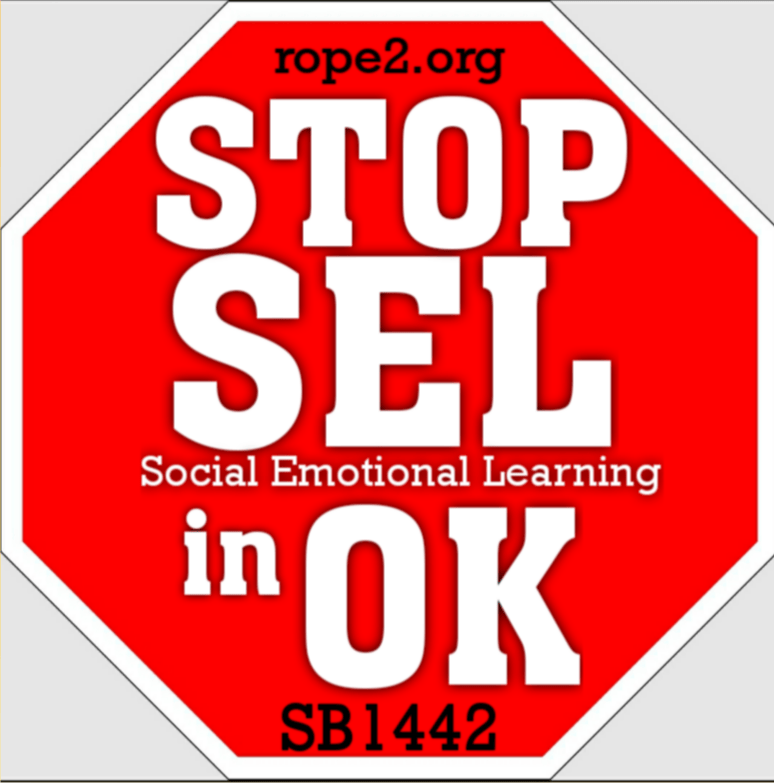
Six Reasons Why The Oklahoma State Legislature Should Ban The Use of SEL – Social Emotional Learning – Through SB1442

Last year, the state Legislature – prompted by outcry from parent and taxpayers across the state and the nation – passed HB1775, a rejection of the teaching of tenets tied to Critical Race Theory.

Unfortunately, CRT tenets are still entering classrooms around the state, packaged under the heading of Social Emotional Learning.

WHAT IS SOCIAL EMOTIONAL LEARNING

Social Emotional Learning is a theory which, according to the Collaborative for Academic Social and Emotional Learning (CASEL), became an “essential part of education” “through which all young people and adults acquire and apply the knowledge, skills and attitudes to develop healthy identities, manage emotions and achieve personal and collective goals, feel and show empathy for others, establish and maintain supportive relationships, and make responsible caring decisions.”

CASEL also goes on to say that “SEL can help address various forms of inequity and empower young people and adults to co-create thriving schools and contribute to safe, healthy and just communities.”

While every parent wants their child to have traits like empathy and every teacher wants a classroom of children who can manage their emotions, SEL programming does much more.

Like so many before it – Outcome Based Learning and Common Core to name a few – SEL has been federalized through numerous grant programs and school accountability requirements. With the carrot of $122 billion dollars in funding via Elementary and Secondary School Education Relief (ESSER) funds, the Biden Administration has lured schools into a program that fosters philosophies steeped in race, with which many parents and taxpayers disagree.

CONCERNS WITH SEL:

#1 Brings CRT Concepts Into Schools and Classrooms

Karen Neimi, the President and CEO of CASEL (Collaborative for Academic Social Emotional Learning) makes it clear throughout a nearly 50-minute video, that, “We believe that our work in Social Emotional Learning must actively contribute to anti-racism” and that CASEL has “prioritized issues of equity in the center of our work for a long time.”

Deena Simmons, Ed.D, Assistant Director of the Yale Center for Emotional Intelligence and an Associate Research scientist at the Yale Child Study Center advocates that, “You can’t be trauma informed if you’re not talking about racism. Without an anti-racist lens, SEL is white supremacy with a hug”.

One Edmond mother recently researched an SEL program being used in her child’s classroom – Conscious Discipline – and found a letter written by founder Becky Bailey, in which she says that her program is “based on and steeped in inclusion” and that they will train their employees in “anti-racist” goals, using Ibram X Kendi’s “Raising Antiracist Kids” and CASEL’s “SEL as a Lever for Equity”.

Dr. James Lindsay explains the mechanisms by which SEL is used to bring CRT concepts into classrooms in a video interview, and Dr. Susan Berry cites numerous articles which bring awareness to this fact in ‘Social Emotional Learning’ Now a Vehicle for Critical Race Theory”.

Oklahoma passed HB1775 in 2021. This bill specifically states, “Any orientation or requirement that presents any form of race or sex stereotyping or a bias on the basis of race or sex shall be prohibited.” Because CASEL’s specifically stated goals include race stereotyping and bias, SEL programming should be banned from classrooms under the law.

#2 CASEL Foundation Supporters Have Leftist Political Philosophies

CASEL Foundation ‘supporters’ are also a cause for concern. Bill and Melinda Gates have been tied to a slew of ‘education reform’ issues beginning with the Obama education reforms in 2008 which have been completely unsuccessful such as Common Core, School Turnaround and teacher effectiveness initiatives.

The Chan Zuckerberg Initiative has been investigated in several states for their interference in the 2020 presidential and state elections.

The Patrick J. McGovern Foundation uses AI to ‘democratize’ data, and uses data to establish racial equity and create climate change solutions.

New Profit is an organization dedicated to raising money to fight social injustice and to establish racial equity through influencing government.

The NoVo Foundation is funded by Warren Buffet. “NoVo also increased our funding to a wide variety of organizations focused on ending violence, giving voice and generally lifting up the truth about systems that have continually oppress (sic) girls and women – Black. Brown. Indigenous. Cis. Trans and gender non-conforming.”

The Raikes Foundation seeks to create systems that will better empower marginalized communities and create a more just and equitable world.

The Robert Wood Johnson Foundation promotes socialized health care and bemoans the effects of climate change on “health and equity”.

Wallace – “Our mission is to foster equity and improvements in learning and enrichment for young people…”

#3 SEL Trains Students As Activists

CASEL cites 10 ‘indicators’ of ‘high quality’ SEL implementation. The first four are; ‘Explicit SEL Instruction’, SEL Integrated with Academic Instruction, Youth Voice and Engagement and Supportive School and Classroom Climates.

Number 3 involves teaching students to use their voice (agency) to advocate for change.

In this video about ‘Schoolwide SEL: Youth Voice and Engagement”, we hear from Mayrydennia Perez, a student who explains how, in 10th grade, students didn’t like a class they were given so they protested. This involved the entire 10th grade class walking out of school and Mayrydennia was very happy to report that the Administration ‘listened to them’ and the class was changed the next year.

Children are not adults. Giving children ‘agency’ – autonomy – to defy school administration, teaches children they have a power they don’t have the worldview yet to process rationally. Giving students ‘voice’ and teaching them to engage on issues is not giving students more responsibility, it’s teaching students to use their emotions to react as activists – I don’t like this, so instead of finding a calm, rational solution, I’m going to get mad and walk out. How does THAT help students manage their emotions?

#4 SEL Uses Lots of Behavioral Surveys

School climate surveys are used to gauge students’ feelings about different factors associated with their school under the guise of creating ‘supportive schools’. Here are some questions that can be found on Oklahoma’s School Climate Survey:

  • Do you know what consent means?
  • During the past 12 months have you experienced sexual activity when you did not want to?
  • During the past 12 months has your dating partner hit, slapped (sic) or physically hurt you?
  • Do you currently receive sexual health information? If so, from where?
  • Do you feel like your school supports and affirms your identities?
  • Choose 3 topics you would like to learn more about: pregnancy, bullying, substance use, mental health, violence prevention, sexual health, LGBTQIA+, other

Data is then compiled into a spreadsheet so that the ‘risk profile’ of the student can be determined and a student effectively pigeonholed by his or her behavior.

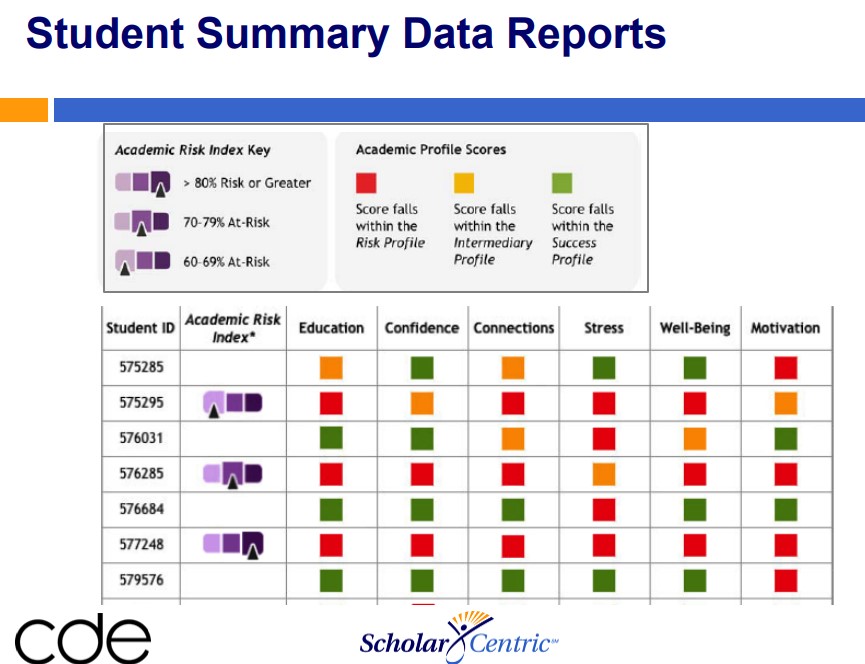
Another SEL survey called Success Highways is given to students in middle school through 10th grade in Oklahoma. The results tell the administrator of the survey the level of academic ‘risk’ for the student in several different categories.

Here are some questions on the Success Highways questionnaire:

  • The reason I keep coming to school is because if I don’t I’ll get punished
  • In the past week, how often have you experienced breaking things when angry
  • In the past week, how often have you experienced feelings of danger
  • In the past week how often have you experienced nightmares
  • In the past week how often have you experienced overeating
  • In the past month how often did you have difficulty paying for recreation and entertainment

These surveys are given in ‘advisory’. The main questionnaire was over 100 questions with other smaller surveys given depending upon the topic. A concerned Edmond mom took a considerable amount of time researching Success Highways and found it linked to ‘Emancipatory Communitarianism’ a form of social justice, among other issues.

A federal law the Protection of Pupil Rights Amendment (PPRA) passed in 1978 protects children from surveys or questionnaires that ask:

1. Political affiliations or beliefs of the student or student’s parent; 2. Mental or psychological problems of the student or student’s family; 3. Sex behavior or attitudes; 4. Illegal, anti-social, self-incriminating, or demeaning behavior; 5. Critical appraisals of others with whom respondents have close family relationships; 6. Legally recognized privileged or analogous relationships, such as with lawyers, doctors, or ministers; 7. Religious practices, affiliations, or beliefs of the student or student’s parent; or 8. Income, other than as required by law to determine program eligibility

Schools MUST send out letters to parents describing the survey and ask for permission to give their child the survey. Unfortunately, this only applies to surveys administered using federal funds and schools get around this caveat by having an in-state agency (OSDE, OSDH) administer the survey as in the case of the CDC Youth Risk Behavioral Survey, or they simply don’t provide them to parents as in this opt out form for School Climate Surveys.

Schools should NOT collect behavioral data on students for numerous reasons:

  • Whether there is an active parent in the home or not, parents MUST be the ones dealing with their child’s behavior – not a public school. Parents know their children MUCH better than anyone else and behavioral data collected at school is only as good as the context in which it’s collected.
  • Often, students lie on surveys to be funny or because they don’t want to answer the questions truthfully. Answers are collected and recorded, leading to improper data collection and results.
  • Many schools are not trained to collect and analyze data and as such data can be misapplied and results meaningless.
  • Data is not safe and parents have no say or knowledge as to how the data is disseminated or to whom, leaving their child’s behavioral profile to be used to sell further educational products or used in ways that could expose the child.

#5 Not All School Counselors Respect Parent Authority OR HB1775

A recent blog involving a walk through the Oklahoma State Department of Education website involved a great deal of connection with the American School Counselors Association (ASCA).

Further research found that the ASCA is another organization steeped in the philosophy of racial justice. An article on their website titled, “Racial Justice Starts At School” indicates that one of the primary functions of school counselors is to “address racism and bias in their school counseling programs.”

In fact, the article goes on to say that, according to the 2020 State of the Profession survey report, “About 42% of school counselors said they are monitoring student behavior to identify racist behavior or speech, 38% are providing individual counseling and 35% are providing classroom lessons…”

This kind of monitoring should be frightening to parents whose children could be counseled for racist ‘behavior or speech’ when there was none such meant. What about children 3 In addition, how in the world could this kind of counseling be done without violating the tenets of HB1775?

Several parents have reported that, following Success Highways surveys, counselors have called their children in to their office for counseling. Once the parents became aware of the practice, the counselor stated that their child was in a ‘low-risk’ category (the risk category never explained to them) and did not require parental notification for counseling. This is a clear violation of Parent’s Rights and should not be allowed.

Then there’s the fact the school counselors have Common Core like “Mindsets and Behaviors” standards – specific behaviors which children should exhibit in order to be ‘successful’ students. Never mind that every student is different and success is as different for each as they are from another. Counselors collect behavioral data on students through these standards.

#6 Teachers Do Not Need A National Program To Help Children

Though SEL has been in classrooms in some form for years, teachers have been helping children develop character by prescribing classroom responsibilities for many decades without it. Good teachers have always had rules in their classrooms to inform students of the ways in which they must manage their own behaviors – raise your hand before asking a question, no talking when the teacher is talking, no hitting or bullying – a program to do this is simply unnecessary and a waste of dollars and time that could be better spent studying academics.

It seems completely bizarre that, while Oklahoma’s NAEP scores have continuously fallen in nearly ALL subjects, schools are now stopping class to have children talk about their feelings in a classroom not staffed by a trained behavioral psychologist.

It’s also a bit bizarre that ESSER funds were meant, in part, to be spent on SEL programs to mitigate student ‘trauma’ resulting from COVID school closures, yet schools created the crisis they now want to mitigate. In fact, numerous studies have indicated that school closures caused students more harm than the virus itself.

It appears that much of the push for SEL is being driven by rising discipline problems in classrooms and schools over the years, made worse by a Dear Colleague letter sent to all US schools asking them to adopt discipline polies that would promote equity in classrooms. This letter resulted in numerous problems in classrooms around the country as schools became unwilling to discipline special education or students of color.  

SEL behavioral programming will accomplish little to nothing until administrators allow teachers to discipline students who provide disruption in the classroom. Disruptive students should be removed from class to allow the rest of the class to learn. Once removed, administrators should work with parents to help the child realign their behaviors and return successfully to the classroom. Why put a program in place to deal with an entire class of children when administrators could simply deal with discipline problems on an individual basis?

True, some parents do not parent their children and some children have deep-seated behavioral issues, yet nothing prevents schools from working with individual students in these circumstances by referring them to state, or private, behavioral assistance – all children should not be placed in behavioral training for the few students who need it.

Sadly, SEL programs will not help the fact that many Oklahoma schools say one thing, but do another. What good does it do to have SEL in every classroom, yet when a student reports something as serious as sexual assault, nothing is done by the Administration to rectify the situation? This has happened more and more often, as administrators abdicate their role in school discipline as seen in both Shawnee and Bixby recently.

In closing, like so many other federalized educational programming, SEL will not produce the results desired and has the very large potential to in fact, inject harmful and unlawful philosophies into classrooms.

Supplemental Links and Information:

New Study Finds Multiple Problems with Push for Social-Emotional Learning in K-12 Education (https://pioneerinstitute.org/featured/new-study-finds-multiple-problems-with-push-for-social-emotional-learning-in-k-12-education/)

Oklahoma School Climate Risk Screening Scale (https://www.scribd.com/document/523717182/Oklahoma-School-Climate-Student-Risk-Screening-Scale)

Oklahoma High School Climate Survey (https://www.scribd.com/document/523755206/HS-Student-Climate-Survey-1)

Social Emotional Learning, Part 1: The New Age Nanny State (https://idahofreedom.org/social-emotional-learning-part-1-the-new-age-nanny-state/)

Social Emotional Learning, Part 2: How SEL Became A Vehicle For Critical Race Theory (https://idahofreedom.org/social-emotional-learning-part-2-how-sel-became-a-vehicle-for-critical-race-theory/)

Social Emotional Learning, Part 3: How Did This Happen In A State Like Idaho (https://idahofreedom.org/social-emotional-learning-part-3-how-did-this-happen-in-a-state-like-idaho/)

Social Emotional Learning Now A Vehicle For Critical Race Theory (https://www.breitbart.com/politics/2021/03/09/social-emotional-learning-now-a-vehicle-for-critical-race-theory/)

Social Emotional Learning: The Dark Side (https://nancyebailey.com/2018/03/19/social-emotional-learning-the-dark-side/)

Emotional Learning Will Be The Downfall of Society (https://www.heartland.org/news-opinion/news/emotional-learning-will-be-the-downfall-of-society)

Jenks Directs Parents To ‘Social Justice’ Materials (https://www.ocpathink.org/post/jenks-directs-parents-to-social-justice-materials)

Pushback Against SEL Bubbles Up In Idaho (https://www.edweek.org/leadership/pushback-over-sel-bubbles-up-in-idaho/2020/02)

“Meatless Mondays” and The Rise Of Social Emotional Learning in Schools (https://fee.org/articles/meatless-mondays-and-the-rise-of-social-emotional-learning-in-schools/)

What’s So Great About Social Emotional Learning (https://truthinamericaneducation.com/social-emotional-learning/great-social-emotional-learning/)

Gasp! How Will We Educate Without Social Emotional Learning (https://truthinamericaneducation.com/social-emotional-learning/gasp-how-will-we-educate-without-social-emotional-learning/)

Trading Academics for Far Left ‘Social Emotional Learning’ (https://illinoisfamily.org/education/trading-academics-for-far-left-social-emotional-learning/)

Using Schools To Retrain Kid’s Emotions – What Could Possibly Go Wrong Here (https://thefederalist.com/2016/12/14/using-schools-retrain-kids-emotions-possibly-go-wrong/)

How Social Emotional Learning Could Harm Our Kids (https://blogs.scientificamerican.com/streams-of-consciousness/how-social-emotional-learning-could-harm-our-kids/)

Using Schools To Retrain Kid’s Emotions – What Could Possibly Go Wrong Here (https://thefederalist.com/2016/12/14/using-schools-retrain-kids-emotions-possibly-go-wrong/)

Schools Ditch Academics For Emotional Manipulation (https://thefdrlst.wpengine.com/2016/10/19/schools-ditch-academics-for-emotional-manipulation/)

How Social Emotional Learning Became Another Vehicle For Anti-White Racism In Schools (https://thefederalist.com/2021/02/08/how-socio-emotional-learning-became-another-vehicle-for-anti-white-racism-in-schools/)

Zuckerbucks Aren’t Just Tampering With Elections, They’re Tampering With Your Kids’ Education (https://thefederalist.com/2021/08/02/zuckerbucks-arent-just-tampering-with-elections-theyre-tampering-with-your-kids-education/)

Social-Emotional Learning and Teachers Students Love? Teachers in Los Angeles! (https://nancyebailey.com/2019/01/22/social-emotional-learning-and-teachers-students-love-teachers-in-los-angeles/)

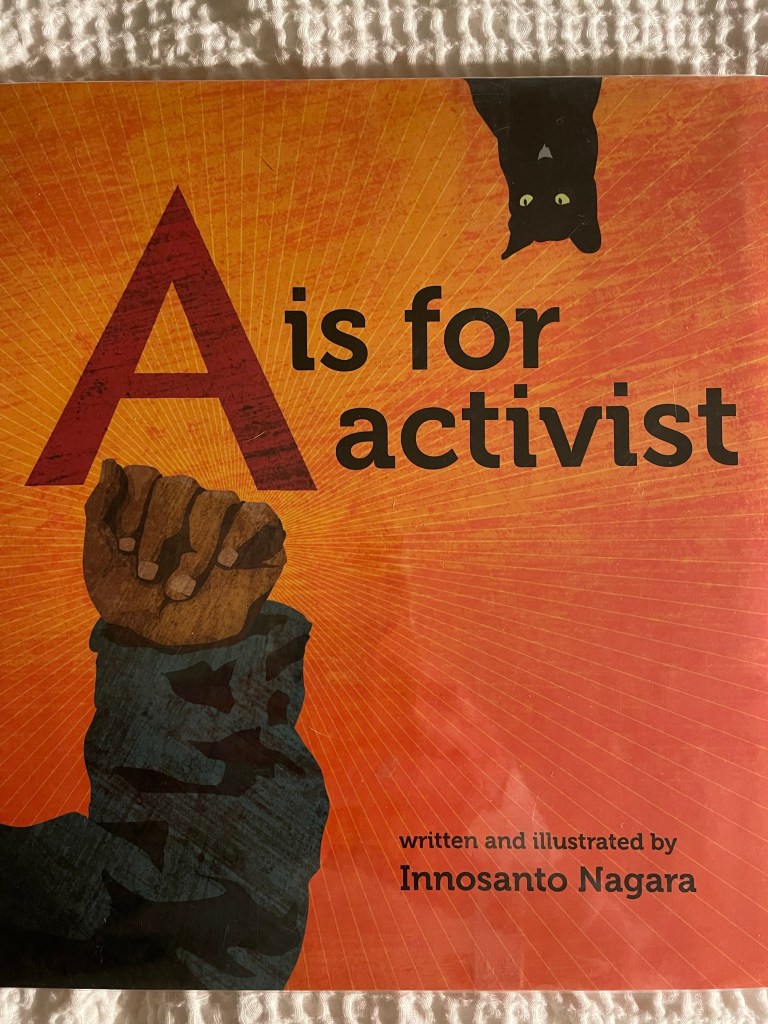
A is for…Activist?

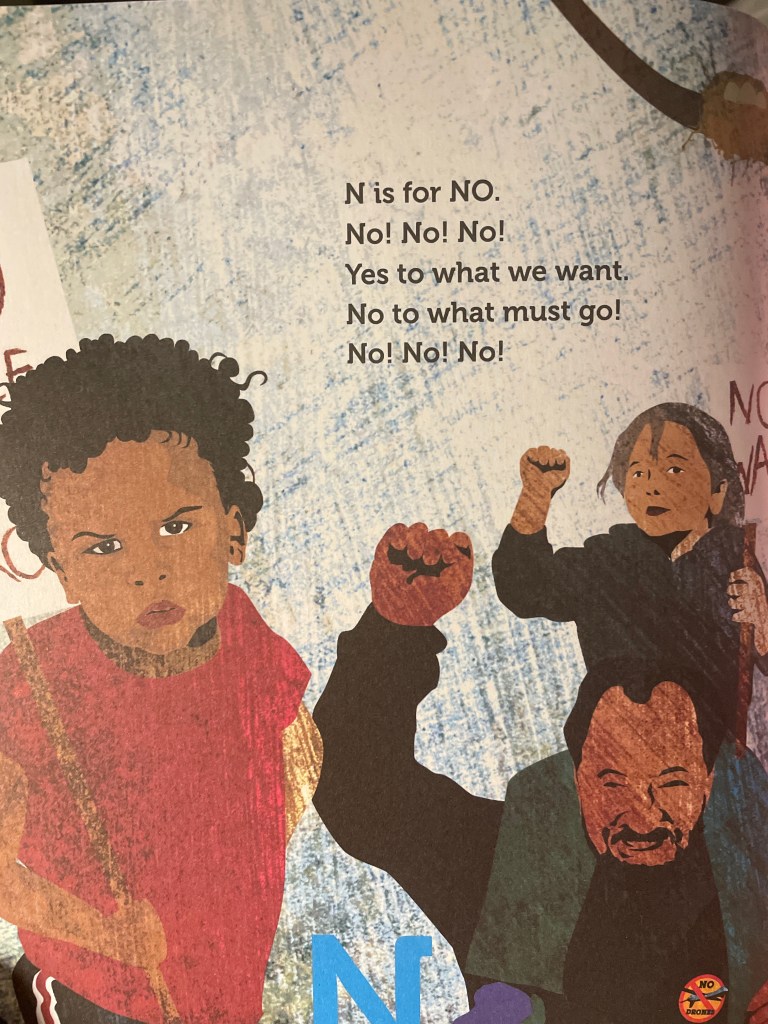
When you visit the library with your 5 year old, he may reach for a board book called A is for Activist by Innosanto Niagara and ask you to read it. The title itself throws up a red flag, but you open the pages to take a look. Expecting to learn his ABCs, instead your toddler is told to agitate, demand, and defy. This book, pretending to be for children, ends with Z is for Zapatista. Many adults don’t clearly know what a Zapatista is; how would a small child begin to understand a Marxist political group? In between A and Z are the rallying cries we have heard from the progressive left, such as the following passages: “Environmental justice is the way!”…”We Demand equality!”…”Love who you choose!”…”…delight in Diversity!”

Not only are the topics and tone of the book wholly inappropriate for children, but the illustrations are ugly and scary. I counted thirteen raised fists. On the N page is an angry-looking child carrying a No Justice, No Peace sign. The scary-looking Zapatista is hooded in black, while a masked black cat lurks over his shoulder. According to Amazon reviewer Kyle Pratt, A is for Activist “allows progressive parents to virtue signal and would produce young radicals who shout slogans with no real understanding.” He continues, “It’s disturbing that we live at a time when parents must check the content of their children’s pre-school and kindergarten books, but as A is for Activist shows—they must.” What is eerily missing from the ABCs of social justice is F is for Freedom and L is for Liberty. Instead, this book teaches that if someone’s ideas are different than your own, you raise your fist in defiance and destroy their notions of liberty. I can’t think of anything more tragic than this book in the hands of parents and children today at your local library. A is for Activist is REALLY B is for Brainwash, or I is for Indoctrination, or T is for Totalitarianism! There are currently 8 A is for Activist books in circulation in Oklahoma County libraries. Please call Larry White, Executive Director of the Metropolitan Library System, to express your displeasure. Your tax-paying voice will make a difference! His number is 405-606-3725.

Success Highways Edmond Public School’s SEL Vehicle for Middle and High Schoolers

By Emily Wright 1/8/22

In the fall parents of EPS middle and high schoolers received letters with information regarding Success Highways a resiliency curriculum being taught during advisory hour. The letter stated:

“What makes students persevere despite adversity? Resiliency makes the difference! Resiliency is a set of protective characteristics possessed by those who are able to adapt to hardship and succeed. It determines why one group or individual student succeeds and another does not. The research found six interrelated resiliency skills that are critical to student success. These skills include: valuing education, academic confidence, connectedness, stress, health and well-being, and intrinsic motivation. A student becomes more resilient if they improve performance (includes attendance, behavior, coursework), take ownership of their education, set and work towards goals, take responsibility for their lives, manage adversity, and thrive in school and beyond. Edmond Public Schools received a grant to implement a Resiliency Curriculum and Assessment called, Success Highways.”

EPS superintendent, Dr. Grunewald, says CRT is a theory only taught in law schools, but it is actually being practiced in our schools via Resiliency Curriculum and Assessment program, Success Highways. (Resiliency is code word for Social Emotional Learning.) Designed for at-risk, inner city students, this program was originally known has Achieving Success Identity Pathways (ASIP).

Under the guise of safety the schools have accelerated the Marxist indoctrination. I believe most teachers and parents buy what is sold to them and have no idea of the ill-intent behind these programs. The schools will say that students must “feel” safe and accepted to achieve academic success and SEL is necessary, especially now in the midst of a pandemic.

If you peel back the curtain on the objectives and the basis of SEL Curricula you will find that these programs are not about teaching “kindness”, “resilience” or academic success skills. Rather, SEL aims to indoctrinate your child and provide them with a Marxist mindset and lens to view the world with. EPS embraces diversity, equity and inclusion which are the basic concepts one must embrace when seeing the world through a racist CRT lens. Just take a walk through any middle school and high school and you will see posters with DEI terms adorning the walls.

CRT posits that white systemic racism organizes American society and its institutions (police, schools, courts, Pro sports teams etc.)

SEL is the vehicle (delivery system) used to teach CRT notions to students. SEL is not only the delivery system but is CRT in praxis (in practice). SEL is just political programing used to ultimately transform children’s core values, attitudes and beliefs. It divides families and silence dissenters by tacit intimidation from the schools, government, media, Hollywood etc.

SEL is the advancement arm of Marxist ideas under the Diversity, Equity and Inclusion movement. DEI is the introduction of identity politics to your children. The process of divide, demonize and destroy is in full swing and schools are the recruiting and brainwashing posts churning out the Neo-Marxist, America hating army of social justice warriors.

SCHOOL SUPERINTENDENTS AND SCHOOL BOARDS ARE COMPLICIT! THEY ACCEPT FEDERAL FUNDING AND APPLY FOR GRANTS THAT HAVE USERED IN THIS GARBAGE.

“Resiliency” curriculum promotes “Victimhood Mentality”; Direct Your Ire Not at Your Parents, but at Society (White Privileged People) Jump on the Social Justice Train!

“Resiliency” Success Highways Based on Emancipatory Communitarianism

The author of Success Highways, psychologist Dr. Scott Solberg supports Emancipatory Communitarianism upon which the program is based.

What is Emancipatory Communitarianism? Isaac Prilleltensky first conceptualized EC in 1997. It is the hybrid of liberation psychology and communitarianism. Liberation psychology promotes individualism and groups, whereas communitarianism stresses responsibilities to each other in the larger community. Counselors, psychologists are to become agent for social justice and through your work train your clients to become fellow social justice warriors to work along side with you to destroy America. What about major role parents play or an intact nuclear family plays in child’s success in school. Unlike traditional theoretical approaches, EC favors (targets) the poor and disadvantaged. The end goal: distributive justice; practitioners directly training clients to advocate in political social spheres. EC psychology is being used to advance the CRT narrative pushed 24-7 by our government, the media, professional sports organizations, corporations, Hollywood etc.: (oppressor vs. oppressed), promote equity; level the playing field by redistributing power ( reverse racism against whites).

“In researcher-practitioner collaborations, the clients are most often individuals who receive services from an organization or system. The goal of working with practitioners is to discover and implement strategies that empower their clients to overcome existing challenges and inequities. From feminist psychotherapy (Enns, 1992) we are encouraged to understand the nature of power and, as “trained professionals,” the importance of redistributing this power using egalitarian strategies that enable practitioners to find their own voice in shaping the discourse and perspectives being offered. From emancipatory communitarianism (Blustein, McWhirter, & Perry, 2005; Prilleltensky, 1997) we are encouraged to address social justice by examining whether and how our strategies empower practitioners to effectively intervene within the context surrounding their clients, enabling clients to successfully navigate their own challenges as they strive to realize their career and life goals. From my experiences, all of these skills and perspectives play an important role in setting the foundation for establishing effective researcher-practitioner collaborations.”

Scott Solberg, speaking at the Conference of the Society of Vocational Psychology, May 16–17, 2016, Florida State University

Who is Dr. Solberg, What COMPANY Does He Keep? Who Does He Work For?

The creator of Success Highways is Dr. Scott Solberg. He is currently a Professor in the Department of Counseling and Applied Human Development at the Boston University Wheelock College of Education and Human Development. Solberg translated ASIP into Success Highways, a one-size fits all curriculum that could be marketed to schools in 2006. Success Highways, under the ScholarCentric umbrella. According to his BU bio he serves as a “subject matter expert in providing resources, presentations, webinars, and consultation services” for a number of organizations and agencies including CASEL, and Council of Chief State School Officers.

History professor, director of the Center for Anti-Racist Research and author of How to Be an Anti-Racist, Ibram X. Kendi, is a fellow colleague of Solberg at Boston University.

“In researcher-practitioner collaborations, the clients are most often individuals who receive services from an organization or system. The goal of working with practitioners is to discover and implement strategies that empower their clients to overcome existing challenges and inequities. From feminist psychotherapy (Enns, 1992) we are encouraged to understand the nature of power and, as “trained professionals,” the importance of redistributing this power using egalitarian strategies that enable practitioners to find their own voice in shaping the discourse and perspectives being offered. From emancipatory communitarianism (Blustein, McWhirter, & Perry, 2005; Prilleltensky, 1997) we are encouraged to address social justice by examining whether and how our strategies empower practitioners to effectively intervene within the context surrounding their clients, enabling clients to successfully navigate their own challenges as they strive to realize their career and life goals. From my experiences, all of these skills and perspectives play an important role in setting the foundation for establishing effective researcher-practitioner collaborations.”

Scott Solberg, speaking at the Conference of the Society of Vocational Psychology, May 16–17, 2016, Florida State University
Image result for ibram x kendi books anti racist
Books by Ibram X. Kendi

CASEL: Distribution Arm of SEL Curricula

Nearly every state Department of Education has partnered with CASEL. Oklahoma State Department of Education has CASEL links to programs and resources on their website. Dr. Grunewald’s response to my November 1, 2021 school board speech mentioning SEL included a link to CASEL via the OSDE site:

“SEL provides a foundation for positive, long-term effects on kids, adults, and communities. Here is a current document from the SDE  that defines SEL and why we teach it.” Dr. Angela Grunewald November 2, 2021

Image result for casel

We define social and emotional learning (SEL) as an integral part of education and human development.

SEL is the process through which all young people and adults acquire and apply the knowledge, skills, and attitudes to develop healthy identities, manage emotions and achieve personal and collective goals, feel and show empathy for others, establish and maintain supportive relationships, and make responsible and caring decisions.

Fundamentals of SEL – CASEL

“SEL can be a powerful lever for creating caring, just, inclusive, and healthy schools that support all young people in reaching their fullest potential. In the context of SEL, equity and excellence refers to every student—across race, ethnicity, family income levels, learning abilities, home language, immigration status, gender identity, sexual orientation, and other factors—engaging in high-quality educational opportunities and environments that best promote their healthy social, emotional, and academic development.”  How Does SEL Support Educational Equity and Excellence? – CASEL

State Superintendent Joy Hofmeister is a member of CRT/SEL Pushing CCSSO

Dr. Solberg is also an expert consultant for America’s Promise Alliance another educational racial eqiuity organization and the Council of Chief State School Offices. The CCSSO Equity goals include:

  • Invest in principals’ ability to lead schools that support the whole child.
  • Integrate analysis of teachers’ ability to teach social-emotional competencies into licensure requirements and teaching frameworks
  • Provide funding for teacher training on restorative justice
  • Check for bias in curriculum and assessment as part of state-level review of instructional materials, and assist LEAs in implementing strategies to detect bias in curriculum and assessment, particularly for locally selected or designed materials.
  • Annually report on multiple indicators of the diversity of the educator workforce

Success Highways/Scholar Centric Blog

Parents your tax payer dollars are being used to fund Marxist indoctrination curriculums. Every company’s website lists CRT dribble and platitudes, thus Scholar Centric’s site did not disappoint. Addressing Race & Political Events in K-12 Schools – Intellispark Derek Francis wrote the Addressing Race & Political Events in K-12 Schools blog post on January 28, 2021. In that post Francis provides an link to an exercise that addresses “racial and political events” under the “Tell the Truth” section of his blog.

This exercise is “Spot the Difference” courtesy of “Woke Kindergarten”. Woke Kindergarten 60 Second Text: Spot the Difference – YouTube Francis says: “Kids are seeing these events unfold and having conversations with peers. Public violence and protest are no longer shocking for them to see. We owe it to tell the kids the truth. Have the conversation. They can handle it. They see it on social media.”

Image result for woke kindergarten
“Counseling psychology places a strong value on working towards social justice by focusing efforts on decreasing inequities experienced by low income, high risk, and underrepresented populations. These efforts are informed by an ethical responsibility to use culturally responsive interventions and multicultural communication skills—all of which are necessary when working in community settings.”

Creator of Success Highways, V. Scott Solberg, speaking at the Conference of the Society of Vocational Psychology, May 16–17, 2016, Florida State University

The “RESEARCH” Success Highways is based on is Junk Science! I researched Dr. Solberg, the author of Success Highways, combed through the bibliography of the research paper on Success Highways and looked at the empirical (not scientific) research provided. That’s right this “researched based” program is not backed up with scientifically proven data that yields repeatable results, no matter what factors are added to the testing. Instead the program is based on empirical evidence which is based on observation and experience, things seen multiple times; with the belief that is how they work. Dr. Solberg also conducted this study, not an independent researcher.

“As with any program of evaluation, our work to date has it limitations. Perhaps most obvious is our inability, at present, to assert that ASIP caused the observed improvements in student academic and behavior outcomes.”

“While we do have evaluation data to suggest that engagement in ASIP activities contributes to positive outcomes for youth, our explanations for how this occurs are as yet based in theory.”

School-Based Social Justice: The Achieving Success Identity Pathways Program April 2006Professional School Counseling pg 286

Evidence That Make You Go Hmm…These School “Professionals are Brainwashing Our Children

The American School Counselor Association (ASCA) adopted a CRT/Social Justice Agenda in 2005 and Success Highways was designed to implement that agenda.

Below are some excerpts from a research paper authored by Solberg and colleague Dr. Kimberly Howard: School-Based Social Justice: The Achieving Success Identity Pathways Program Pathways (a.k.a. Success Highways) published in 2006 in Professional School Counseling. The title ( School-Based Social Justice…)even states the obvious; confirming that Success Highways is a SEL/CRT indoctrination program.

“This curriculum originally was created to assist low-income youth and youth from diverse racial/ethnic backgrounds in becoming aware of the oppression they experience daily, both oppression that exists in the environment and how their behavior contributes to these experiences. By teaching youth to understand how the social context shapes their behaviors and to recognize both the explicit and implicit ways that this occurs, school counselors can assist youth to develop an empowered frame of reference (Field & Baker, 2004). Once youth have attained this frame of reference, they then have the ability to choose, with both intentionality and reflectiveness, how to respond in ways that are self-affirming and consistent with their sense of fairness and justice.”

School-Based Social Justice: The Achieving Success Identity Pathways Program April 2006Professional School Counseling pg 285

“It is imperative that school counselors become actively engaged in promoting school success for all students. For youth from low-income and diverse backgrounds, future career opportunities are predicated on achieving educational success. Therefore, school counselors become agents for social justice when creating, implementing, and supporting school-based interventions designed to promote school success, especially culturally relevant interventions that target youth from low- income and diverse backgrounds. This article describes the Ecological Developmental Cognitive Framework designed to inform the development of curricula that improve school success for all youth. The Achieving Success Identity Pathways is described as an example of curricula derived from this framework and a program that incorporates the four main components of the ASCA National Model®.”

School-Based Social Justice: The Achieving Success Identity Pathways Program April 2006Professional School Counseling pg 278

“We would argue that youth from low-income and diverse backgrounds fail in school and society because oppression existing in the youth’s macrosystemic and exosystemic contexts (e.g., history of their racial/ethnic group, society beliefs regarding race, economic status, experience with racism/bigotry, media portrayals, and discriminatory housing practices) creates life experiences that result in internalized dispositions that maintain this oppression(Solberg & Howard, 2000). As a result of growing up within an oppressive social context, youth build a set of beliefs about themselves that are organized around core definitions of distrust, betrayal, danger, hopelessness, anger, loss, inadequacy, and social injustice. These core beliefs serve as predispositions and expectancies that influence their behavior across all social contexts, including school. Without intervention strategies to counter such predispositions that maintain oppression, youth who have internalized oppressive messages likely will continue to fail in school.”

School-Based Social Justice: The Achieving Success Identity Pathways Program April 2006Professional School Counseling pg 279

In Conclusion

Counselors, and teachers are not psychologists. If you choose not to opt your children out of SEL instruction they will be subjected to psychological treatment (abuse) in a non- therapeutic, uncontrolled environment complete with a healthy dose of “career training” (CRT mindset development)

Students are given a survey to pinpoint social-emotional strengths and weaknesses. The data mining will aid school officials in determining who is “at-risk” so “interventions” can be made. A post-test is given to determine SEL gains. I am not sure how you teach and then assess resilience. Genetics, individual life experiences and environment determine one’s resilience. How does teaching resilience address learning loss? How does focusing on feelings teach concepts/subjects students are behind in due to being kept out of a classroom full time for nearly a year and half? Shouldn’t we hire math and reading instructors to address the learning gaps? What does career training have to do with SEL? (Another topic for another day)

Parents take action! Question teachers, counselors, administrators, the superintendent and school board members. Speak at school board meetings. Run for the school board or actively campaign for school board candidates and/or donate to their campaigns.

The last round of Covid relief education funds: American Rescue Plan; requires schools to spend 20% of the funds on interventions that “respond to student’s academic, social and emotional needs.” PATRIOTS WE MUST GAIN CONTROL OF SCHOOL BOARDS!

Guest Post: Senator Garvin Misses The Mark With Teacher Shortage Bills

By Deborah Campbell

Senator Garvin says two bills (SB1144, SB1119) will address teacher shortages.

Truth is, it lowers standards and harms the protected group of students under I.D.E.A.; Section 504; and the ADA.
When you read SB 1144 substitute teachers:(a) there are no limitations on the number of days the substitute can teach with a caveat; and (b) Section 1(C) says the restrictions will not apply to the protect student population (IDEA, Section 504, ADA) therefore an unqualified substitute teacher can teach beyond the limited hours/days.

Unqualified is defined as not having the formal education and training in education IN ADDITION to the formal education required for a degree in special education. It includes no experience with implementing the goals, objectives and instructional needs of the child. Not to mention is there are medical related needs.
(c) No mention or requirement that substitute teachers have the formal education, training and experience with implementing the goals, objectives and instructional needs set forth in the child’s individualized educational plans (IEP) or 504 Plan..(d) No provision to require the local school boards and OK State School Board to create a data base of applicants of retired special education teachers or unemployed special education teachers. (e) Will the substitute be qualified to instruct and implement the goals, objectives and instructional needs identified in the child’s IEP or 504 Plan? How about physical impairments such as visually impaired, blind, hard of hearing or deaf?

Next, SB 1119 Alternative Teaching Certificates: (a) I have no problem with a successful person from a profession teaching a specific trade without a degree in education for high school and trade schools.
(b) Will parents of children in general education and parents of the protected student population (I.D.E.A.; Section 504; and ADA) have accessibility to verify that person’s credentials?
(c) Is Senator Garvin and the special interest groups promoting SB1119 willing to amend the bill by removing the protected group of students from the Alternative Teacher Certificates ?
(d) Will the Alternative Certified teachers be qualified to instruct and implement the goals, objectives and instructional needs identified in each child’s IEP or 504 Plan? How about physical impairments such as visually impaired, blind, hard of hearing or deaf?


Around 2015-2016, the OK State Department of Education was promoting the Alternative Teaching Certificate and summer boot camps. The boot camp’s goal was classroom preparation. This included special education. At that time, I spoke on the phone with Joy Hofmeister regarding the boot camp and certificate program. She said it was a solution to the teacher shortage.

To this day, I don’t think parents of special needs children were aware of this.

This bothered me for two reasons:

  1. It de-values our special education teachers who spent money and time going beyond obtaining a general education (K-12) degree.
  2. The children protected by I.D.E.A; Section 504; and the ADA are not receiving a free and appropriate education (FAPE).

Another important point: Each protected child with an IEP (not a 504 plan) is designate a specific amount of federal money to be used for that child, not the classroom. For example, that money to be used for that child’s specific needs such as related services and technology. That money follows the child.
Furthermore, this conditional money has bookkeeping requirements. Has an audit ever been done on this money to see:(a) was this money put into the general funds for all students?(b) Is there an itemized expense record for each school year for that child?

These issues have not been addressed. Why?

If these questions concern you, please reach out to Senator Garvin and ask question based on the above information.

Session opens FEBRUARY 7th. Senator Garvin may be reached at 405-521-5522 or jessica.garvin@oksenate.gov.

Meet Ralph

Pornography is pornography

It would be simple-minded to believe that the pornographic books in school libraries are only found under keyword searches such as “homosexuality”, “queer” or “gay”. There are many heterosexual books which are equally inappropriate for young minds. One such book, Forever, by Judy Blume, is a coming-of-age story filled with lurid details of minors engaging in sexual activity. It is page after page of too much information. In the following passage we are introduced to Michael, Katherine, and Ralph.

“Don’t,” he said wiggling out of his pajama bottoms. He led my hands to his penis. Katherine…I’d like you to meet Ralph…Ralph, this is Katherine. She’s a very good friend of mine.”

“Does every penis have a name?”

“I can only speak for my own.”

Blume, Judy. Forever. Atheneum Books for Young Readers, 2014.

And I can only speak for myself. This is disgusting. Katherine goes on to give Ralph a hand job until she feels “wetness” on her hand. Not to be deterred, Katherine hangs on to Ralph. (Please, someone get the girl a tissue!)

Blume can’t let go either. A few chapters later, Katherine and Michael get naked and “make love” on the bathroom rug. Unfortunately, Michael is unable to hold out long enough for poor Katherine and she is left wanting. In case you sense a lack of equity in this given situation, don’t be alarmed. Michael and Ralph make up for their lack of “love making” ability one hour later.

“This time Michael made it last much, much longer and I got so carried away I grabbed his backside with both hands, trying to push him deeper and deeper into me and I spread my legs as far apart as I could and I raised my hips off the bed and I moved with him, again and again and again and at last, I came. I came right before Michael and as I did I made noises, just like my mother. Michael did too.

While he was still on top of me, catching his breath, I started laughing. “I came…” I told him. “I actually came.”

Blume, Judy. Forever. Atheneum Books for Young Readers, 2014

Forever is a Time Best YA Book of All Time (2021) and a 1996 winner of the A.L.A. Margaret A Edwards Award. The American Library Association is one of the key reasons why books with explicit sexual passages are astonishingly abundant in Oklahoma schools and across our nation. It did, after all, win awards; it must be good.

It’s in your schools. Go find it

Blog at WordPress.com.

Up ↑